
What is actually treated here
The umbrella term “vascular lesions” covers very different things, with very different prognoses:
- Facial telangiectasia: the fine red capillaries on the nasal alae, cheeks and chin. The best-responding lesion of all. They are frequently part of rosacea, and it is worth looking at the underlying disease and not just the capillary.
- Leg spider veins: the fine red or bluish branches on thighs and calves. They respond well, though they usually need more sessions than facial ones.
- Cherry angiomas (red dots): the small raised red spots on the trunk and arms that appear with age. Benign, and they clear quickly.
- Poikiloderma of Civatte: the mottled, blotchy redness on the sides of the neck and the décolletage — the mark of chronic sun damage. Responds well to IPL.
- Persistent erythema: the diffuse background flush of the face. See rosacea.
What light does NOT treat — and why that matters
If your leg veins are thick, bulging, tortuous or palpable; if your legs feel heavy by the end of the day; if you have swelling, night cramps, itching or colour changes at the ankle — then you are not dealing with a cosmetic skin problem. You are dealing with venous insufficiency, and that is the territory of angiology / vascular surgery.
This has to be said plainly, because treating superficial spider veins without investigating the circulation beneath them is a classic and expensive mistake: the spiders come back, again and again, because the pressure that creates them is still there. You would be sweeping the smoke while the fire keeps burning.
The correct approach to a leg with spider veins is to ask first whether there are symptoms of venous insufficiency. If there are, the first step is a Doppler study — an assessment of the circulation, which is an angiology investigation and not a skin treatment. If there are none, or the circulation has already been investigated, then the practice does treat the leg: transdermal Nd:YAG laser sclerotherapy closes superficial veins with no needles and no surgery, and it is one of the indications where the Fotona SP Dynamis Max performs best.
In other words: we are not sending you away. We are telling you the order. Treating the spider veins of a leg with diseased circulation is sweeping the smoke without putting out the fire — they come back. With the circulation investigated, the laser does excellent work.
How light works on a vessel
The principle is called selective photothermolysis, and it is elegant: a wavelength is chosen that haemoglobin absorbs avidly and the surrounding skin does not. The energy becomes heat inside the vessel, the wall is damaged, the vessel collapses, and the body reabsorbs it over the following weeks. The skin above is left intact.
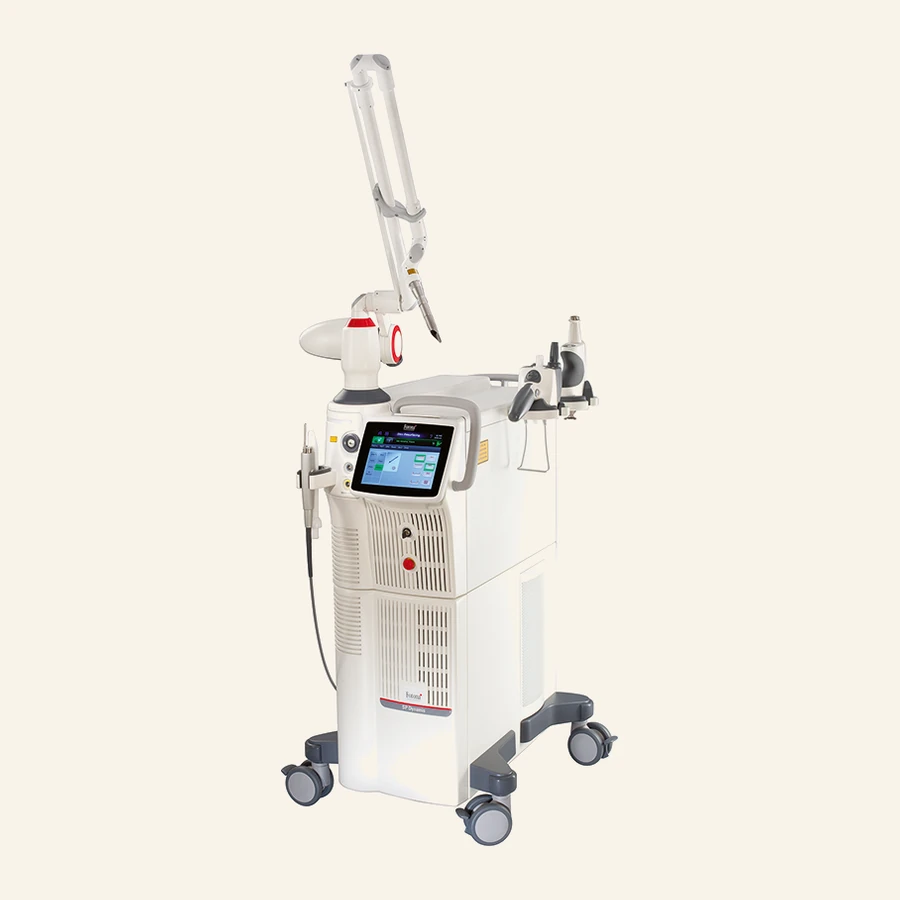
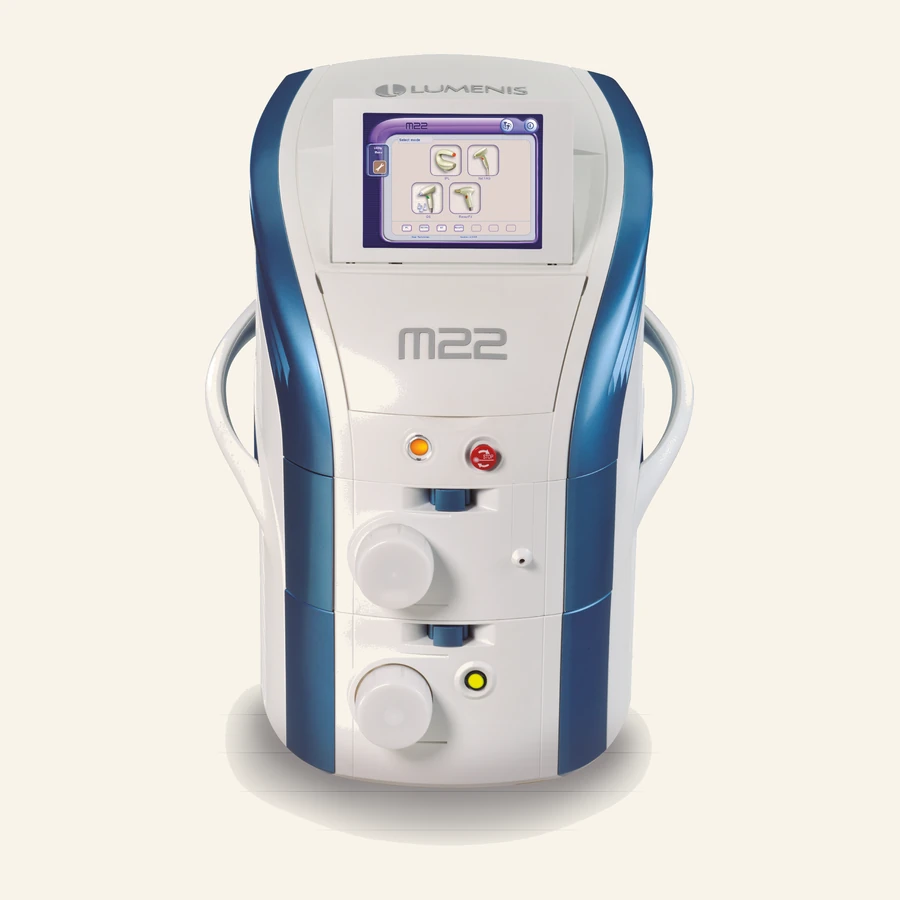
Two tools are used, chosen by the calibre and depth of the vessel: the intense pulsed light (IPL) of the Lumenis M22 (Lumenis, Israel), ideal for diffuse redness and fine telangiectasia on the face and décolletage; and the Nd:YAG laser of the Fotona SP Dynamis (Fotona, Slovenia), which penetrates deeper and handles somewhat thicker, deeper vessels better — typically those on the legs.
What to expect, unvarnished
Immediately after the pulse the vessel may vanish from view, darken, or turn grey. All of that is normal. Over the following days there is redness, mild swelling and sometimes small crusts or a bruise — especially on the legs.
Genuine reabsorption takes 2 to 6 weeks. That is why sessions are spaced, and why judging the result at three days makes no sense.
Typically 2 to 4 sessions are needed on the face and more on the legs. And here is the necessary honesty: the treated vessels disappear, but new vessels can appear — light removes the vessel, not the tendency to form them. If there is underlying rosacea, ongoing sun damage, or untreated venous insufficiency, they will come back. That is why it is always combined with treating the cause, and with photoprotection.
Darker skin: mind the contrast
In phototypes IV to VI, the skin’s melanin competes with haemoglobin to absorb the energy. That narrows the safety margin: an overly aggressive IPL can leave a mark — lighter or darker — where there was only a capillary before.
The correct strategy is the usual one on darker skin: conservative settings, a test patch, more sessions, and a preference for Nd:YAG in high phototypes, because its wavelength is less absorbed by melanin. Speed is traded for safety.
A vascular lesion that changes is not a cosmetic matter
A cherry angioma that has looked the same for years and causes no trouble is benign. But a vascular lesion that grows quickly, bleeds without injury, hurts, changes colour, or appears newly in an adult is assessed medically before anything is fired at it.
Firing a laser at a lesion that should have been biopsied destroys the evidence and delays the diagnosis. When in doubt, look first. See moles and warts and skin cancer screening.
What does it cost?
A session starts at approximately $5,000 MXN, depending on the area treated and how many sessions your response calls for. Approximate price — the definitive cost is set at your private consultation with Dr. Arístides Arellano.
Track record and credentials
Vascular lesions are treated at the Clínica Dermatológica y Cirugía Estética de Puebla, in operation since 1971.
Dr. Arístides Arellano is a plastic surgeon holding a specialty licence: he practises under a Mexican medical licence (D.G.P. 1125959) and a specialty licence in Plastic & Reconstructive Surgery (0002008), both issued by the Directorate General of Professions (DGP), which reissued his certificate of professional standing in 2025. His career began before Mexico’s present-day specialty-board system existed: he belongs to the founding generation of plastic surgery in Puebla, the second generation of a surgical tradition started in 1971 by Dr. Francisco Arellano Ocampo. Trust is verified, not promised: both licences are public and anyone can look them up in the DGP’s National Registry of Professionals.
Before-and-after photographs
Most patients want to see before-and-after photographs before deciding. Out of respect for each person’s privacy, Dr. Arístides Arellano shows real cases —always with documented consent— during your in-person consultation, where you can review results from patients with a starting point similar to yours. Results may vary from patient to patient.
Risks and expectations
Every medical treatment —topicals, peels and energy-based devices included— carries risk and requires a prior assessment. In darker skin (Fitzpatrick IV–VI, the most common phototypes in Mexico) a poorly indicated procedure can darken the patch instead of lightening it. Results may vary according to each patient, their phototype and their individual triggers.
Trust is verified, not promised. All 210 scanned documents —degree, licences, diplomas, publications and certificates, from 1977 to 2025— are open in Dr. Arístides Arellano’s credential archive, alongside an explanation of the difference between a specialty licence and a board certification.
Session plan and expectation
- AssessmentFirst: are there symptoms of venous insufficiency? If so, angiology before laser.
- Day 0The vessel vanishes, darkens or turns grey. All normal.
- Days 1–10Redness, mild swelling, sometimes crusts or a bruise (especially on legs).
- Weeks 2–6Genuine reabsorption of the vessel. This is when the result shows.
- Sessions2–4 on the face; more on the legs. Spaced weeks apart.
- AfterwardsNew vessels can appear. Light removes the vessel, not the tendency.
Frequently asked questions
Does laser work for varicose veins?
It depends on the calibre. Spider veins and superficial leg veins are treated here, with transdermal Nd:YAG laser sclerotherapy: it closes the vessel with no needles and no surgery. Thick, bulging, tortuous varicose veins are a different matter: that is a circulatory problem rather than a skin one, and before treating anything the circulation must be investigated with a Doppler. It is not that we will not treat your leg: it is that we first need to know why it is filling with veins.
How do I know if I have venous insufficiency?
The signs are heavy legs at the end of the day, swelling, night cramps, itching and colour changes at the ankle, along with thick, palpable veins. If you have those symptoms, the first step is not laser: it is a Doppler study assessing the circulation. That study is arranged before the leg is treated, because treating spider veins over diseased circulation makes them come back. Once it has been investigated, the practice does treat the superficial veins with transdermal Nd:YAG laser sclerotherapy.
How many sessions do I need?
Usually 2 to 4 on the face and more on the legs, spaced several weeks apart. Reabsorption of the vessel takes 2 to 6 weeks, so judging the result at three days makes no sense.
Do they come back?
The treated vessels disappear, but new ones can appear: light removes the vessel, not the tendency to form them. If there is underlying rosacea, ongoing sun damage or untreated venous insufficiency, they will return. That is why treatment is always combined with treating the cause, and with photoprotection.
Is it safe on darker skin?
It needs more care, because melanin competes with haemoglobin for the energy and the safety margin narrows. Conservative settings are used, with a test patch, more sessions, and a preference for the Nd:YAG laser in high phototypes, because its wavelength is less absorbed by melanin.
Are the little red dots on my chest dangerous?
Cherry angiomas are benign and very common with age; they clear quickly with laser if they bother you cosmetically. But any vascular lesion that grows quickly, bleeds without injury, hurts or changes colour must be assessed medically before anything is fired at it: destroying with a laser a lesion that should have been biopsied erases the evidence and delays the diagnosis.
The equipment used
Every case is different. Discuss yours in a personal consultation.
Book a consultation on WhatsAppEvery figure published on this site is approximate and is not a quote. Any procedure or treatment first requires a private assessment consultation with Dr. Arístides Arellano —$800 MXN, charged separately— and it is at that consultation that the definitive cost of your case is determined.
Educational content; it does not replace a medical consultation. Results may vary from person to person.