
What is a hair transplant?
A hair transplant takes follicular units from the donor area (the nape and sides, whose hair is genetically programmed not to fall) and reimplants them one by one into the areas of loss: temples, crown, frontal hairline.
The detail almost nobody explains: transplanted hair keeps the genetic memory of where it came from. That is why hair taken from the nape, once implanted at the front, keeps growing for life. It is not an artificial implant or a prosthesis: it is your own living tissue, relocated.
It is outpatient surgery, under local anaesthesia, lasting 4 to 8 hours depending on the number of grafts. You walk out the same day.
Diagnosis first, scalpel second
Half the bad hair results seen in consultation are not failures of technique: they are failures of indication. Someone was operated on who should not yet have been, or whose hair loss was not androgenetic.
Before grafts are discussed, a real diagnosis is made. Not all hair loss is surgical: alopecia areata, telogen effluvium, scarring alopecias and thyroid or nutritional problems get worse if operated. And in a young patient with still-active loss, operating without a medical containment plan guarantees that in three years he has an island of transplanted hair surrounded by fresh baldness.
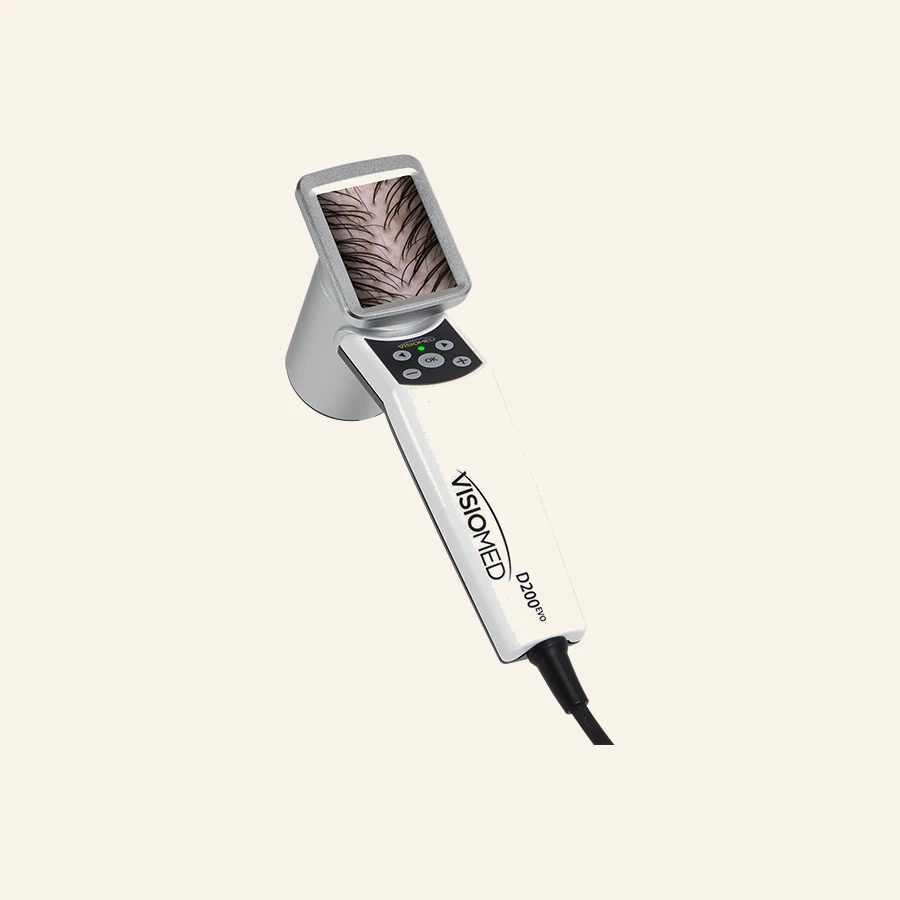
- HairMetrix (Canfield) digital diagnosis: AI-assisted trichoscopy. It measures true density, shaft calibre and follicular units per cm² without shaving, and allows objective before/after comparison.
- Donor-area assessment: it is a finite resource. How many grafts exist across your whole life —not just today— determines what can honestly be promised.
- Ruling out non-androgenetic causes: thyroid, anaemia, deficiencies, stress, medication, scarring alopecias.
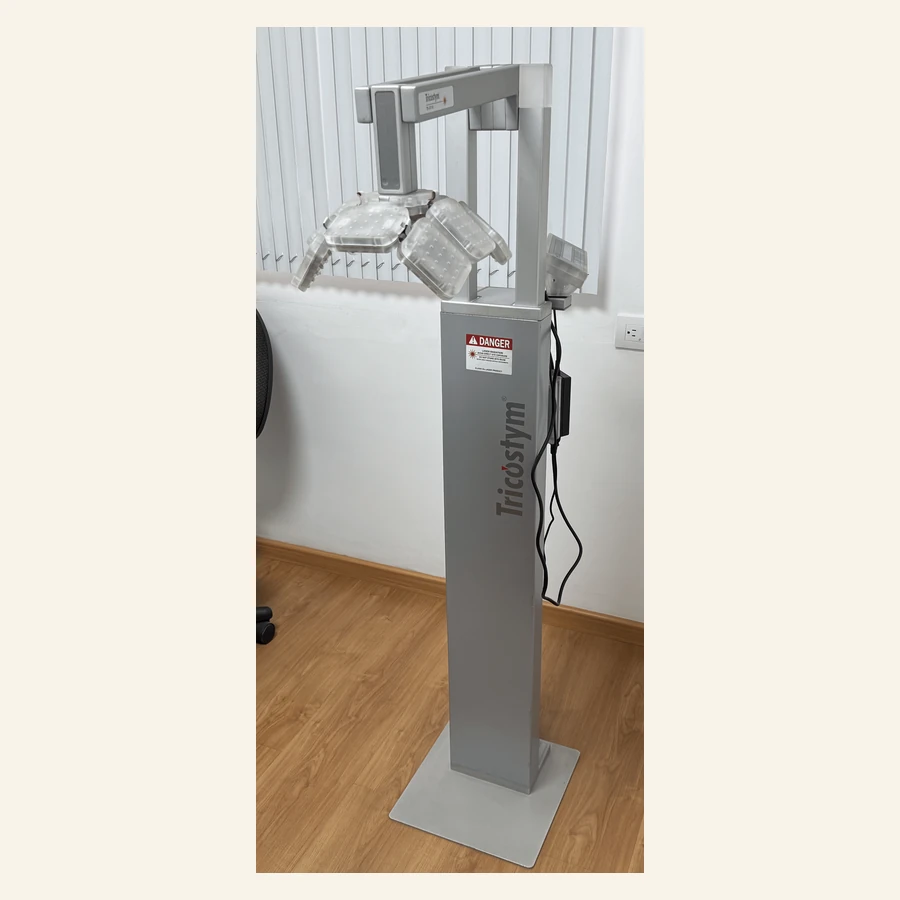
- Medical containment plan (supervised finasteride/minoxidil, PRP, mesotherapy): protects the native hair, which surgery does not.
Techniques used
There is no “best” technique. There is a correct technique for your case, and choosing it is the surgical decision that weighs most on the final result.
- Manual FUE (Follicular Unit Extraction): follicular units are extracted one by one with micropunches. No linear scar —only millimetric dots that blend in— and you can wear your hair short afterwards. The most requested technique.
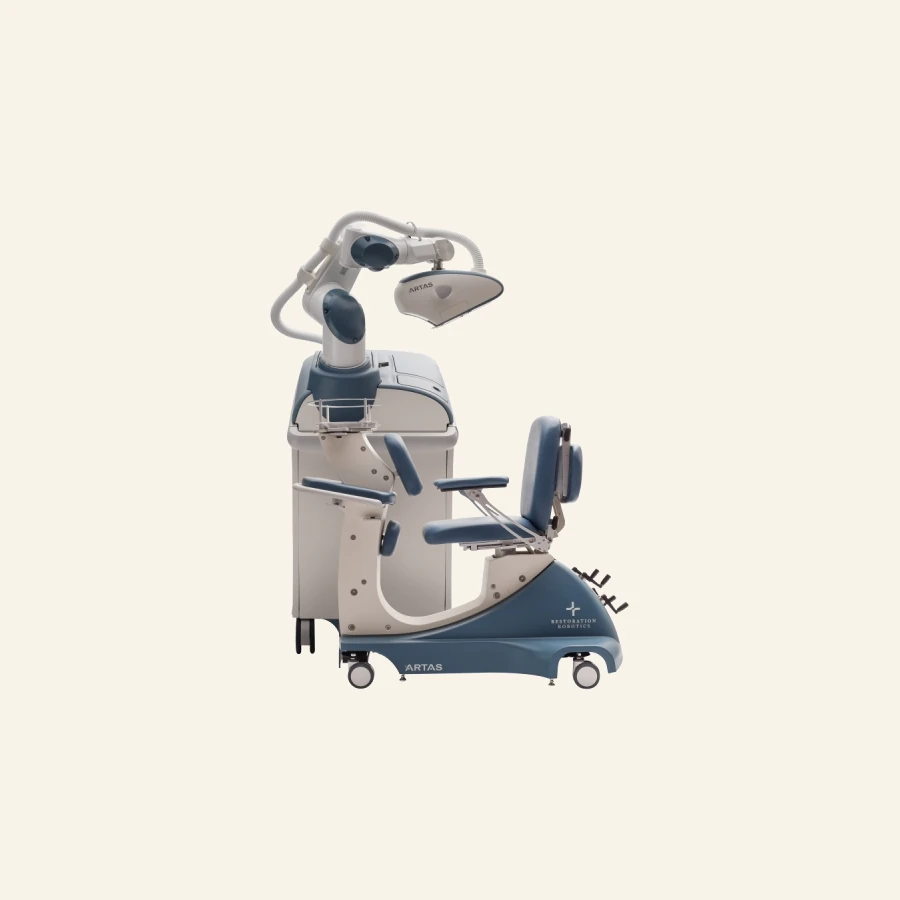
- ARTAS iX robotic transplant: a robot with AI-assisted vision selects and extracts each follicle at optimal depth, force and angle, without the fatigue or tremor of an eight-hour day. It lowers the transection rate (follicles damaged on extraction). See the ARTAS iX system.
- FUT / FUSS (strip technique): an occipital strip is removed and follicles dissected under microscope. It leaves a fine linear scar hidden under the hair and, in exchange, allows the largest number of grafts in a single session. Still the best option in extensive baldness.
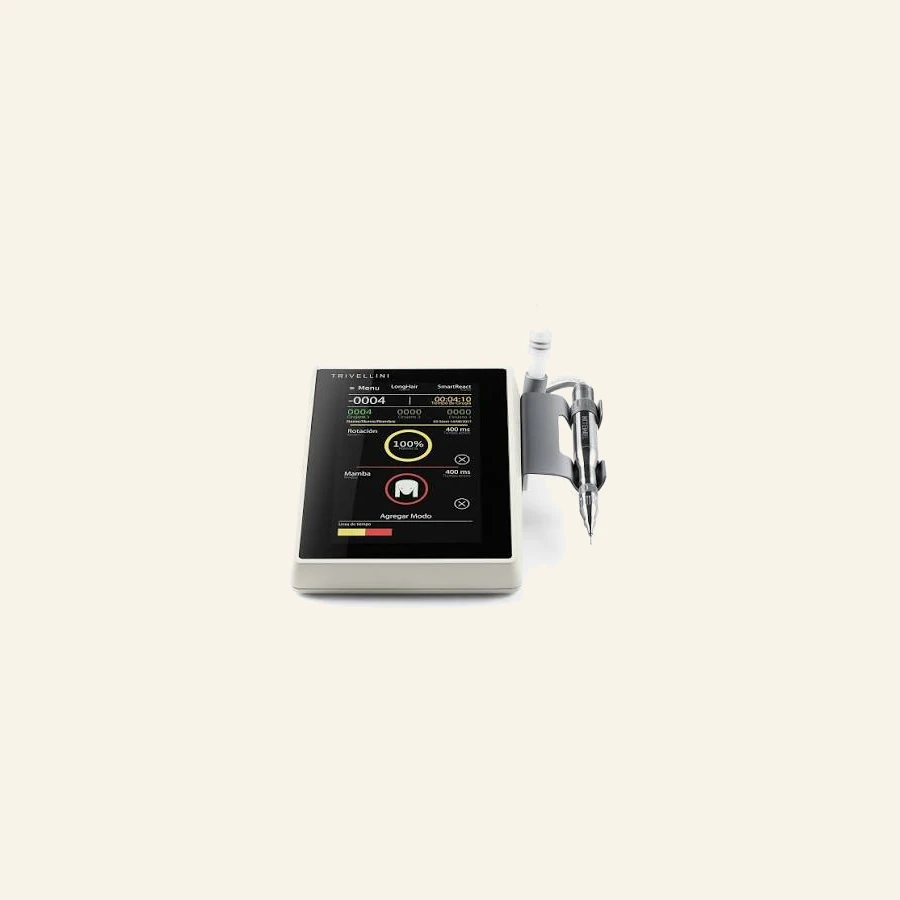
- Long Hair FUE (Trivellini “Mamba” system): FUE with long hair, without shaving the donor area, using a programmable multiphase punch. The patient sees the result the same day and can return to work unnoticed.
- Beard, moustache and eyebrow transplant: same technique, entirely different design — angle, direction and density are another matter on the face. See beard transplant.
How is a hair transplant performed?
Surgery is outpatient and performed under local anaesthesia, in a session of 4 to 8 hours depending on graft count. The patient is awake and comfortable, and can listen to music, eat and rest.
1. Designing the hairline. This is the artistic part and the one that betrays bad work. A straight, dense, too-low line is the signature of a poor transplant: it looks “planted”. A natural line is irregular, drawn to respect face shape and age, and drawn knowing the patient will keep ageing.
2. Extraction of the follicular units from the donor area, follicle by follicle (FUE / ARTAS) or by strip (FUT). Each unit holds 1 to 4 hairs and is kept alive in solution while it waits.
3. Opening the recipient sites. Everything else is decided here: the angle, direction and density at which each hair will emerge. A hair implanted at the wrong angle grows the wrong way for the rest of its life.
4. Implantation, placing single-hair units in the front row (for a soft, natural edge) and 2-, 3- and 4-hair units behind, where they deliver density.
What nobody tells you: shock loss
Between weeks two and six, the transplanted hair falls out. All of it. This is normal, described and expected: it is called shock loss. The follicle stays alive under the skin and enters a resting phase before starting again.
From the third or fourth month, new hair begins to emerge. By six months there is a visible result. The definitive result is judged at 12 months, and on the crown it can take up to 18.
This is said here, in writing, before operating — because the patient who does not know it panics in week four and believes it failed. It did not fail: it is in the script. All surgery carries risk and requires a prior medical assessment. Results may vary according to each patient, their anatomy and their individual healing process.
Who is a good candidate?
People with androgenetic alopecia (common male- or female-pattern baldness) who have a sufficient, stable donor area, are in good health and hold realistic expectations. Also patients with stabilised scarring alopecia, scars from previous surgery or scalp burns, and those seeking to restore a beard or eyebrows.
Greater caution —or waiting— applies to the very young patient with active loss and no medical plan, to anyone with a poor donor area, and to anyone expecting the hair they had at twenty. Achievable density is excellent, but it is not infinite: the donor area is a finite resource to be managed across a lifetime, not spent in a single operation.
A plastic surgeon, not a hair centre
A hair transplant is surgery on the scalp: it works with planes, blood supply and healing. That it is performed by a licensed plastic and reconstructive surgeon —not a technician— matters for exactly the reasons it matters in any other operation: the prior diagnosis, the handling of tissue, the donor-area scar, and what happens when something does not go to plan.
Dr. Arístides Arellano has been a member of the International Society of Hair Restoration Surgery (ISHRS) since 1996, when modern follicular transplantation was only beginning in Mexico.
Dr. Arístides Arellano is a plastic surgeon holding a specialty licence: he practises under a Mexican medical licence (D.G.P. 1125959) and a specialty licence in Plastic & Reconstructive Surgery (0002008), both issued by the Directorate General of Professions (DGP), which reissued his certificate of professional standing in 2025. His career began before Mexico’s present-day specialty-board system existed: he belongs to the founding generation of plastic surgery in Puebla, the second generation of a surgical tradition started in 1971 by Dr. Francisco Arellano Ocampo. Trust is verified, not promised: both licences are public and anyone can look them up in the DGP’s National Registry of Professionals.
Before and after
Most patients want to see before-and-after photographs before deciding. Out of respect for each person’s privacy, Dr. Arístides Arellano shows real cases —always with documented consent— during your in-person consultation, where you can review results from patients with a starting point similar to yours. Results may vary from patient to patient.
Approximate price in Puebla
Reference prices: FUE manual from $55,000 MXN and ARTAS iX robótico from $70,000 MXN, approximate, depending on the number of follicles to be transplanted and the technique. The price is all-inclusive: it covers use of the operating theatre and facilities, pre-operative laboratory work and the post-surgical recovery treatments. It is not the surgeon’s fee alone. Approximate price — the definitive cost is set at your private consultation with Dr. Arístides Arellano.
Related patient guide
To go deeper before or after your consultation: How many grafts do I need? How a hair transplant is estimated — part of the informational guide series reviewed by Dr. Arístides Arellano.
Dr. Arístides Arellano’s track record in hair surgery
This is a line almost nobody in Puebla can document: his first scientific publication, in 1986, was on the surgical treatment of baldness — twenty years of experience accumulated by the group he trained with. He is a plastic surgeon holding a specialty licence (cédula de especialidad) issued by the DGP:
- Article: Surgical treatment of baldness — 20 years of experience — Medicina Cutánea I.L.A., Vol. XIV, 1986 · Chajchir, Benzaquen, Arellano
- Spanish-Argentine conference on synthetic hair implants — Buenos Aires, 1988
- Member — International Society of Hair Restoration Surgery (ISHRS) — 1996
- Speaker — Argentine Hair Micro-transplant Association course — Tema: evolución de la cirugía de las alopecias definitivas · Buenos Aires, 27 de abril de 2020 Topic: the evolution of surgery for definitive alopecia — the full history of the technique, told by someone who lived it.
Trust is verified, not promised. All 210 scanned documents —degree, licences, diplomas, publications and certificates, from 1977 to 2025— are open in Dr. Arístides Arellano’s credential archive, alongside an explanation of the difference between a specialty licence and a board certification.
Recovery · step by step
- Days 1–3Mild swelling of forehead and eyelids; sleep semi-upright. The grafts are already fixed, but treated like glass.
- Days 7–10Crusts fall away. Social life resumes; the recipient area is still pink.
- Weeks 2–6⚠️ SHOCK LOSS: the transplanted hair falls out. Normal and expected. The follicle stays alive.
- Months 3–4New hair starts to emerge, fine at first. It thickens over the months.
- Month 6Visible result; around 60% of the hair has emerged.
- Months 12–18Definitive result. This — and not before — is when the surgery is judged.
Frequently asked questions
How much does a hair transplant cost in Puebla?
Cost is calculated by the number of follicular units (grafts) your case requires and by the technique chosen: manual FUE, robotic ARTAS iX, FUT or Long Hair FUE. One patient may need 1,200 grafts and another 4,000, so there is no single price. It is set at the consultation, after the hair diagnosis, with a written quote.
Does transplanted hair fall out again?
Transplanted hair is taken from the nape and sides, whose follicles are genetically programmed not to fall, and it keeps that genetic memory once relocated. That is why it is permanent. What can keep falling is the native hair that was not transplanted — which is why the medical containment plan is part of the treatment.
Does hair fall out after the transplant? Is that normal?
Yes, and it is entirely normal. Between weeks two and six the transplanted hair falls out: this is called shock loss. The follicle remains alive under the skin and enters a resting phase. New hair begins to emerge around the third or fourth month.
How long until I see the result?
There is a visible result at around 6 months, when roughly 60% of the hair has emerged. The definitive result is judged at 12 months, and on the crown it can take up to 18. Results may vary from patient to patient.
Which is better, FUE or FUT?
Neither is better in the abstract; they are different. FUE leaves no linear scar and allows short hair, but yields fewer grafts per session. FUT leaves a fine linear scar hidden under the hair and allows the largest number of grafts in one operation, so it remains the best option in extensive baldness. The right technique is chosen at the consultation.
What is the ARTAS robotic hair transplant?
It is a robotic system with AI-assisted vision that selects and extracts each follicular unit at optimal depth, force and angle, without the fatigue or tremor of a long surgical day. It reduces transection —follicles damaged during extraction— and keeps the same precision at graft number 2,000 as at the first.
Does a hair transplant hurt?
It is performed under local anaesthesia: you feel the initial application and then pressure, not pain. The patient is awake throughout, and can listen to music, eat and rest. Subsequent discomfort is mild and controlled with simple analgesics.
Looking for a trichologist in Puebla?
Trichology is the study of hair and scalp, and it is the right starting point: no hair loss should be treated without a diagnosis. In this clinic that evaluation is performed by Dr. Arístides Arellano, plastic surgeon and ISHRS member since 1996, using HairMetrix digital trichoscopy. The practical difference from a trichology-only centre is that here diagnosis and the full treatment —from the medical plan to surgical transplantation, if indicated— sit under the same judgment and the same doctor.
Can it be done without shaving my head?
Yes. The Long Hair FUE (Trivellini) system allows extraction and implantation without shaving the donor area, using a programmable multiphase punch. The patient sees the result the same day and can return to work without the procedure being obvious.
The equipment used
Every case is different. Discuss yours in a personal consultation.
Book a consultation on WhatsAppEvery figure published on this site is approximate and is not a quote. Any procedure or treatment first requires a private assessment consultation with Dr. Arístides Arellano —$800 MXN, charged separately— and it is at that consultation that the definitive cost of your case is determined.
Educational content; it does not replace a medical consultation. Results may vary from person to person.