
First: is it a scar, or is it a mark?
After a pimple settles, the skin is almost always altered. But there are three different outcomes, and only one of them is a scar:
- Red or pink mark (post-inflammatory erythema): the footprint of inflammation. Not a scar. It fades on its own over weeks or months. No tissue was lost — the vessels are simply dilated.
- Brown or dark mark (post-inflammatory hyperpigmentation): pigment deposited after inflammation. Also not a scar. It clears on its own with time and strict photoprotection — and sun exposure is the only thing that makes it persist for years. See melasma & pigmentation.
- A true scar: there is a change in contour. The skin has sunk (atrophic) or raised (hypertrophic/keloid). You can see it with side lighting and feel it: the surface is no longer smooth. This does not resolve on its own, and it is the only thing that justifies treatment.
- The home test: gently stretch the skin. If the mark disappears, it is colour and it will go. If a pit or ridge remains, it is a scar.
The scar types — and why the type decides everything
There is no such thing as "the acne scar treatment", because there is no such thing as a single acne scar. A plan that does not distinguish the type is a plan that will fail on half the face:
- Ice-pick: narrow, deep pits. The hardest of all: no surface laser reaches their floor.
- Boxcar: depressions with sharp edges and a flat floor, like small craters.
- Rolling: soft undulations that give the skin a quilted look. They are tethered from below by fibrous bands pulling the skin inward.
- Hypertrophic and keloid: raised scars, more common on chest, back and jawline. They have their own management — see scars & keloids.
- Most faces carry a mixture of types. That is why serious treatment is nearly always combined.
The non-negotiable rule: active acne is switched off first
Treating scars while acne is still erupting is throwing money away: every new breakout creates fresh scars on freshly treated skin, and resurfaced skin is more vulnerable to inflammation.
The correct order is: control the acne → let the skin stabilise → treat the scars that remain. If you still have active lesions, the assessment starts there, in the clinic’s dermatology consultation. See Dermatology.
And one thing you must tell your physician without fail: whether you have taken isotretinoin (the oral treatment for severe acne), or are taking it now. It changes the timing and the settings of any procedure performed on the skin.
The real treatment: a combination, not a machine
Each scar type has its own tool. Here is the correspondence, unvarnished:
- Rolling → subcision. A needle or cannula releases the fibrous band anchoring the scar from beneath, allowing the skin to lift. This is a surgical manoeuvre, not a device treatment. No laser reaches those bands — which is why so many people complete five laser sessions and their rolling scars are still there.
- Ice-pick → punch excision or TCA CROSS. The narrow scar is excised and closed, or a focal chemical agent is applied at the base of the pit so it heals from within. Again: scalpel and precision, not light.
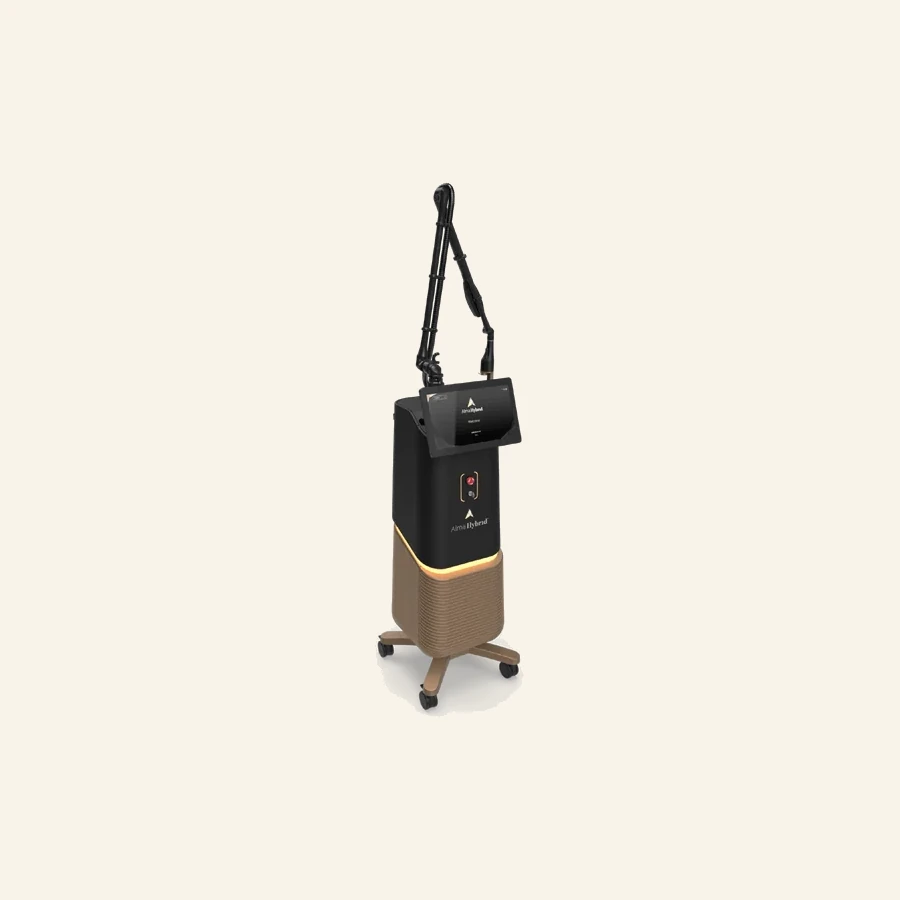
- Boxcar → ablative fractional CO2 laser (Lumenis AcuPulse), redefining the edges and stimulating new collagen. See CO₂ laser. Very sharp edges may also require punch elevation.
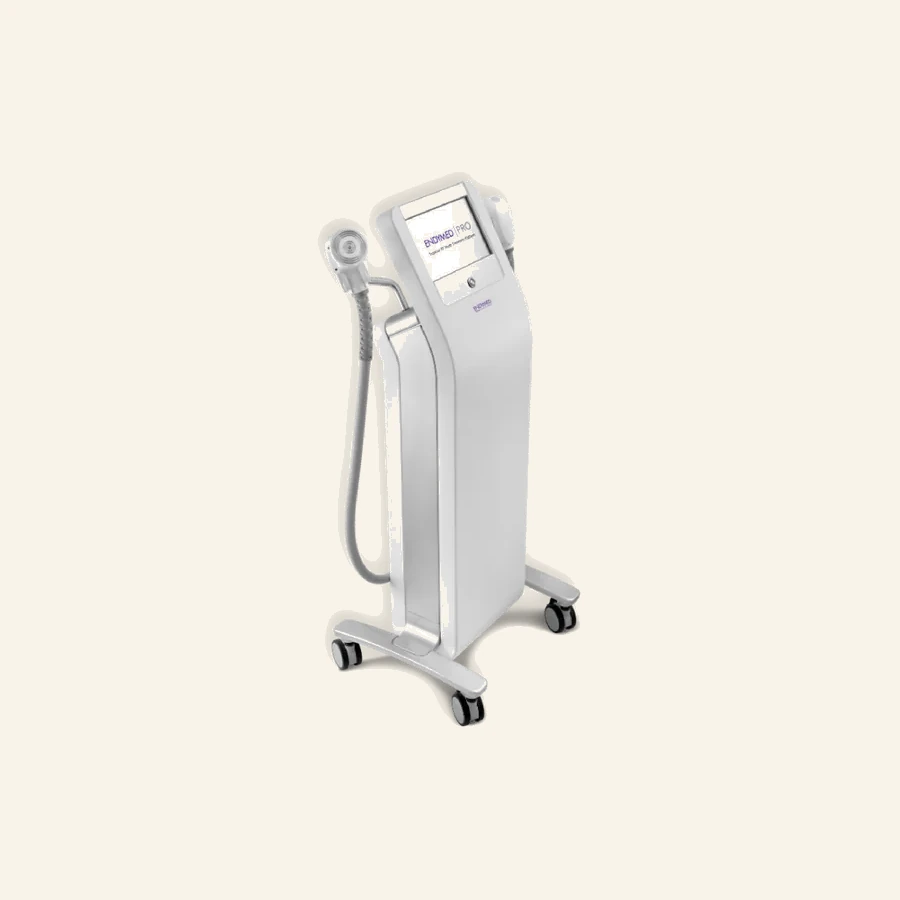
- General texture and shallow scarring → non-ablative fractional laser (Lumenis ResurFX) or radiofrequency microneedling (EndyMed PRO): less downtime, more gradual improvement, better tolerated in darker skin.
- Residual redness → intense pulsed light (Lumenis M22), which addresses the vessel, not the contour.
- Dark marks → photoprotection and time. Yes: the correct indication here is to perform no procedure at all.
How much will they improve? The honest expectation
Acne scars are improved, not erased. The realistic goal is skin that is markedly smoother and more even, where the scars stop being the first thing you see in a photograph — not skin as though the acne had never happened. Anyone promising the latter is selling something biology does not provide.
Improvement is progressive and cumulative: built across several spaced sessions and months of collagen remodelling. Much of the CO2 result appears between the third and sixth month after the session, not the following week. Patience is part of the treatment.
And deep ice-pick scars will remain the most stubborn, even when everything is done well. Saying so beforehand prevents disappointment afterwards.
The risk that matters in Mexico: darker skin
Most of our patients are Fitzpatrick IV to VI. In those skin types, aggressive resurfacing can trigger post-inflammatory hyperpigmentation — trading a scar for a dark patch that lasts months. It is the classic error of treating Latin skin with protocols designed for fair skin.
So we work with conservative settings, with skin preparation beforehand, with spaced sessions and, in many cases, preferring non-ablative technology or radiofrequency microneedling over CO2 at full power. A good result in darker skin is built slowly; forcing it is the fastest way to ruin it.
What does the consultation involve?
The skin is examined under side lighting — which is what reveals true contour, invisible under the flat frontal light of a bathroom mirror. The skin is stretched to separate mark from scar, the coexisting scar types are counted, and a staged plan is defined: what is done first, what comes later, and what does not need doing at all.
You should leave that consultation with three things clear: the type of your scars, the approximate number of stages, and the realistic ceiling of improvement in your specific case.
Why with a plastic surgeon
Half of acne scar treatment — subcision, punch excision, edge elevation — is skin surgery performed in millimetres. The other half is technology. A clinic that only owns devices can only offer the half it owns, which is why so many patients end up buying laser sessions for scars the laser was never going to solve.
Scars are treated at the Clínica Dermatológica y Cirugía Estética de Puebla, running since 1971, where both halves sit under one roof.
Dr. Arístides Arellano is a plastic surgeon holding a specialty licence: he practises under a Mexican medical licence (D.G.P. 1125959) and a specialty licence in Plastic & Reconstructive Surgery (0002008), both issued by the Directorate General of Professions (DGP), which reissued his certificate of professional standing in 2025. His career began before Mexico’s present-day specialty-board system existed: he belongs to the founding generation of plastic surgery in Puebla, the second generation of a surgical tradition started in 1971 by Dr. Francisco Arellano Ocampo. Trust is verified, not promised: both licences are public and anyone can look them up in the DGP’s National Registry of Professionals.
Before-and-after photographs
Most patients want to see before-and-after photographs before deciding. Out of respect for each person’s privacy, Dr. Arístides Arellano shows real cases —always with documented consent— during your in-person consultation, where you can review results from patients with a starting point similar to yours. Results may vary from patient to patient.
Risks and expectations
Every medical treatment —topicals, peels and energy-based devices included— carries risk and requires a prior assessment. In darker skin (Fitzpatrick IV–VI, the most common phototypes in Mexico) a poorly indicated procedure can darken the patch instead of lightening it. Results may vary according to each patient, their phototype and their individual triggers.
What does acne scar treatment cost?
It depends entirely on the scar type and how many stages are required. As a reference, non-ablative fractional laser (ResurFX) sessions for scarring cost $8,000 MXN, and CO₂ laser resurfacing starts at $25,000 MXN. Approximate price — the definitive cost is set at your private consultation with Dr. Arístides Arellano.
Minor surgical procedures — subcision, punch excision — are quoted according to the number of scars treated and are defined at the consultation. See the full price list.
Which CO₂ laser suits which acne scar
Not all acne scars are treated the same way, or with the same laser. The practical distinction: fractional CO₂ (AcuPulse) resurfaces the surface and improves the whole — texture, pores, rolling scars; surgical CO₂ (NovaPulse) cuts, and its place is in individual scars that need excision or release.
CO₂ emits at 10,600 nm, a wavelength that tissue water absorbs almost completely. It therefore cuts in a very thin layer and seals the finest vessels as it goes: it incises and coagulates in the same pass.
In practice, a face with mixed scarring usually needs more than one tool and more than one session: subcision for tethered depressed scars, targeted excision of an isolated scar, and fractional treatment for the whole. Dr. Arístides Arellano, plastic surgeon in Puebla, plans according to the scar type, not according to the equipment available.
Trust is verified, not promised. All 210 scanned documents —degree, licences, diplomas, publications and certificates, from 1977 to 2025— are open in Dr. Arístides Arellano’s credential archive, alongside an explanation of the difference between a specialty licence and a board certification.
Recovery · step by step
- Days 1–3 (after fractional CO2)Intense redness, a sunburn-like sensation and swelling. The skin weeps slightly. It is kept moist with the prescribed ointment and not touched.
- Days 4–7Grid-pattern flaking with pink skin underneath. Normal activity can resume with strict photoprotection; mineral make-up is usually cleared toward the end of this phase.
- Weeks 2–4Residual redness settles. The result is NOT visible yet: the skin is only beginning to lay down new collagen.
- Months 3–6This is where the real result appears. Collagen remodels and scar depth progressively decreases. This is when we assess whether another session is needed.
- After subcisionBruising and temporary firmness of the area for 1–2 weeks; this is expected and part of the mechanism. Scar elevation is judged at 6–8 weeks.
- ThroughoutRigorous SPF 50+ photoprotection for the entire process. Sun on freshly treated skin is the direct route to the dark patch we were trying to avoid.
Frequently asked questions
Do acne scars go away completely?
No. They improve markedly, but they are not erased. The realistic goal is much smoother, more even skin — not skin as though the acne had never happened. Deep ice-pick scars remain the most stubborn even with correct treatment. Results may vary.
I have red and dark marks from acne. Are those scars?
Almost certainly not. Red marks (post-inflammatory erythema) and brown ones (post-inflammatory hyperpigmentation) are changes in colour, not contour, and they fade on their own with time and photoprotection. Stretch the skin: if the mark disappears, it is a mark, and it needs no laser. Only a change in contour is a scar.
Does laser erase acne scars?
Laser improves boxcar scars and overall texture, but it does not resolve rolling scars — which are tethered by fibrous bands beneath the skin and require subcision, a surgical procedure — nor deep ice-pick scars, which require excision or TCA CROSS. That is why serious treatment is combined and never depends on a single machine.
Can I treat scars while I still have active acne?
It is not advisable. Every new breakout creates fresh scars on freshly treated skin. The acne is controlled first, the skin is allowed to stabilise, and the sequelae are treated afterwards. You must also disclose any isotretinoin use: it changes the procedure timeline.
How many sessions will I need?
It depends on the type and number of scars. A typical combined plan runs across several stages spaced over months. Be wary of closed packages sold before an assessment that distinguishes your scar types.
Is it safe in darker skin?
Yes, with conservative settings. The specific risk in phototypes IV–VI is post-inflammatory hyperpigmentation: trading the scar for a dark patch. It is prevented by preparing the skin, spacing sessions, and preferring — where appropriate — non-ablative technology or radiofrequency microneedling over CO2 at full power.
What does it cost?
Non-ablative fractional laser (ResurFX) sessions for scarring cost approximately $8,000 MXN, and CO₂ laser resurfacing starts at $25,000 MXN. Subcision and punch excision are quoted by the number of scars. The exact amount is confirmed at the in-person consultation.
The equipment used
Every case is different. Discuss yours in a personal consultation.
Book a consultation on WhatsAppEvery figure published on this site is approximate and is not a quote. Any procedure or treatment first requires a private assessment consultation with Dr. Arístides Arellano —$800 MXN, charged separately— and it is at that consultation that the definitive cost of your case is determined.
Educational content; it does not replace a medical consultation. Results may vary from person to person.