
Rosacea is not acne. The difference matters
Both produce bumps on the face, and there the resemblance ends. Confusing them is the most common and most expensive mistake, because the treatment for one aggravates the other.
- Acne has comedones — blackheads and whiteheads. Rosacea does not. This is the fastest way to tell them apart.
- Rosacea has background redness (persistent erythema on cheeks, nose, forehead and chin) and often visible capillaries (telangiectasia). Acne does not.
- Rosacea flushes: sudden episodes of redness with heat and burning, triggered by something. Acne does not.
- Acne belongs to adolescents and young adults; rosacea usually begins after 30, and is more common in fair skin — although on darker skin it is diagnosed late and badly, precisely because the redness is harder to see.
- Rosacea often involves the eyes (ocular rosacea): dryness, grittiness, burning, inflamed lids. Many patients spend years with “dry eye” without knowing it is the same disease.
The triggers: half the treatment
Rosacea is not “cured” by a drug because it is not an infection: it is skin that over-reacts. Identifying your triggers — not the generic list — is literally half the treatment, and it is free.
The most frequent and best documented: sun (the number-one trigger, by a distance), heat — ambient, saunas, very hot baths, cooking over a stove — alcohol (red wine notoriously), spicy food and very hot drinks, intense exercise, stress, and abrupt temperature changes.
The most useful tool we will ask you for is not a product: it is a diary. Two weeks of noting what you ate, what you drank, where you were and when you flushed reveals a personal pattern no consultation can guess.
The thing to say plainly: it is controlled, not cured
Rosacea is a chronic, relapsing condition. With the right plan the redness reduces markedly, flares space out, and visible capillaries can be cleared. But no treatment — topical, oral or laser — guarantees it will not come back. Stopping maintenance, a summer without protection, or a stressful season can reactivate it.
If someone promises to cure your rosacea definitively, that promise is not medical: it is commercial. The honest frame is a chronic disease kept under control — the way blood pressure is controlled. Within that frame, results are good and durable.
Treatment has two halves, and both must be done
The medical half. The inflammation, papules, pustules and ocular rosacea are treated medically, with topical and where appropriate systemic therapy, under prescription and follow-up. That part belongs to the clinic’s dermatology consultation — the same consultation with which Dr. Francisco Arellano Ocampo founded the house in 1971 — not to a laser device. No drug names or doses are published here: they are prescribed in consultation.
The vascular half. The background redness and dilated capillaries do not respond to creams. They are blood vessels, and they are treated with light. This is where technology genuinely contributes, and it is Dr. Arístides Arellano’s ground.
Doing only the medical half leaves the face red. Doing only the vascular half leaves the disease active underneath, and the capillaries return sooner. Both are done.
Intense pulsed light (IPL) for the vascular component
The Lumenis M22’s intense pulsed light (Lumenis, Israel) emits light that is selectively absorbed by the haemoglobin in dilated vessels. The vessel heats, collapses, and the body reabsorbs it. The surrounding skin is left intact.
It is the reference treatment for the persistent erythema and telangiectasia of rosacea, and is usually planned as a series of 3 to 5 sessions spaced 3 to 4 weeks apart, with maintenance afterwards. The improvement in background redness is visible and, for many patients, it is what most changes the face in the mirror.
Two necessary honesties. First: capillaries can return, especially if the triggers stay active — IPL does not cure the tendency, it clears the result of the tendency. Second: on darker skin IPL demands more care, because melanin competes for the energy; conservative settings are used, and in high phototypes we assess whether IPL is the right tool at all.
What NOT to do with rosacea
Almost all the damage we see in consultation is self-inflicted with good intentions:
- Treating it like acne. Scrubs, brushes, alcohol toners and aggressive peels further inflame already inflamed skin.
- Using topical steroids “because they take the redness down”. They reduce redness for a few days and then make it severely worse: steroid-induced rosacea is among the worst seen, and it is avoidable.
- Ignoring the eyes. If there is burning, dryness or grittiness, say so. Untreated ocular rosacea can affect the cornea.
- Skipping sunscreen. It is the number-one trigger. Without daily photoprotection, everything else works less well.
- Pointing a powerful laser at active, inflamed rosacea before the disease is controlled. Order matters: put the fire out first, then clear the ashes.
What does it cost?
The dermatology consultation and medical plan are quoted separately from the vascular component. The number of IPL sessions depends on the extent of the erythema and the capillaries. It is defined at consultation. See prices.
Related guide: Is there a cure for rosacea?
Track record and credentials
Rosacea is managed at the Clínica Dermatológica y Cirugía Estética de Puebla, in operation since 1971. The disease is controlled in the clinic’s dermatology consultation; the vascular component is treated by Dr. Arístides Arellano with the practice’s light platform. Both under the same roof.
Dr. Arístides Arellano is a plastic surgeon holding a specialty licence: he practises under a Mexican medical licence (D.G.P. 1125959) and a specialty licence in Plastic & Reconstructive Surgery (0002008), both issued by the Directorate General of Professions (DGP), which reissued his certificate of professional standing in 2025. His career began before Mexico’s present-day specialty-board system existed: he belongs to the founding generation of plastic surgery in Puebla, the second generation of a surgical tradition started in 1971 by Dr. Francisco Arellano Ocampo. Trust is verified, not promised: both licences are public and anyone can look them up in the DGP’s National Registry of Professionals.
Before-and-after photographs
Most patients want to see before-and-after photographs before deciding. Out of respect for each person’s privacy, Dr. Arístides Arellano shows real cases —always with documented consent— during your in-person consultation, where you can review results from patients with a starting point similar to yours. Results may vary from patient to patient.
Risks and expectations
Every medical treatment —topicals, peels and energy-based devices included— carries risk and requires a prior assessment. In darker skin (Fitzpatrick IV–VI, the most common phototypes in Mexico) a poorly indicated procedure can darken the patch instead of lightening it. Results may vary according to each patient, their phototype and their individual triggers.
Trust is verified, not promised. All 210 scanned documents —degree, licences, diplomas, publications and certificates, from 1977 to 2025— are open in Dr. Arístides Arellano’s credential archive, alongside an explanation of the difference between a specialty licence and a board certification.
Control and maintenance plan
- ConsultationDistinguished from acne and seborrheic dermatitis. Eyes checked. Subtype identified.
- Weeks 1–2Trigger diary. Daily photoprotection and gentle cleansing. Scrubs and alcohol out.
- Months 1–3Medical treatment in the dermatology consultation: put out the inflammation first.
- Months 2–4IPL (M22) for erythema and capillaries. Series of 3–5 sessions every 3–4 weeks.
- MaintenanceLifelong trigger control. Top-up sessions as capillaries reappear.
- RelapseExpected, not a failure. The plan resumes.
Frequently asked questions
Is there a cure for rosacea?
No. Rosacea is a chronic inflammatory skin disease: it is controlled very well, but it is not cured. With medical treatment, trigger control and IPL for the capillaries, redness reduces markedly and flares space out. But it can reactivate with sun, heat, alcohol or stress. Anyone promising a definitive cure is making a commercial promise, not a medical one.
How do I know if it is rosacea or acne?
The quickest clue is comedones: acne has blackheads and whiteheads, rosacea does not. Rosacea also has background redness, visible capillaries and sudden flushing episodes triggered by something, usually begins after 30, and frequently involves the eyes. Telling them apart matters, because aggressive anti-acne treatments make rosacea worse.
Does IPL clear the redness?
It substantially reduces persistent erythema and clears dilated capillaries, because the light is absorbed by haemoglobin and the vessel collapses. It is usually planned as a series of 3 to 5 sessions. What it does not do is cure the tendency: if triggers stay active, capillaries can return, which is why it is always combined with medical control and photoprotection.
Can I use steroids to reduce the redness?
No, and it is one of the worst mistakes in rosacea. Topical steroids reduce redness for a few days and then make it severely worse: steroid-induced rosacea is among the hardest presentations to treat, and it is entirely avoidable. Any rosacea medication is prescribed and supervised in consultation.
What triggers rosacea flares?
The best documented are sun (the main one), heat, alcohol — red wine notoriously — spicy food and very hot drinks, intense exercise, stress and abrupt temperature changes. Triggers are personal, which is why the most useful tool is a two-week diary: it reveals a pattern no consultation can guess.
Does rosacea affect the eyes?
Frequently, and it is often missed. Ocular rosacea causes dryness, burning, grittiness and inflamed eyelids; many patients spend years being treated for “dry eye” without knowing it is the same disease. If you have eye symptoms, mention them: untreated ocular rosacea can affect the cornea.
The equipment used
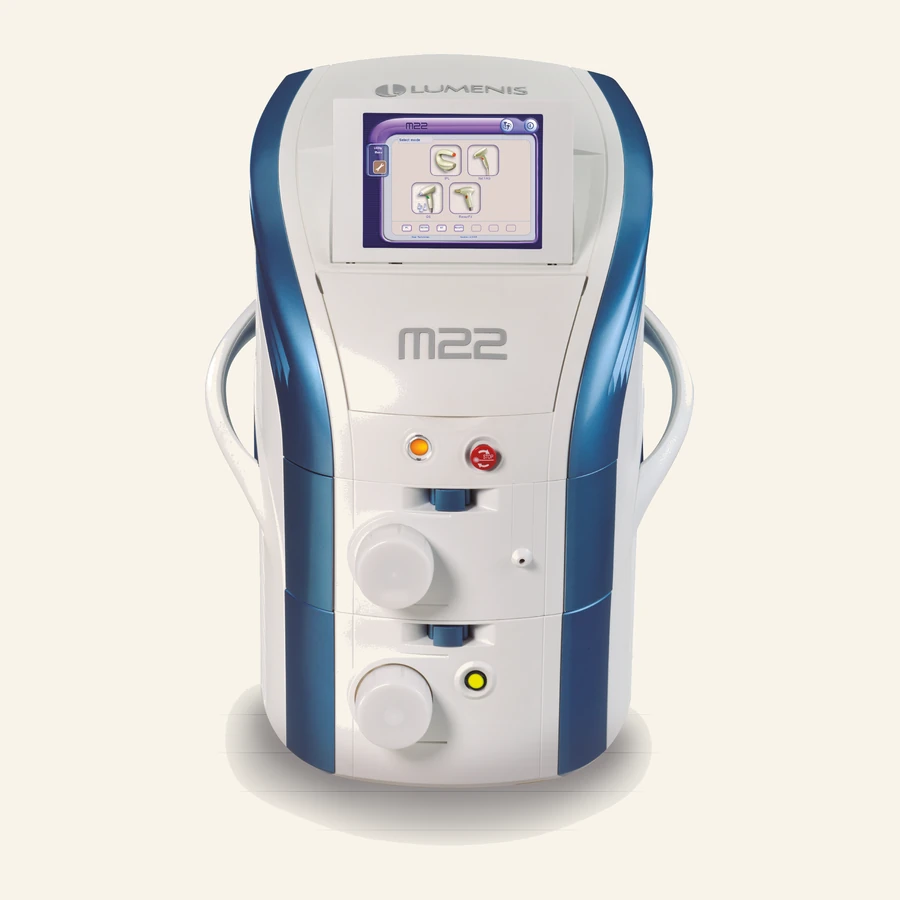
Every case is different. Discuss yours in a personal consultation.
Book a consultation on WhatsAppEvery figure published on this site is approximate and is not a quote. Any procedure or treatment first requires a private assessment consultation with Dr. Arístides Arellano —$800 MXN, charged separately— and it is at that consultation that the definitive cost of your case is determined.
Educational content; it does not replace a medical consultation. Results may vary from person to person.