What is buccal fat removal?
Buccal fat removal is the partial surgical extraction of the buccal fat pads: fat pockets located in the mid-lower cheek, between the masseter muscle and other facial structures. Removing a portion of this fat reduces lower-cheek volume, which slims the facial oval and accentuates the cheekbones.
Not all the fat is removed —only a measured portion— to keep the result natural and avoid premature facial hollowing. It is one of the most sought-after facial aesthetic procedures for those who want to slim the face without a major operation.
Technique used by Dr. Arístides Arellano
The procedure is performed through an intraoral incision (inside the mouth, at cheek level), so it leaves no visible skin scar. Through this small incision, a measured portion of the buccal fat pad is identified and removed on each side, taking care to leave enough tissue for a result proportionate to the rest of the face.
How is it performed?
It is performed under local anaesthesia with sedation in most cases, though it can be combined with general anaesthesia if performed alongside another facial procedure. It is a short outpatient procedure —approximately 30 to 45 minutes— and the patient goes home the same day.
All surgery carries risk and requires prior medical assessment. Results may vary according to each patient, their bone structure and their facial fat distribution.
Who is a good candidate?
- A rounded face from excess volume in the mid-lower cheek, with bone structure and skin that can support a change in proportion.
- Good general oral health.
- People with an already slim face, or a predisposition to future facial hollowing, must be assessed with particular caution: buccal fat removal is permanent.
- Realistic expectations: the goal is to refine the facial oval, not to create defined cheekbones on its own — that depends on bone structure.
Recommended post-surgical treatments
For a more comfortable recovery, Dr. Arístides may recommend facial manual lymphatic drainage once the initial phase has passed. See the full guide: Post-surgical recovery and care.
What a buccal fat removal does NOT do
This is the most useful section on the page, because most of what is promised about this operation online is untrue. Buccal fat removal takes out the buccal fat pads — two deep fat deposits in the cheek. That is all it does, and three things follow that are worth saying plainly:
- It does not define the jawline. The jaw line is drawn by bone, the masseter muscle and the skin of the neck. The buccal pad sits above and inside that zone: removing it slims the midface, not the jaw border.
- It does not remove a double chin. That is submental fat, below the chin, in a different compartment reached a different way. That is a submental liposuction — a separate operation, even when done on the same day.
- It does not slim a round face caused by weight. If the volume comes from generalized subcutaneous fat rather than the buccal pad, removing the pad changes little and the result disappoints.
- It is not a weight-loss procedure and it substitutes for nothing. It is a change of proportion measured in millimetres, not in dress sizes.
Buccal fat removal and submental liposuction: what each one corrects
This is the most common confusion and the one that wastes the most money, because many people ask for one when what bothers them is corrected by the other. The difference is anatomical and simple:
- Buccal fat removal — the cheek, the midface. Entered from inside the mouth, removing the buccal pad. It slims below the cheekbone and lightly marks the cheek hollow.
- Submental liposuction — under the chin and the neck. Entered through a tiny incision beneath the chin, aspirating submental fat. It defines the angle between neck and jaw.
- Together — a reasonable and common combination when both genuinely apply, done in one operation. But they are indicated separately: needing one does not imply needing the other.
- Neither corrects skin laxity or a recessed chin. If the problem is hanging skin the answer is a facelift; if it is a short chin, a chin implant.
Badly done buccal fat removal, and why it cannot be undone
"Buccal fat removal gone wrong" is searched constantly and deserves a serious answer rather than silence. The error is almost always the same: taking out too much. The buccal pad does not grow back. Tissue removed does not return, and no operation restores it properly — grafting fat into that area corrects only partially and does not reproduce the original structure.
Over-resection produces a hollowed face, with a depression below the cheekbone that light exaggerates further, and which ages the face instead of refining it. It is the opposite of what the patient came for.
That is why the surgical judgement here is deliberately conservative: the appropriate portion is removed and the part that provides support is left alone. A discreet, stable result is worth more than a striking one at three months that is regrettable at ten years.
What happens with age — the argument almost nobody explains
This is why a plastic surgeon says no more often than an aesthetic clinic does. The face loses volume with age: deep fat reabsorbs and descends, cheekbones flatten and the midface hollows on its own, with nobody helping. It is a normal, universal process.
Removing deep fat at 25 from a face that is already slim brings that process forward. The result may please at six months and look gaunt at forty-five, and by then there is no tissue to give back. It is why candidate selection matters more in this operation than technique does.
In a genuinely full face, with a wide cheek and good cheekbone projection, buccal fat removal ages well and the result holds, because there is volume to spare. The right question is not "can I have it?" but "will it still suit me in twenty years?".
Buccal fat removal in men
It is performed on men and the indication is the same, but the aesthetic goal is not. In a male face the ideal is usually a flat, firm midface rather than a hollow one: an over-marked cheek feminizes the face and removes the sense of width that reads as strength.
So in men the amount removed tends to be even more conservative, and frequently what actually bothers him is not the cheek but the neck. In those cases the right operation is a submental liposuction, alone or combined.
Why this page publishes no before-and-after photos
Many people arrive searching for "buccal fat removal before and after", and we would rather explain why you will not find them here than fill the space with catalogue images.
The first reason is honest: the change from a well-executed buccal fat removal is subtle. It is millimetres in the midface. The dramatic transformations circulating on social media are almost always something else — weight loss, a different angle, different lighting, or several procedures performed at once — and publishing those as the result of buccal fat removal alone would sell an expectation the surgery does not meet.
The second is that the practice archive holds no photographic series of this operation at the quality and consent standard we require for publication. We would rather have no gallery than a misleading one. At your in-person consultation Dr. Arístides can show you clinical material and, more importantly, tell you whether the change is worth it on your particular face.
Approximate price
Buccal fat removal has a reference cost of $6,000 MXN. Approximate price — the definitive cost is set at your private consultation with Dr. Arístides Arellano. The final cost may vary if it is combined with another facial procedure in the same operation. Full breakdown: how much buccal fat removal costs in Mexico — the price table, what the figure includes and what it does not.
About Dr. Arístides Arellano
Dr. Arístides Arellano is a plastic surgeon holding a specialty licence: he practises under a Mexican medical licence (D.G.P. 1125959) and a specialty licence in Plastic & Reconstructive Surgery (0002008), both issued by the Directorate General of Professions (DGP), which reissued his certificate of professional standing in 2025. His career began before Mexico’s present-day specialty-board system existed: he belongs to the founding generation of plastic surgery in Puebla, the second generation of a surgical tradition started in 1971 by Dr. Francisco Arellano Ocampo. Trust is verified, not promised: both licences are public and anyone can look them up in the DGP’s National Registry of Professionals.
Documented training in facial aesthetics and anatomy
Buccal fat removal is a small operation with a large margin for error: taking too much ages the face permanently. Dr. Arístides Arellano is fully licensed — professional and specialty cédula — and facial anatomy is a documented part of his postgraduate training:
- Course: Applied anatomy for plastic surgery — Sociedade Brasileira de Cirurgia Plástica — Regional do Rio de Janeiro
- Course: facial aesthetics — XXVI Congresso Brasileiro de Cirurgia Plástica · Blumenau, 1989
- Facial surgery course — Sociedade Brasileira de Cirurgia Plástica · Río de Janeiro
- DGP specialty authorization — AE-002008 — Dirección General de Profesiones (DGP) · México D.F., 27 de marzo de 1990
Trust is verified, not promised. All 210 scanned documents —degree, licences, diplomas, publications and certificates, from 1977 to 2025— are open in Dr. Arístides Arellano’s credential archive, alongside an explanation of the difference between a specialty licence and a board certification.
Recovery · step by step
- Days 1–3Cheek swelling (more noticeable than most patients anticipate) and mild-to-moderate discomfort managed with analgesia; soft or liquid diet.
- Days 4–7Swelling decreases progressively; good oral hygiene and the prescribed rinses are advised for intraoral healing.
- Week 2Visible swelling improves considerably; most social activities can resume.
- Weeks 4–8The definitive facial-oval result becomes clear as residual swelling resolves.
Risks and contraindications
Buccal fat removal is a short operation, but it works in dense anatomical territory — the parotid duct and branches of the facial nerve cross the area — and it removes a tissue that does not grow back. Those two facts define its risks:
- Parotid (Stensen’s) duct injury: the duct draining saliva from the parotid gland runs beside the buccal fat pad; injury is infrequent and requires repair.
- Facial nerve branch injury: the buccal branch runs near the surgical field; involvement usually causes temporary weakness of one movement and is rarely persistent.
- Over-resection: buccal fat does not regenerate. Removing too much produces, over the years, a gaunt face that is difficult to correct; that is why resection is conservative and this procedure is not for every face.
- Hematoma: blood collecting in the cheek, which may need drainage.
- Infection: access is from inside the mouth, so post-operative oral hygiene is part of the treatment.
- Asymmetry: the two fat pads are not the same size to begin with; a visible difference can remain.
- Temporary trismus: transient difficulty opening the mouth due to swelling, easing within days.
Buccal fat removal is postponed or reconsidered in these situations:
- A thin face with little facial fat: today’s “excess” can be tomorrow’s hollowing, because the face naturally loses volume with age. Measuring this is exactly what the consultation is for.
- Active oral infection or untreated poor dental hygiene: resolved first with the dentist.
- Age: the older the patient, the more cautiously removal must be weighed against natural volume loss.
- Expecting buccal fat removal to “slim” a face whose contour is set by bone or by submental fullness: identifying where the contour comes from is part of the consultation.
Frequently asked questions
How much does buccal fat removal cost in Puebla?
The reference price is approximately $6,000 MXN. The exact amount is confirmed at your in-person consultation with Dr. Arístides Arellano, and may vary if combined with another facial procedure.
What is buccal fat removal and what is it for?
It is the partial surgical removal of the buccal fat pads, natural fat pockets in the mid-lower cheek. Reducing their volume slims the facial oval and accentuates the cheekbones.
Does buccal fat removal leave a scar?
No. The incision is made inside the mouth (intraoral route), so no visible scar remains on the skin.
Who is a candidate for buccal fat removal?
People with a rounded face from excess cheek volume, with a bone structure that supports the change. It is not recommended for already-slim faces because of the risk of a hollow appearance long term; this is assessed individually at consultation.
Is buccal fat removal permanent?
Yes: the fat removed does not re-form. That is why the amount extracted is measured carefully during surgery, seeking a natural result proportionate to the rest of the face.
How long is recovery after buccal fat removal?
Initial swelling is noticeable during the first week and improves progressively; the definitive facial-oval result is seen between the fourth and eighth week. Results may vary.
What is the difference between buccal fat removal and submental liposuction?
They are different operations on different fat. Buccal fat removal takes out the buccal pad, which sits in the cheek, and is done from inside the mouth; it slims the midface. Submental liposuction aspirates the fat beneath the chin and defines the angle between neck and jaw. Both can be done on the same day when both are indicated, but needing one does not mean needing the other.
What does a badly done buccal fat removal mean?
It almost always means one thing: more tissue was removed than it should have been. The buccal pad does not grow back, so excess cannot be undone; grafting fat afterwards corrects only partially and does not reproduce the original structure. Over-resection produces a hollowed face, with a depression under the cheekbone that ages the face rather than refining it. That is why a conservative approach is not timidity — it is what protects the long-term result.
How does buccal fat removal look years later?
The face loses volume with age naturally: deep fat reabsorbs, cheekbones flatten and the midface hollows on its own. Buccal fat removal brings that process forward. In a genuinely full face the result ages well because there is volume to spare; in an already slim face it may please at six months and look gaunt twenty years later, when there is no tissue left to give back. This is why candidate selection matters more than technique.
What are the consequences of buccal fat removal?
The expected ones are cheek swelling for one to two weeks and discomfort chewing for the first few days. Surgical risks include asymmetry, haematoma, infection and, uncommonly, injury to the parotid duct or to branches of the facial nerve, which run near the operative field. The consequence that cannot be corrected is over-resection. All of this is explained at the assessment, before any decision.
Does buccal fat removal define the jawline?
No. The jaw line is defined by bone, the masseter muscle and the skin of the neck, and the buccal pad sits above and inside that zone. Buccal fat removal slims the midface. If what you want is definition of the jaw border and the neck, what should be assessed is a submental liposuction, and in some cases the chin.
Is buccal fat removal done on men?
Yes, and the technique is the same, but the aesthetic goal changes. In a male face the ideal is usually a flat, firm midface rather than a hollow one, because an over-marked cheek feminizes the face. So a more conservative amount is removed in men, and frequently what actually bothers him is the neck, not the cheek.
Does buccal fat removal help a square face?
It depends on what produces that shape. If the width comes from the masseter muscle or from bone, buccal fat removal will not change it, because it acts on a different plane. If it comes from a genuine deep fat accumulation in the cheek, it does slim it. Telling one from the other is exactly what the assessment is for, and why it cannot be answered from a photograph.
Can buccal fat removal be combined with rhinoplasty?
Yes, and it is a frequent combination, because both work on the proportions of the same face and share one anaesthetic and one recovery. It is assessed case by case according to total operating time and general health, and decided at consultation.
Why are there no before-and-after photos of buccal fat removal on this page?
For two reasons. First, the change from a well-executed buccal fat removal is subtle, a matter of millimetres: the dramatic transformations circulating on social media are usually weight loss, a different angle, different light or several procedures at once, and publishing those as the result of this operation alone would sell a false expectation. Second, the practice archive holds no series of this surgery at the quality and consent standard we require for publication. Clinical material can be reviewed at the in-person assessment.
Can buccal fat removal be reversed?
Not strictly. The buccal pad does not grow back and removed tissue is not recovered. If the result is excessive, the only option is a fat graft that fills partially and does not restore the original structure. That is why too little is removed rather than too much.
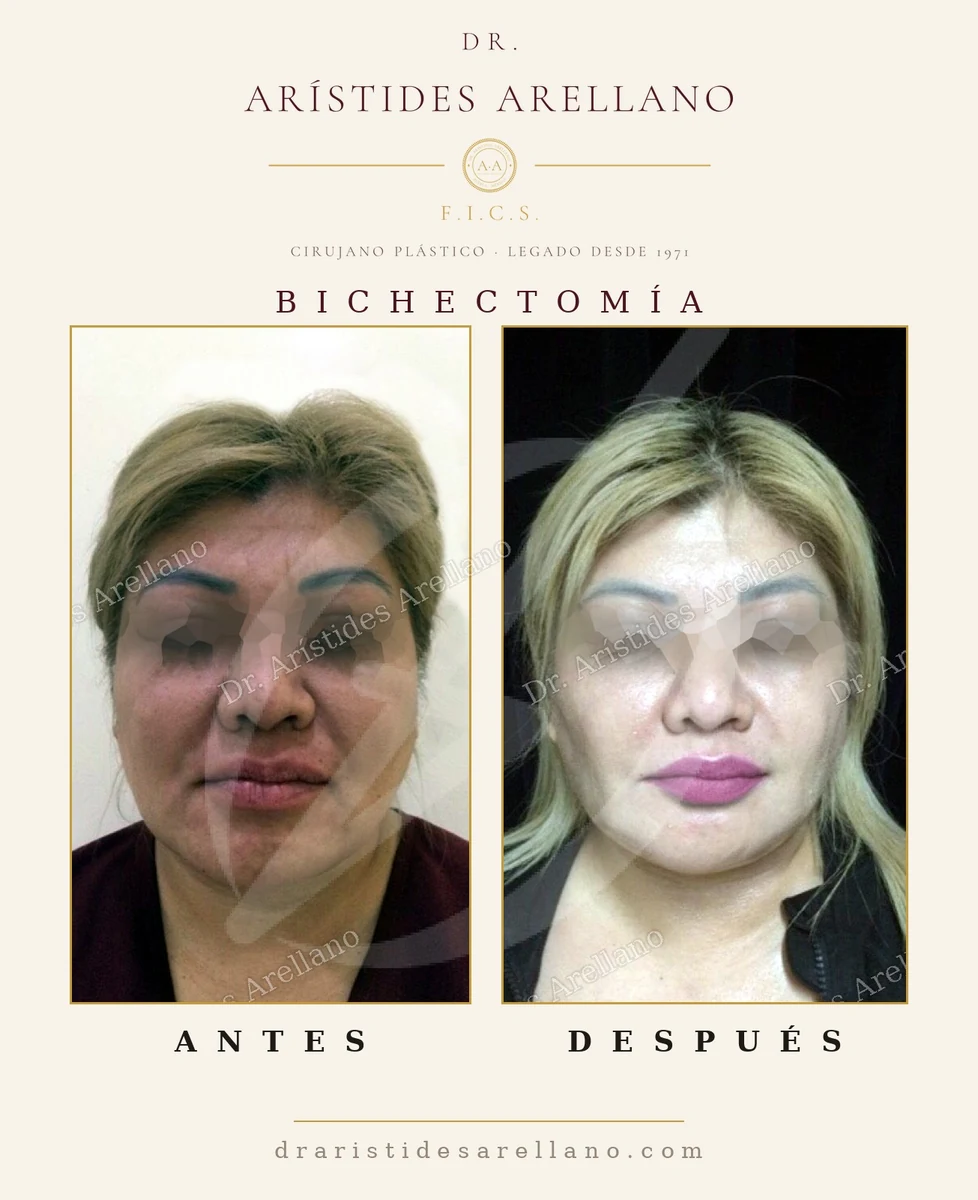
Before and after
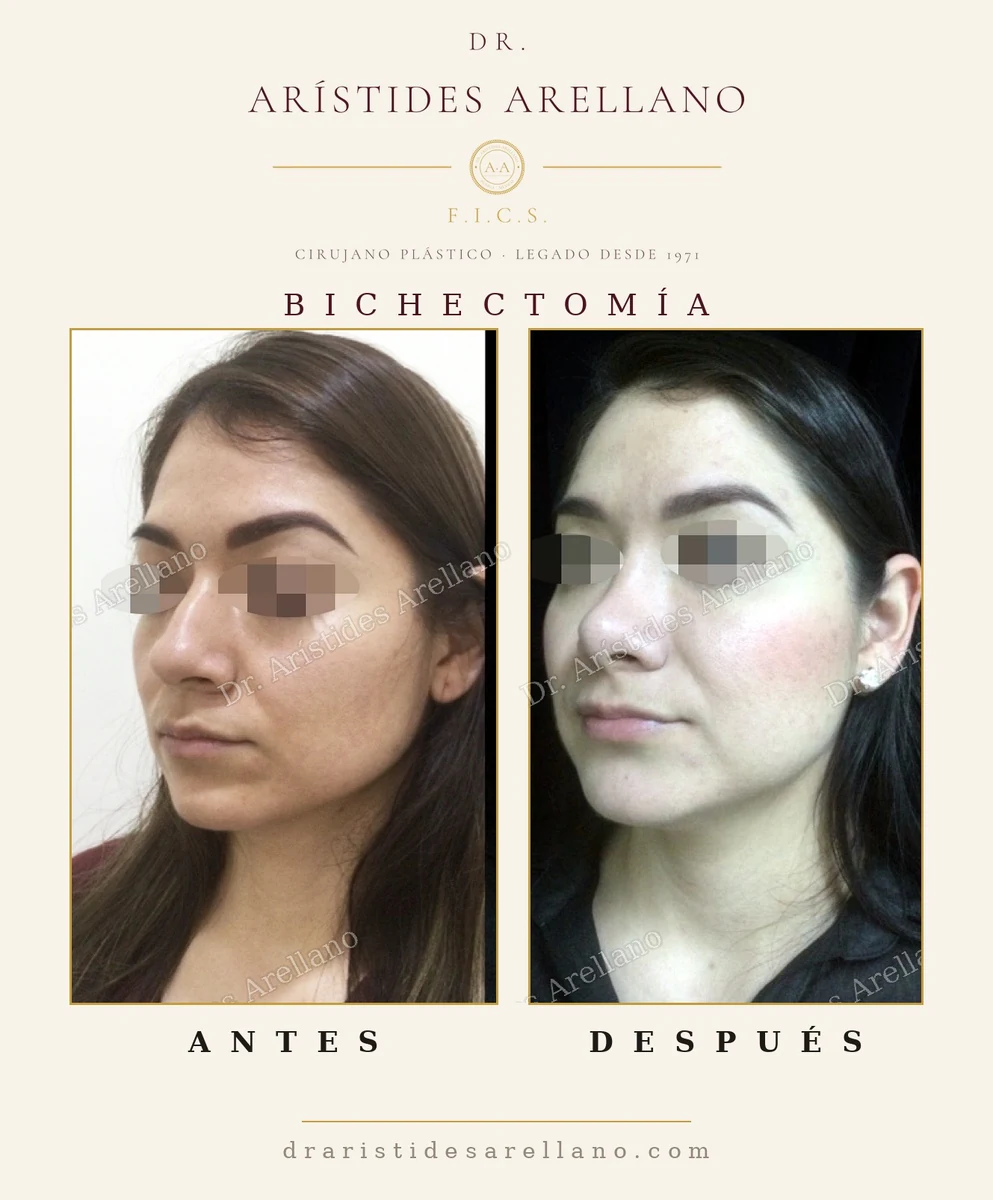
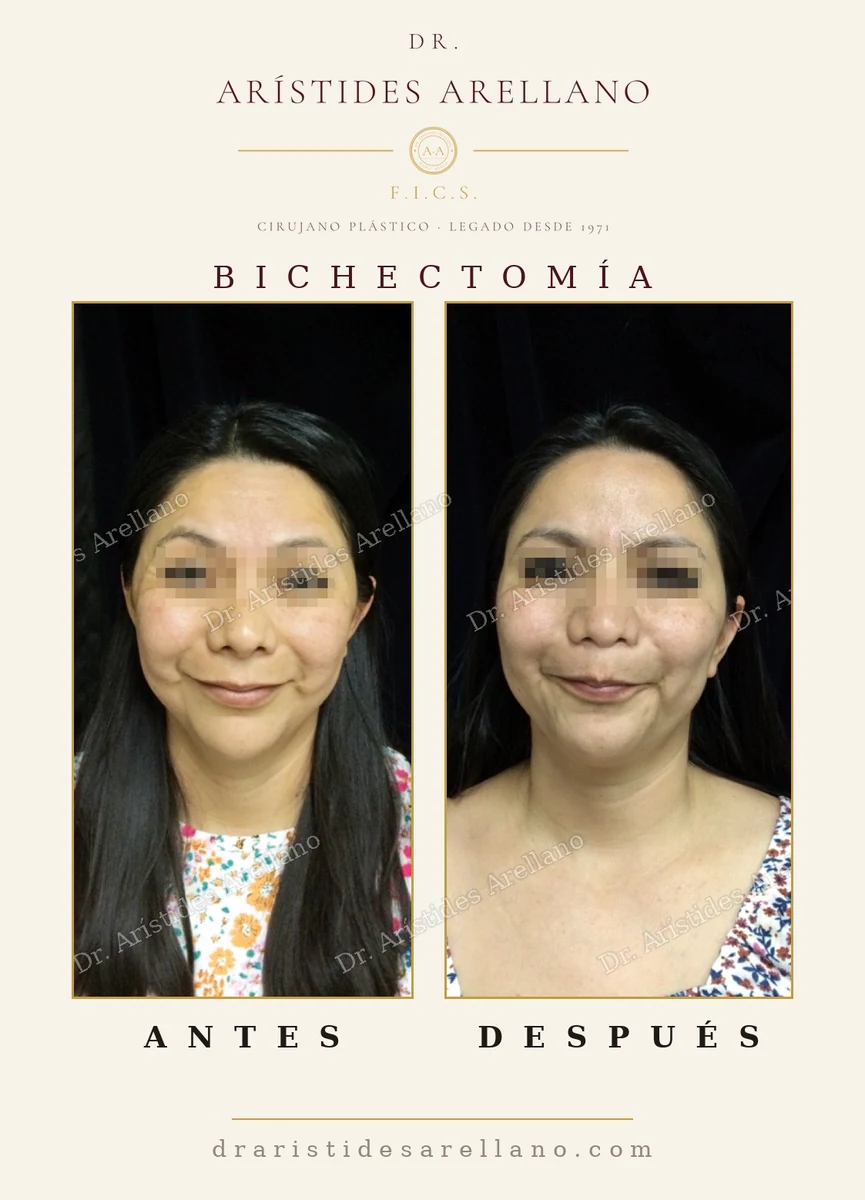
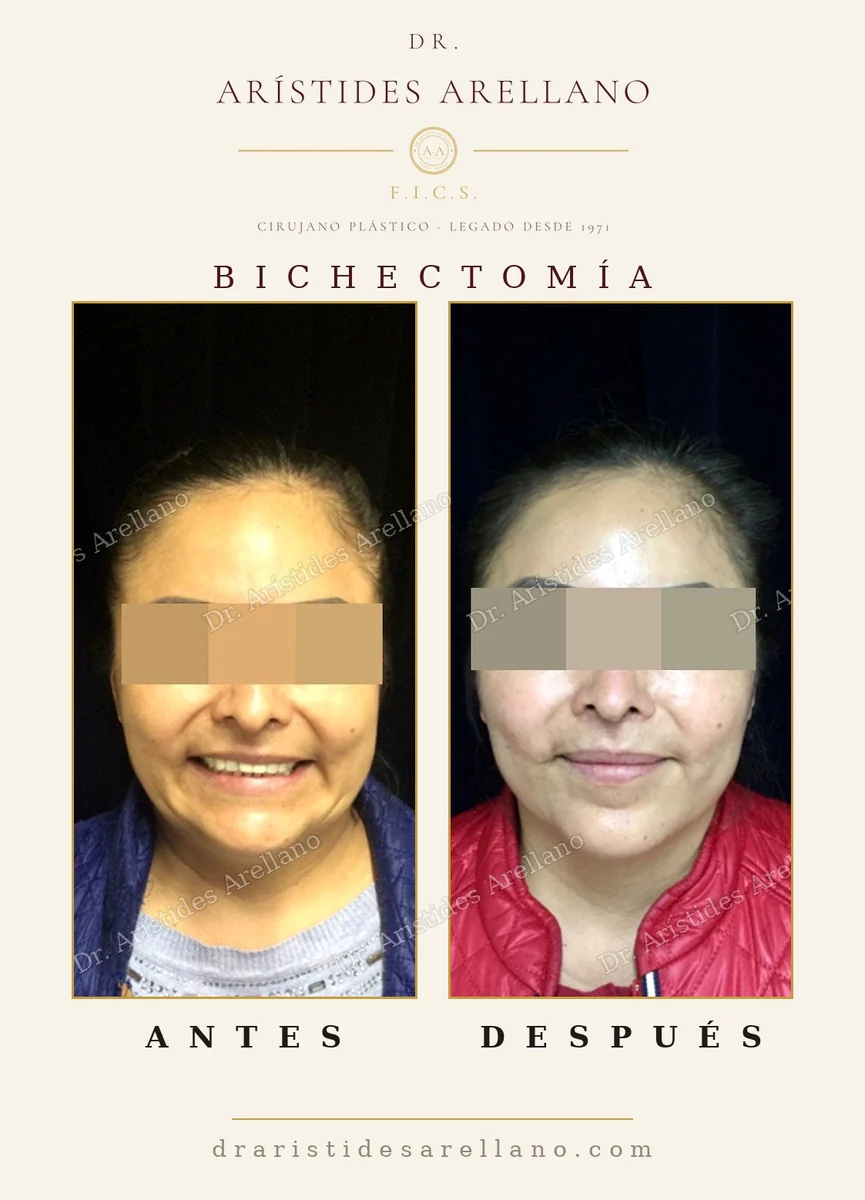
What is buccal fat removal? It is the removal of the buccal fat pads, two fat packets in the cheek beneath the muscle. Access is from inside the mouth, so it leaves no visible scar. It slims the lower third of the face and, by contrast, makes the cheekbone read more. It does not slim the whole face, and it is not a substitute for losing weight. All surgery carries risks and requires a prior medical assessment; results vary from person to person.
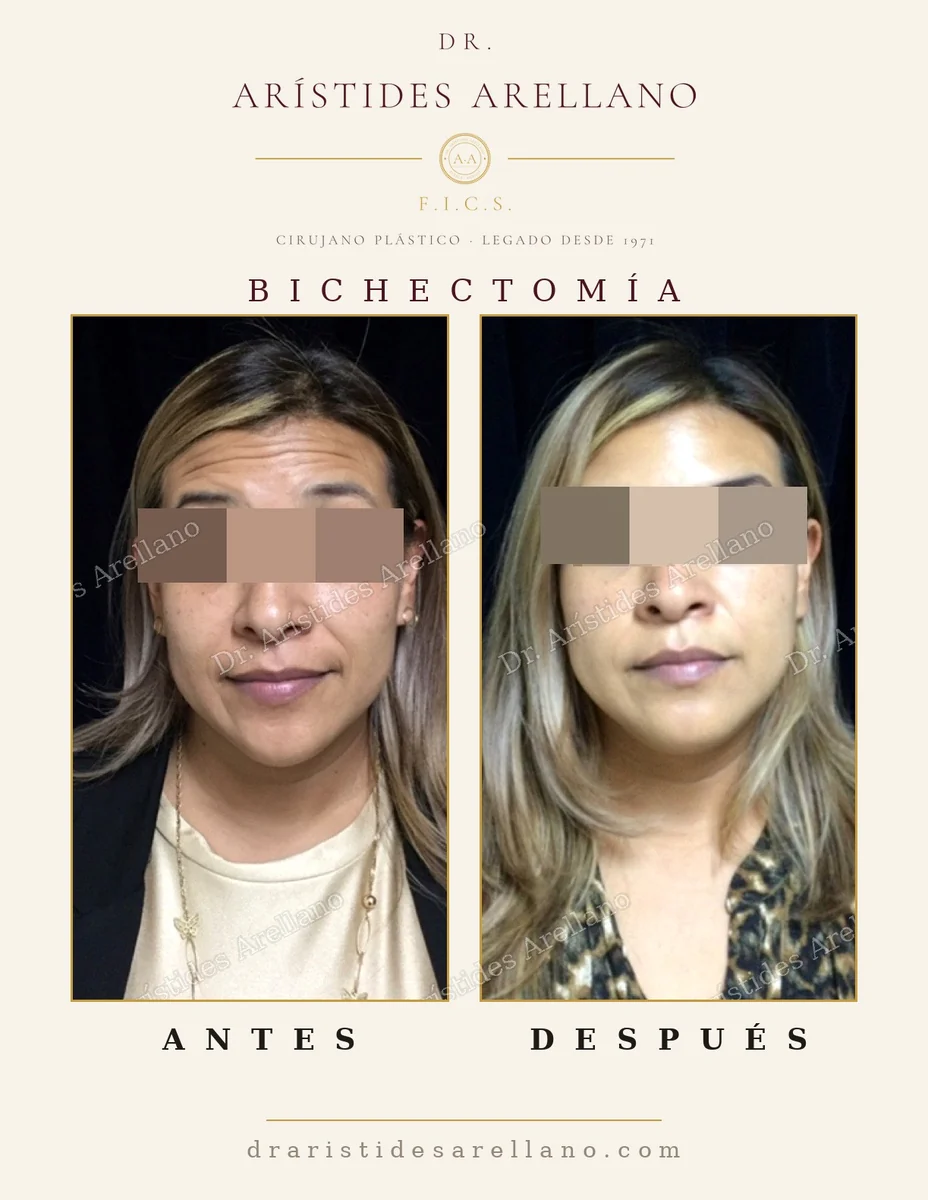
How much does buccal fat removal cost? Here it starts at approximately MX$6,000, including follow-up; the assessment consultation is billed separately. It is one of the most affordable procedures on the list because it is done under local anaesthetic and takes under an hour — not because it is trivial: it is performed alongside structures that must be respected. The definitive cost of each case is set at the private assessment consultation. All surgery carries risks and requires a prior medical assessment; results vary from person to person.
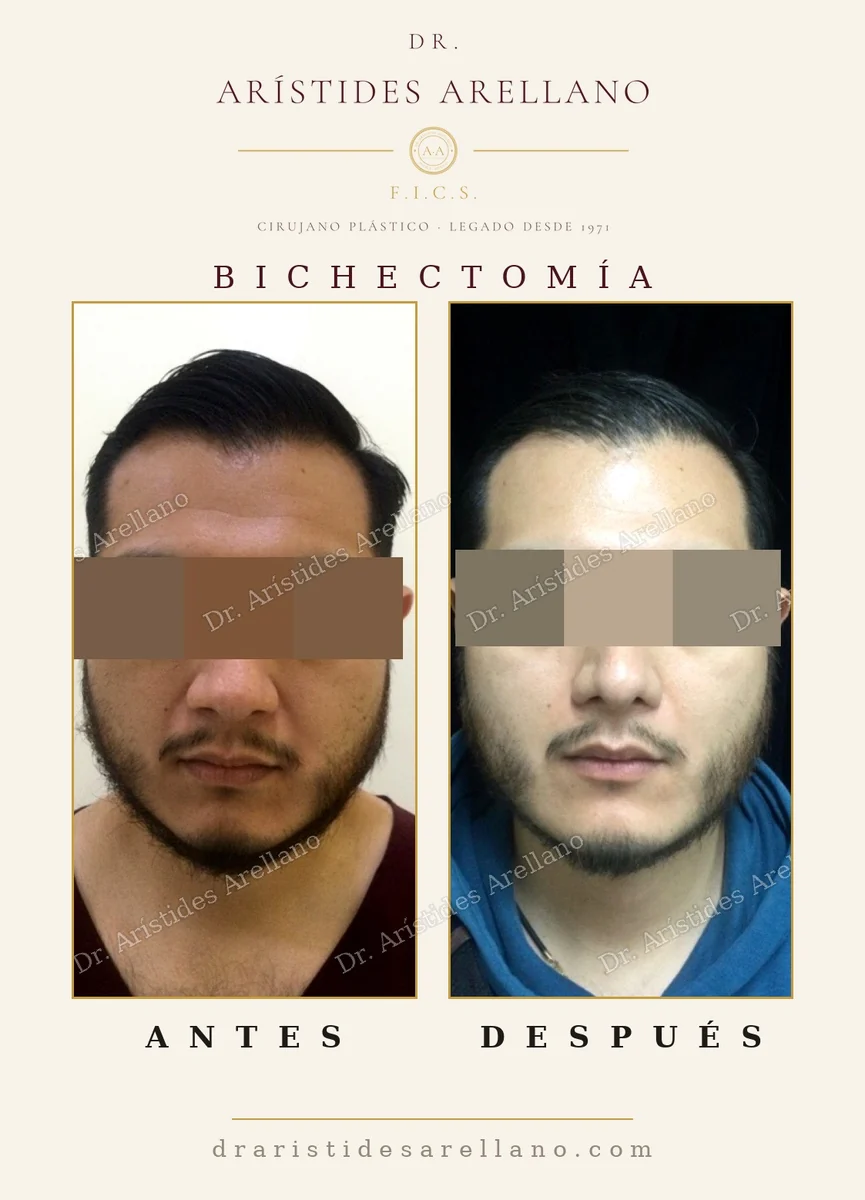
Is it permanent? Yes. Buccal fat pads do not grow back, so what is removed is gone — and for the same reason there is no undoing it. Only part of the pad is taken, never the whole thing, precisely because the result has to still look right in twenty years, not just next month. All surgery carries risks and requires a prior medical assessment; results vary from person to person.
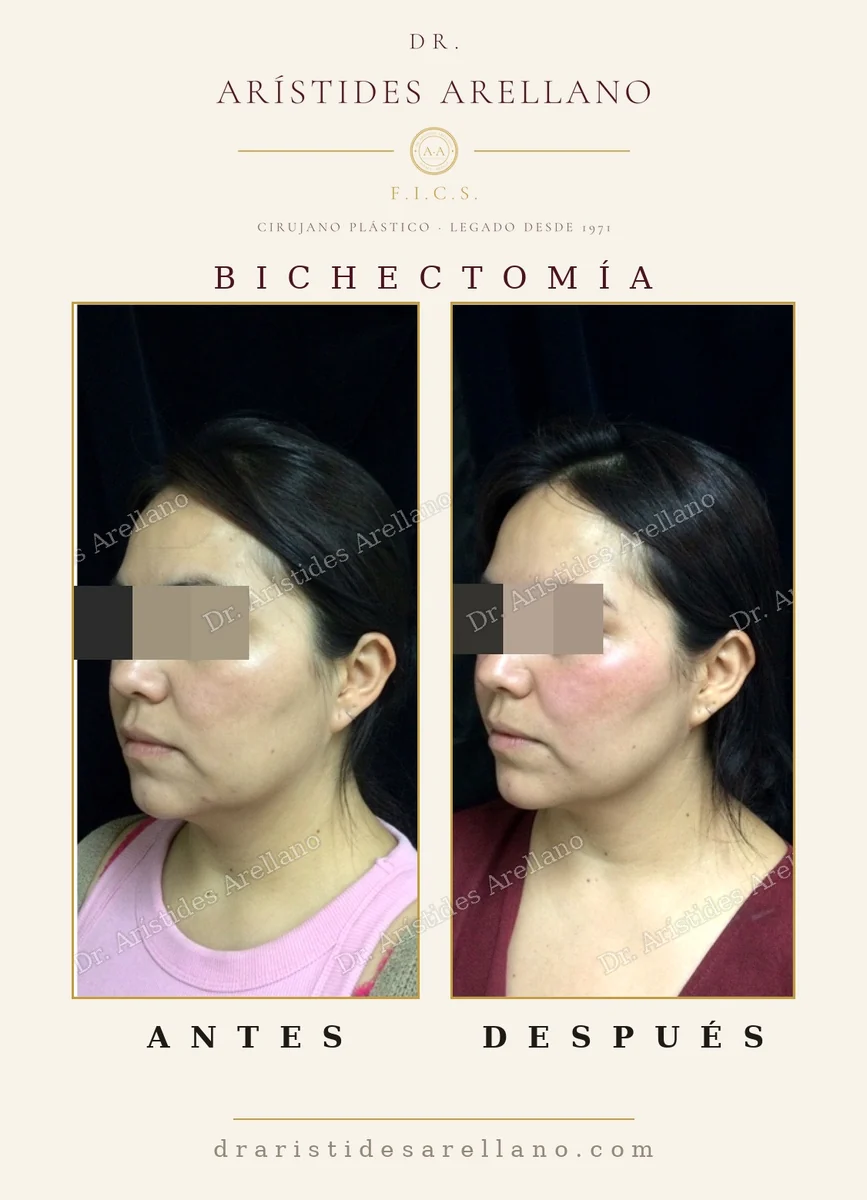
How long does the swelling last? For the first three days the face looks fuller than before surgery — that is normal and it is the stage where people panic. Most of it settles within two weeks. The real result is not judged until three months, when the remaining fat settles. First-week photos mean nothing. All surgery carries risks and requires a prior medical assessment; results vary from person to person.
Photographs of real patients, published with their written informed consent. Results may vary from person to person; these images are not a promise of outcome.
Every case is different. Discuss yours in a personal consultation.
Book a consultation on WhatsAppEvery figure published on this site is approximate and is not a quote. Any procedure or treatment first requires a private assessment consultation with Dr. Arístides Arellano —$800 MXN, charged separately— and it is at that consultation that the definitive cost of your case is determined.
Educational content; it does not replace a medical consultation. Results may vary from person to person.