
What it does, in one sentence
Every tightening device — radiofrequency, laser, ultrasound — does the same thing: it heats the dermis in a controlled way to a threshold at which existing collagen contracts and, above all, production of new collagen is triggered.
From that come the two defining features of the treatment. It is progressive — collagen takes 3 to 6 months to form, so the result is not there when you walk out — and it is subtle. Anyone looking for an immediate, obvious change is on the wrong page.
The honest conversation: energy or surgery?
It is the only question that matters, and the answer turns on one thing: whether the problem is skin quality, or whether the tissue has already descended.
Energy works well if you are roughly 30 to 50, the skin has lost firmness but the facial oval is still recognisable, there is no structural jowl or deep folds, and what you want is to “look rested” rather than ten years younger. It also works well as maintenance after surgery.
Energy does not work if there is genuine excess skin, if the jowl hangs, if the neck has marked bands, or if the tissue has already migrated downwards. No machine lifts descended tissue. None. It can improve the texture of that skin, but it will not reposition it, and the sessions you buy trying are sessions wasted.
The quickest way to know which group you are in: look in the mirror, then lie down. If lying flat your face looks the way you want it to look standing up, the problem is descent — and that is surgery. If lying down it looks the same, the problem is skin quality, and energy helps.
The devices, and what each contributes
Chosen by indication, not by what happens to be available:
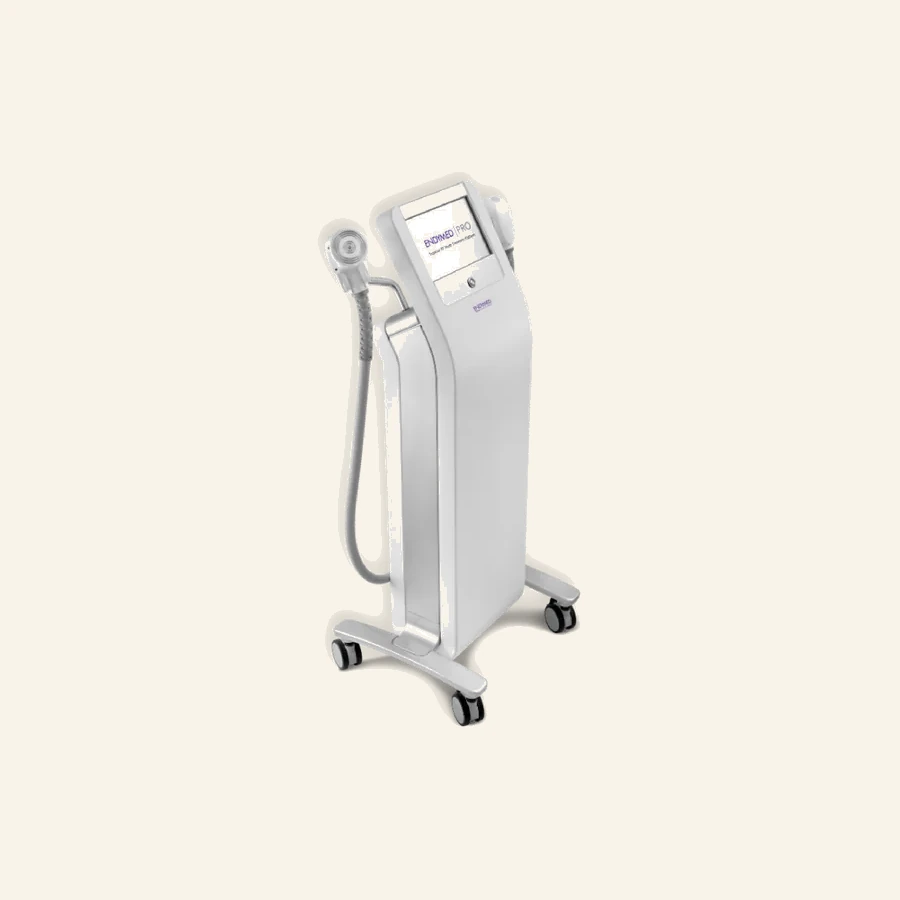
- EndyMed PRO — fractional radiofrequency. The workhorse of tightening. It heats the dermis with a good safety profile on darker skin, because radiofrequency does not depend on melanin to act — a real advantage in phototypes IV to VI.
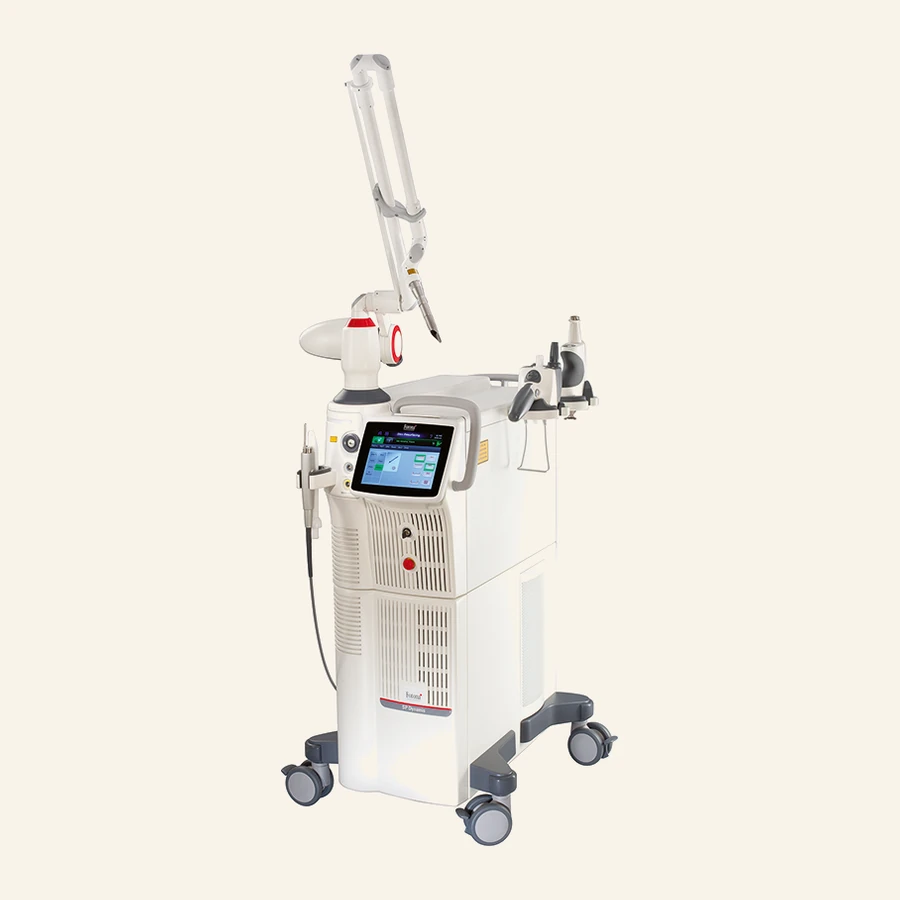
- Fotona SP Dynamis — Nd:YAG tightening protocols. Deep dermal heating, including an intraoral route in some facial protocols.
- Alma Hybrid and ResurFX (Lumenis M22). These work mainly on texture and superficial collagen; combined when laxity comes with pores, pigment or scarring.
- Facial Endolift — a step above: minimally invasive, with a laser fibre. For when external energy is no longer enough but you still do not want surgery. It has its own page.
What to genuinely expect
The session lasts 30 to 60 minutes and feels like tolerable deep heat, with a handpiece gliding over the skin. There is no downtime: you can go back to work the same day, with some redness.
It is planned as a series of 3 to 6 sessions spaced weeks apart, and the result is assessed 3 to 6 months after finishing, once the new collagen has formed. Afterwards it is maintained with periodic top-ups: tightening does not stop ageing, it offsets it.
The typical improvement is real but moderate: firmer skin, a somewhat more defined contour, better texture. It is not a facelift, it does not pretend to be, and presenting tightening as equivalent to surgery is exactly the kind of promise this clinic does not make.
Why ask a surgeon this question
A clinic that only owns machines has a structural problem: the only answer it can give you is the machine. If you need surgery, that clinic will sell you a package of sessions anyway, because it is the only thing it sells.
A plastic surgeon who also operates can tell you “this is not for energy” without losing the patient — he simply changes the recommendation. That does not make anyone a better person; it makes the advice more reliable, because there is not only one possible exit.
And it works the other way too: some patients are advised energy rather than surgery, because they do not need it yet. Operating on a 38-year-old who does not need a facelift is exactly as poor a judgement as selling 20 radiofrequency sessions to a 62-year-old with a descended neck.
What does it cost?
A session starts at $8,000 MXN and the course of 5 sessions at $24,000 MXN, approximate figures depending on the area treated and how many sessions your response calls for. Approximate price — the definitive cost is set at your private consultation with Dr. Arístides Arellano.
Track record and credentials
Tightening is performed at the Clínica Dermatológica y Cirugía Estética de Puebla, in operation since 1971.
Dr. Arístides Arellano is a plastic surgeon holding a specialty licence: he practises under a Mexican medical licence (D.G.P. 1125959) and a specialty licence in Plastic & Reconstructive Surgery (0002008), both issued by the Directorate General of Professions (DGP), which reissued his certificate of professional standing in 2025. His career began before Mexico’s present-day specialty-board system existed: he belongs to the founding generation of plastic surgery in Puebla, the second generation of a surgical tradition started in 1971 by Dr. Francisco Arellano Ocampo. Trust is verified, not promised: both licences are public and anyone can look them up in the DGP’s National Registry of Professionals.
Before-and-after photographs
Most patients want to see before-and-after photographs before deciding. Out of respect for each person’s privacy, Dr. Arístides Arellano shows real cases —always with documented consent— during your in-person consultation, where you can review results from patients with a starting point similar to yours. Results may vary from patient to patient.
Risks and expectations
Every medical treatment —topicals, peels and energy-based devices included— carries risk and requires a prior assessment. In darker skin (Fitzpatrick IV–VI, the most common phototypes in Mexico) a poorly indicated procedure can darken the patch instead of lightening it. Results may vary according to each patient, their phototype and their individual triggers.
Trust is verified, not promised. All 210 scanned documents —degree, licences, diplomas, publications and certificates, from 1977 to 2025— are open in Dr. Arístides Arellano’s credential archive, alongside an explanation of the difference between a specialty licence and a board certification.
Session plan and expectation
- AssessmentThe real question: mild laxity, or tissue that has already descended? Energy or surgery follows from that.
- Day 0Mild redness for a few hours. No downtime.
- Sessions 1–6Spaced weeks apart, by device and indication.
- Months 3–6This is when the result shows: the new collagen has formed.
- MaintenancePeriodic top-ups. Tightening offsets ageing; it does not stop it.
- ExpectationReal but moderate improvement. It is not a facelift and does not pretend to be.
Frequently asked questions
Does laser tightening replace a facelift?
No. Energy improves skin firmness and texture, but it does not lift tissue that has already descended. If there is genuine excess skin, a hanging jowl or neck bands, no machine will reposition it, and the sessions you buy trying are wasted. If the laxity is mild and the facial oval is still recognisable, energy does help.
How do I know whether I need energy or surgery?
A simple test: look in the mirror standing, then lying down. If lying flat your face looks the way you want it to look standing, the problem is tissue descent, and that is surgery. If lying down it looks much the same, the problem is skin quality, and energy-based tightening is a good option.
When do I see the result?
3 to 6 months after finishing the plan, not when you leave the session. The treatment works by inducing new collagen, and collagen takes months to form. That is why it is progressive and why it should be judged patiently: anyone wanting an immediate, obvious change should not start here.
Is it safe on darker skin?
Radiofrequency is, and it is the best option in phototypes IV to VI, because it does not depend on melanin to act and therefore does not compete with the skin’s pigment. With laser, settings need more care. The device is chosen for your phototype, not for what the clinic feels like using.
How many sessions do I need?
Usually 3 to 6, spaced weeks apart, followed by periodic maintenance. The exact number depends on the device, the degree of laxity and your response. Tightening does not stop ageing: it offsets it, which is why maintenance is part of the plan, not an extra.
Does it hurt?
It is felt as tolerable deep heat, with a handpiece gliding over the skin. It does not require anaesthesia in most cases and leaves no downtime: you can return to your routine the same day, with some redness for a few hours.
The equipment used
Every case is different. Discuss yours in a personal consultation.
Book a consultation on WhatsAppEvery figure published on this site is approximate and is not a quote. Any procedure or treatment first requires a private assessment consultation with Dr. Arístides Arellano —$800 MXN, charged separately— and it is at that consultation that the definitive cost of your case is determined.
Educational content; it does not replace a medical consultation. Results may vary from person to person.