
What is radiofrequency?
Radiofrequency is a non-invasive procedure that applies electromagnetic energy to heat the deep layers of the skin (the dermis) in a controlled way, up to a therapeutic temperature. That heat produces two effects: it immediately contracts the existing collagen fibres —felt as a slight tightening— and, above all, it stimulates the production of new collagen over the following weeks and months, which is what improves firmness and skin quality in a sustained way.
It is used on the face and neck —jawline, mild laxity of the facial oval, periocular texture, neck— and on the body: abdomen, flanks, arms and thighs, where it helps skin firmness and the appearance of the surface. It needs no operating room, leaves no scar and, in most of its variants, has no downtime.
It is worth understanding its exact place, because that is where the honesty of the treatment lies: radiofrequency improves and prevents mild-to-moderate laxity and enhances skin quality, but it does not replace surgery. When there is already excess skin that hangs —after major weight loss, after pregnancy, or with advanced ageing— no energy device will remove it: that is done by surgery such as a facelift or a dermolipectomy. Promising that radiofrequency substitutes for the scalpel in those cases is what leaves patients disappointed.
Techniques used by Dr. Arístides Arellano
There is no single radiofrequency: there are different ways to deliver the energy, and each has its indication. The choice is defined at the assessment, according to the area, the degree of laxity and the quality of the skin:
- Monopolar radiofrequency: the energy penetrates deeply and heats the dermis across a wide volume. It is the variant aimed at moderate laxity of the face, neck and larger body areas, where reaching deeper planes matters.
- Bipolar and multipolar radiofrequency: the current flows between several electrodes, with more controlled and slightly more superficial heating. It is usually very comfortable and is used in a series of sessions to improve texture, pores and firmness.
- Fractional microneedling radiofrequency: combines microneedling with radiofrequency delivered directly into the dermis. It adds a mechanical stimulus to the thermal one, so it is the option when, beyond tightening, the goal is to work on scars, enlarged pores or textural damage. This variant does use a topical anaesthetic and can leave redness and small crusts for a few days.
- Body contouring radiofrequency: applicators designed for large surfaces —abdomen, flanks, arms, thighs— aimed at improving skin firmness and the look of "orange-peel" skin. It must be clear: it is not a weight-loss method and not an alternative to liposuction; it works on the skin, not on the volume of fat.
- Integration into a treatment plan: radiofrequency is rarely an end in itself. It is combined with other procedures and, when the assessment shows the real problem is excess skin, Dr. Arístides says so plainly and directs the patient toward the appropriate surgical solution rather than selling sessions that will not resolve it.
How is it performed?
Radiofrequency is performed in the office, without surgery or incisions. The area is cleaned, a conductive gel is applied, and the handpiece is glided over the skin, delivering the energy while a sensor ensures the skin reaches and holds the therapeutic temperature without exceeding it. The usual sensation is one of tolerable warmth, like a warm massage.
Each session lasts, depending on the area, between 20 and 60 minutes. Most variants need no anaesthesia; fractional microneedling radiofrequency is the exception and is done with a topical anaesthetic. A series of several sessions spaced a few weeks apart is almost always scheduled, because collagen stimulation is progressive: the result builds over time and is not judged after a single visit. Once the course is complete, periodic maintenance is usually recommended, since the treatment improves the skin but does not stop ageing.
The number of sessions, the specific technique and the intervals between them are defined at the assessment, after examining the area and evaluating skin quality and the degree of laxity.
Every medical treatment —topicals, peels and energy-based devices included— carries risk and requires a prior assessment. In darker skin (Fitzpatrick IV–VI, the most common phototypes in Mexico) a poorly indicated procedure can darken the patch instead of lightening it. Results may vary according to each patient, their phototype and their individual triggers.
Who is a good candidate?
A good candidate is someone seeking to improve skin firmness and texture without surgery and without downtime, and with realistic expectations of a gradual result:
- Mild-to-moderate laxity of the face, neck, facial oval or body contour, with reasonably preserved skin quality.
- People who want to improve skin quality non-invasively and prefer a gradual change to surgery.
- Realistic expectations: anyone who already has significant hanging excess skin is not a candidate for radiofrequency but for a surgical assessment. It is the honest conversation that avoids spending on sessions that will not achieve the goal.
- Good general health, with no infection, dermatitis or active lesion in the area to be treated.
- It is not performed during pregnancy, nor over pacemakers or other implantable electronic devices, nor over metal implants in the treatment area. These and other factors are reviewed at the assessment, because safety is decided before the device is switched on.
Recommended post-treatment care
To support collagen stimulation and protect the result, Dr. Arístides may recommend, depending on the case, consistent hydration and strict photoprotection, and in some plans radiofrequency is combined with other tissue-stimulating procedures. See the full guide: Post-surgical recovery and care.
Before and after
Most patients want to see before-and-after photographs before deciding. Out of respect for each person’s privacy, Dr. Arístides Arellano shows real cases —always with documented consent— during your in-person consultation, where you can review results from patients with a starting point similar to yours. Results may vary from patient to patient.
Approximate price
A session starts at $800 MXN and the course of 6 sessions at $7,000 MXN, approximate figures depending on the area treated and how many sessions your response calls for. Approximate price — the definitive cost is set at your private consultation with Dr. Arístides Arellano.
About Dr. Arístides Arellano
Dr. Arístides Arellano is a plastic surgeon holding a specialty licence: he practises under a Mexican medical licence (D.G.P. 1125959) and a specialty licence in Plastic & Reconstructive Surgery (0002008), both issued by the Directorate General of Professions (DGP), which reissued his certificate of professional standing in 2025. His career began before Mexico’s present-day specialty-board system existed: he belongs to the founding generation of plastic surgery in Puebla, the second generation of a surgical tradition started in 1971 by Dr. Francisco Arellano Ocampo. Trust is verified, not promised: both licences are public and anyone can look them up in the DGP’s National Registry of Professionals.
Related patient guide
Before committing to any energy-device treatment, it helps to tell an honest indication from a commercial promise: How to choose a plastic surgeon in Puebla — part of the informational guide series reviewed by Dr. Arístides Arellano.
Trust is verified, not promised. All 210 scanned documents —degree, licences, diplomas, publications and certificates, from 1977 to 2025— are open in Dr. Arístides Arellano’s credential archive, alongside an explanation of the difference between a specialty licence and a board certification.
Recovery · step by step
- Same dayYou can resume your activities immediately. Mild redness and a sensation of warmth in the area are normal and settle within a few hours.
- First few daysWith the fractional microneedling variant there may be redness and small crusts or pinpoint marks for 2 to 5 days. With needle-free radiofrequency there is usually no visible mark.
- Weeks 2 to 6Firmer skin with better texture starts to be noticeable as the series of sessions progresses.
- Months 2 to 6Collagen stimulation reaches its full effect; this is when the result is best appreciated. Results may vary.
- MaintenancePeriodic top-up sessions are usually recommended, because radiofrequency improves the skin but does not stop ageing.
Frequently asked questions
What is radiofrequency for?
It improves the firmness and texture of facial and body skin without surgery. It heats the dermis in a controlled way, which contracts existing collagen and stimulates new collagen over the following weeks. It is useful for mild-to-moderate laxity and for skin quality; it does not remove excess skin that already hangs. Results may vary.
Does radiofrequency replace a facelift or surgery?
No. Radiofrequency improves and prevents mild-to-moderate laxity, but when there is already hanging excess skin no energy device will remove it: that belongs to surgery such as a facelift or a dermolipectomy. Promising it substitutes for the scalpel in those cases is what leaves patients disappointed, and that is not done here.
How many radiofrequency sessions do I need?
Almost always a series of several sessions spaced a few weeks apart, because collagen stimulation is progressive and the result builds over time. The exact number depends on the area, the degree of laxity and the quality of your skin, and is defined at the assessment after examining the area. Periodic maintenance is usually recommended afterward.
Does radiofrequency hurt?
In most variants, no. You feel a tolerable warmth, similar to a warm massage, and no anaesthesia is needed. The exception is fractional microneedling radiofrequency, which is done with a topical anaesthetic and can leave redness and small crusts for a few days.
Does radiofrequency remove fat or help you lose weight?
No. Radiofrequency works on the skin: its firmness and texture, including the look of orange-peel skin. It is not a weight-loss method and not an alternative to liposuction, which removes fat volume. If the goal is to reduce localized fat, that is discussed at the assessment as a separate procedure.
Who should not have radiofrequency?
It is not performed during pregnancy, nor over pacemakers or other implantable electronic devices, nor over metal implants in the treatment area, nor when there is infection, dermatitis or an active lesion in the area. These factors are reviewed at the assessment, because safety is decided before the device is switched on.
The equipment used
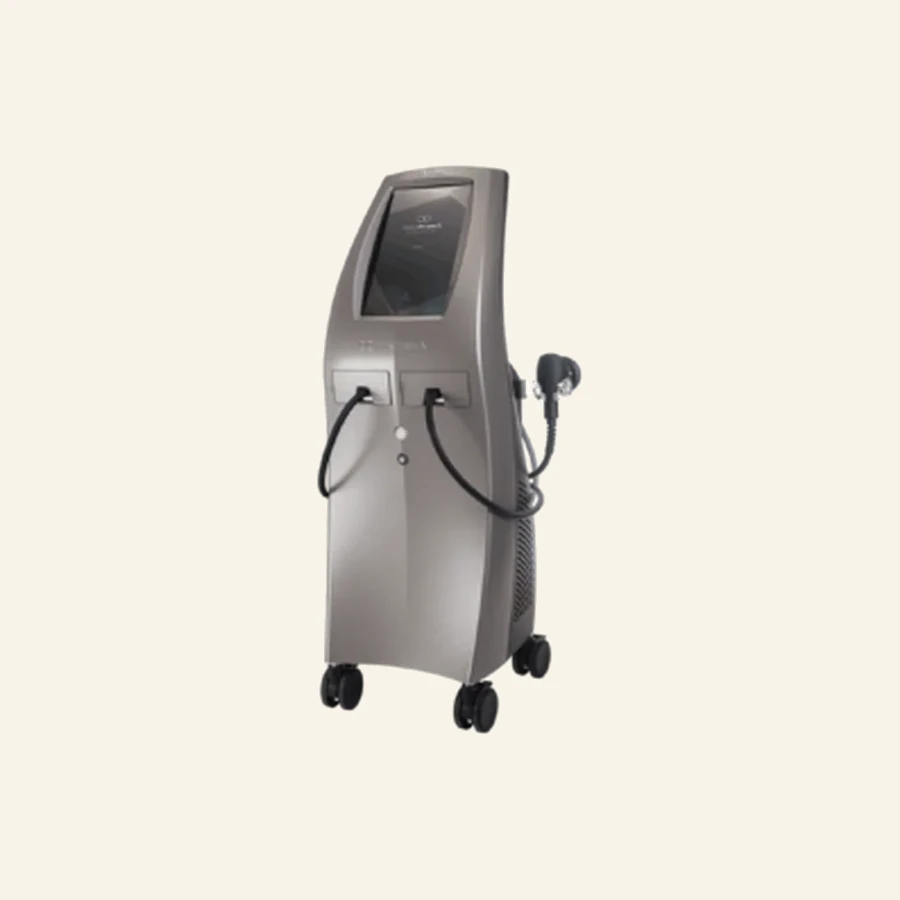
Every case is different. Discuss yours in a personal consultation.
Book a consultation on WhatsAppEvery figure published on this site is approximate and is not a quote. Any procedure or treatment first requires a private assessment consultation with Dr. Arístides Arellano —$800 MXN, charged separately— and it is at that consultation that the definitive cost of your case is determined.
Educational content; it does not replace a medical consultation. Results may vary from person to person.