
What is cellulite and why does it appear?
Aesthetic cellulite —its medical name is edematous fibrosclerotic panniculopathy— is the quilted, dimpled, "orange-peel" look that appears mainly on the thighs, buttocks and hips. It is not a disease or a sign of being overweight: slim women and heavier women both have it, because its origin is structural, not simply excess weight.
Beneath the skin, bands of fibrous tissue (the septae) tether the skin to the deeper layers. In women these septae are more vertical, and when the fat between them increases or the tissue loses firmness, the fat pushes up while the septae pull down: the result is a dimple. Hormones, genetics, circulation and the quality of the skin’s collagen all play a part —which is why it is so common and why no cream erases it.
One point confuses many people: this aesthetic cellulite is not the same as infectious "cellulitis" (a skin infection that turns red, hurts and needs antibiotics). They are two different things sharing a popular name. This page is about the first.
Techniques used by Dr. Arístides Arellano
There is no single technique for cellulite: the right one depends on whether a marked dimple (a tight septum) predominates, or skin laxity, or the fat component, and on your grade. That is why it is chosen at the consultation, and several modalities are often combined over a plan:
- Subcision — a minimally invasive technique that releases the fibrous septae producing the deepest dimples. By cutting the band that pulls the skin inward, the dimple softens. It is the most direct answer for isolated, deep depressions.
- Radiofrequency — energy that heats the dermis in a controlled way to stimulate new collagen and improve the firmness and texture of the skin. It targets the laxity component rather than the isolated dimple.
- Laser — light-based modalities that act on the skin and tissue to stimulate collagen and even out texture. This is why the treatment sits within the clinic’s laser and energy area; the specific device is chosen for your case.
- Acoustic wave therapy — shockwaves that improve microcirculation and stimulate the tissue; usually indicated as part of a series of sessions, alone or combined.
- Supportive measures — weight control, strength exercise for the lower body, hydration and, when they help, topical treatments. They do not "cure" cellulite, but they sustain and prolong the result of everything else.
How is it performed?
Everything starts by classifying your cellulite: Dr. Arístides assesses the area standing and in movement, defines the grade (from cellulite seen only on pinching to dimples obvious at rest) and what predominates —dimple, laxity or fat. The technique follows from that diagnosis; firing the wrong machine at the wrong problem is the most common reason to spend and not improve.
The treatments are outpatient and without an operating theatre in most cases. Subcision is done under local anaesthesia over the marked dimples; the energy modalities (radiofrequency, laser, acoustic waves) are applied in the office, in sessions of minutes, with generally tolerable discomfort. General anaesthesia is almost never required.
It is not a single session or an immediate result. The skin needs weeks to build new collagen, so the work is done in a series of spaced sessions —the number is set at the consultation— and a maintenance is usually scheduled. Improvement is partial and progressive: the realistic goal is to reduce the appearance of cellulite, not to erase it, and anyone who promises to leave you with zero is not being straight with you.
Every medical treatment —topicals, peels and energy-based devices included— carries risk and requires a prior assessment. In darker skin (Fitzpatrick IV–VI, the most common phototypes in Mexico) a poorly indicated procedure can darken the patch instead of lightening it. Results may vary according to each patient, their phototype and their individual triggers.
Who is a good candidate?
- Women with cellulite on the thighs, buttocks or hips who want to improve texture and dimpling without undergoing surgery.
- People with isolated, marked dimples, which tend to respond especially well to subcision releasing the responsible septum.
- Patients with a skin-laxity component, for whom collagen-oriented energy modalities add the most.
- People with a stable weight, good habits and realistic expectations: they understand the result is an improvement, is maintained with care and may vary from one person to another.
- It is not the right treatment if your goal is to reduce volume or localized fat —that is another consultation, such as liposuction— nor does it replace weight control: cellulite and excess fat are different problems.
Recommended post-treatment care
After the sessions recovery is usually straightforward: there may be redness, tenderness or a passing bruise in the treated area —more common after subcision— which settles within a few days. As a general rule, hydration, walking to aid circulation, and avoiding high-impact exercise and direct sun on the area for the days you are told are recommended. The result is sustained with a stable weight and physical activity, and sometimes with a maintenance session. See the full guide: Post-surgical recovery and care.
Before and after
Most patients want to see before-and-after photographs before deciding. Out of respect for each person’s privacy, Dr. Arístides Arellano shows real cases —always with documented consent— during your in-person consultation, where you can review results from patients with a starting point similar to yours. Results may vary from patient to patient.
Approximate price
A session starts at $1,500 MXN and the course of 10 sessions at $8,000 MXN, approximate figures depending on the area treated and how many sessions your response calls for. Approximate price — the definitive cost is set at your private consultation with Dr. Arístides Arellano.
About Dr. Arístides Arellano
Dr. Arístides Arellano is a plastic surgeon holding a specialty licence: he practises under a Mexican medical licence (D.G.P. 1125959) and a specialty licence in Plastic & Reconstructive Surgery (0002008), both issued by the Directorate General of Professions (DGP), which reissued his certificate of professional standing in 2025. His career began before Mexico’s present-day specialty-board system existed: he belongs to the founding generation of plastic surgery in Puebla, the second generation of a surgical tradition started in 1971 by Dr. Francisco Arellano Ocampo. Trust is verified, not promised: both licences are public and anyone can look them up in the DGP’s National Registry of Professionals.
Related patient guide
With cellulite, exaggerated promises and "packages" sold before a diagnosis are everywhere. Choosing whom to trust with the treatment matters as much as the technology. To know what to verify before deciding, read How to choose a plastic surgeon in Puebla, with criteria that apply to a non-surgical aesthetic treatment too.
Trust is verified, not promised. All 210 scanned documents —degree, licences, diplomas, publications and certificates, from 1977 to 2025— are open in Dr. Arístides Arellano’s credential archive, alongside an explanation of the difference between a specialty licence and a board certification.
Recovery · step by step
- Before — the assessmentThe type and grade of cellulite and what predominates (dimple, laxity or fat) are classified. The technique and number of sessions follow from that diagnosis.
- Day of the sessionAn outpatient procedure of minutes, without general anaesthesia. Subcision is done under local anaesthesia. Normal activity is usually resumed the same day.
- Days 1–5There may be redness, tenderness or a passing bruise, more common after subcision. It settles within a few days with hydration and light activity.
- Following weeksImprovement is progressive as new collagen forms. The work is done in a series; the skin’s appearance changes between sessions.
- MaintenanceThe result is sustained with a stable weight and exercise, and sometimes with a reinforcement session. Results may vary from patient to patient.
Frequently asked questions
Can cellulite be removed completely?
Not definitively. Cellulite has a structural origin (the fibrous septae, the fat and the quality of the skin), so the realistic goal is to reduce its appearance and improve texture, not erase it 100%. Current treatments achieve partial, progressive improvements sustained with care; anyone promising to remove it forever is not being straight with you.
How many sessions do I need to treat cellulite?
It depends on the grade, the indicated technique and the area. Cellulite is almost never treated in a single session: the skin needs weeks to build new collagen, so the work is done in a series of spaced sessions and a maintenance is usually scheduled. The exact number is set at the consultation, not over the phone.
Is cellulite the same as being overweight?
No. Cellulite appears in slim women too because its cause is structural, not simply excess fat: the fibrous septae pull the skin down while the fat pushes up. Losing weight can help, but it does not remove cellulite, and treating cellulite is different from reducing volume or localized fat.
Does subcision hurt and need downtime?
Subcision is done under local anaesthesia, so the area is numb during the procedure. Afterwards there may be tenderness and some bruising for a few days, which settle with simple care. It is an outpatient procedure: most patients resume normal activity the same day or the next.
What is the difference between treating cellulite and liposuction?
They are different things. Liposuction removes fat and reduces volume, but it is not designed to correct cellulite dimples, and it can even accentuate them if done without judgement. Cellulite treatment focuses on the septae, the skin and its texture. At the consultation we define which problem you have and, therefore, which solution fits.
Do anti-cellulite creams work?
On their own, very little. A cream does not reach the fibrous septae or the deep fat that produce the dimples, so it cannot correct the structure causing cellulite. They can add hydration and be a support within a plan, but they do not replace the techniques that actually act on the tissue. Results may vary from one person to another.
The equipment used
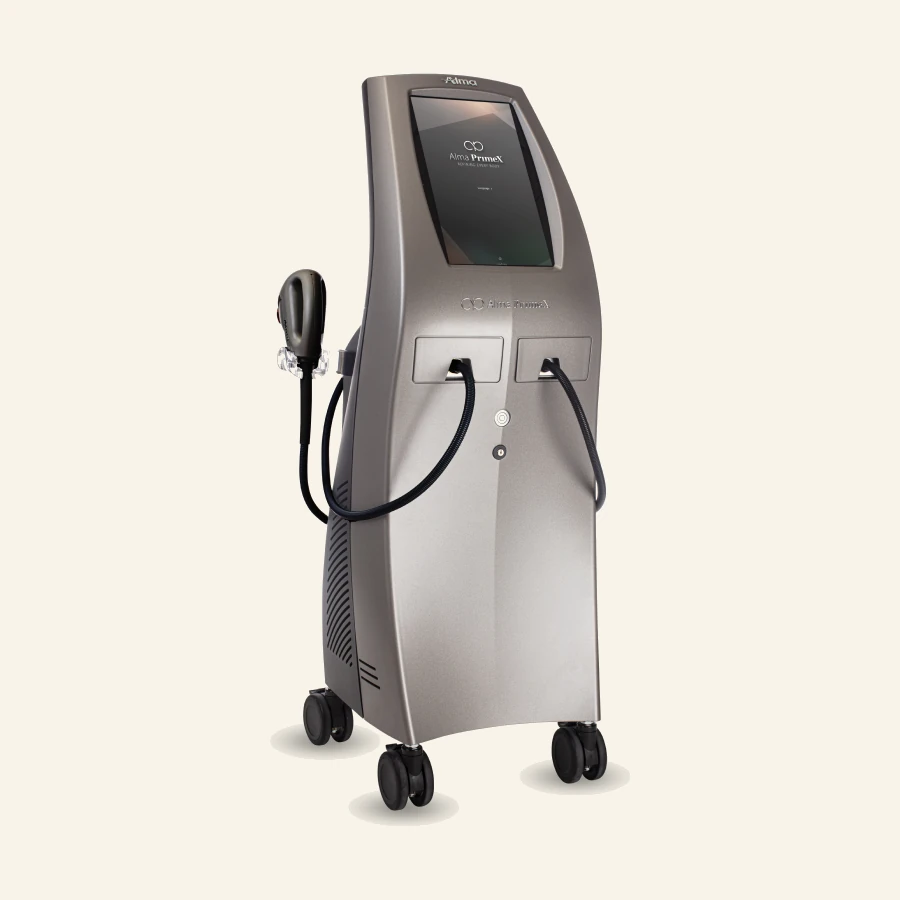
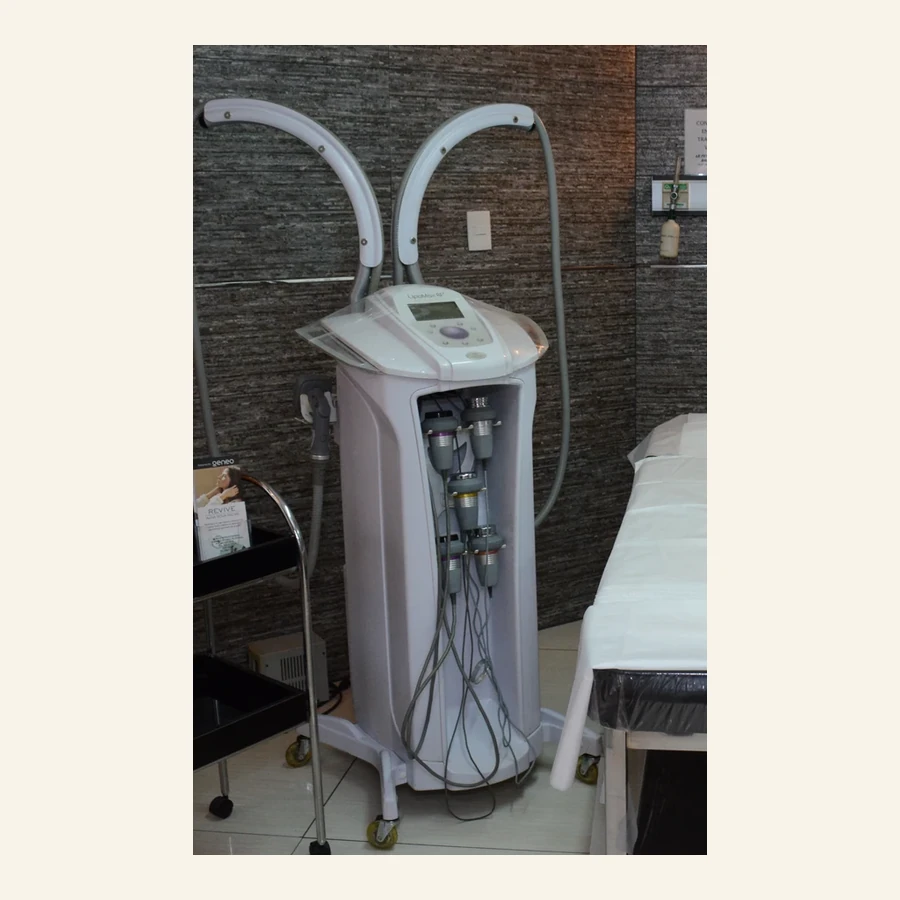
Every case is different. Discuss yours in a personal consultation.
Book a consultation on WhatsAppEvery figure published on this site is approximate and is not a quote. Any procedure or treatment first requires a private assessment consultation with Dr. Arístides Arellano —$800 MXN, charged separately— and it is at that consultation that the definitive cost of your case is determined.
Educational content; it does not replace a medical consultation. Results may vary from person to person.