
What is the fractional CO₂ laser?
The carbon dioxide (CO₂) laser emits a 10,600 nm wavelength fully absorbed by the water in the skin: on firing, it vaporises tissue in a controlled way and triggers immediate collagen contraction. It has been the reference ablative laser for decades.
In fractional mode, the beam splits into hundreds of microcolumns treating only a fraction of the surface, leaving intact skin between them. That healthy skin speeds healing: much of the effect of classic CO₂, with a recovery of days rather than weeks.
In this clinic the CO₂ is used as what it is: a surgical instrument. The indications are a plastic surgeon’s — scars, resurfacing of marked ageing, eyelids and skin lesions — not a seasonal aesthetic menu.
Surgical indications for CO₂
- Acne scars: fractional treatment remodels the collagen of depressed scars over several sessions. The indication with the most accumulated evidence.
- Surgical and post-traumatic scars: as part of the scar revision protocol, the laser refines the relief and colour of the mature or revised scar.
- Perioral and periocular resurfacing: the “barcode” lines of the upper lip and the fine lines around the eyes, where CO₂ remains the standard everything else is measured against.
- Adjunct to blepharoplasty: Dr. Arístides performs blepharoplasty with CO₂ laser technique, and the same platform tightens the thin lower-lid skin without an additional incision.
- Selected benign skin lesions: certain raised or keratotic lesions can be vaporised with micron precision, after diagnostic assessment — with histopathological study whenever there is any doubt.
How is the session performed?
The session takes place in a surgical office setting, under topical or local anaesthesia, or light sedation depending on the area and planned depth. It lasts 20 to 45 minutes.
Firing depth and density are not a machine preset: they are programmed for each zone of each patient — the eyelid is not the cheek, and an acne scar is not a perioral wrinkle. This is where surgical judgment separates a result from a complication.
Afterwards the skin is red, with an intense sunburn sensation that subsides within hours. A strict care protocol follows: emollients, absolute sun protection, and no picking at the micro-crusts.
Depending on indication, the plan may involve 1 to 4 sessions spaced 4 to 8 weeks apart. In scars, change is progressive: new collagen keeps remodelling for months after each session.
Who is a good candidate — and who is not?
Good candidates have acne or surgical scars, marked perioral or periocular photoageing, or skin lesions suitable for vaporisation, with realistic expectations and willingness to comply with sun protection.
CO₂ demands more caution —or an alternative— in darker skin phototypes (higher risk of post-inflammatory hyperpigmentation, assessed individually), actively tanned skin, active herpes infection (prophylaxis is indicated), recent isotretinoin treatment and known keloid tendency. None of this is decided from a catalogue: it is decided by examining your skin. All surgery carries risk and requires a prior medical assessment. Results may vary according to each patient, their anatomy and their individual healing process.
A laser in a surgeon’s hands
The CO₂ laser removes tissue irreversibly. The difference between an excellent resurfacing and a depigmentation or a new scar is the operator: the prior diagnosis, the choice of parameters and the management of treated skin. It is exactly the kind of decision surgical training exists for.
Dr. Arístides Arellano is a plastic surgeon holding a specialty licence: he practises under a Mexican medical licence (D.G.P. 1125959) and a specialty licence in Plastic & Reconstructive Surgery (0002008), both issued by the Directorate General of Professions (DGP), which reissued his certificate of professional standing in 2025. His career began before Mexico’s present-day specialty-board system existed: he belongs to the founding generation of plastic surgery in Puebla, the second generation of a surgical tradition started in 1971 by Dr. Francisco Arellano Ocampo. Trust is verified, not promised: both licences are public and anyone can look them up in the DGP’s National Registry of Professionals.
Before and after
The cases below are real patients of Dr. Arístides Arellano, published with their written informed consent. Out of respect for each person’s privacy, only expressly authorised cases are published; at your in-person consultation Dr. Arístides can show you further cases with a starting point similar to yours. Results may vary from patient to patient.
Approximate price in Puebla
A fractional CO₂ laser session has a reference cost of $25,000 MXN. Approximate price — the definitive cost is set at your private consultation with Dr. Arístides Arellano. The final cost depends on the extent of the area, the planned depth and the number of sessions your case requires.
Two CO₂ lasers, not one: one polishes, the other cuts
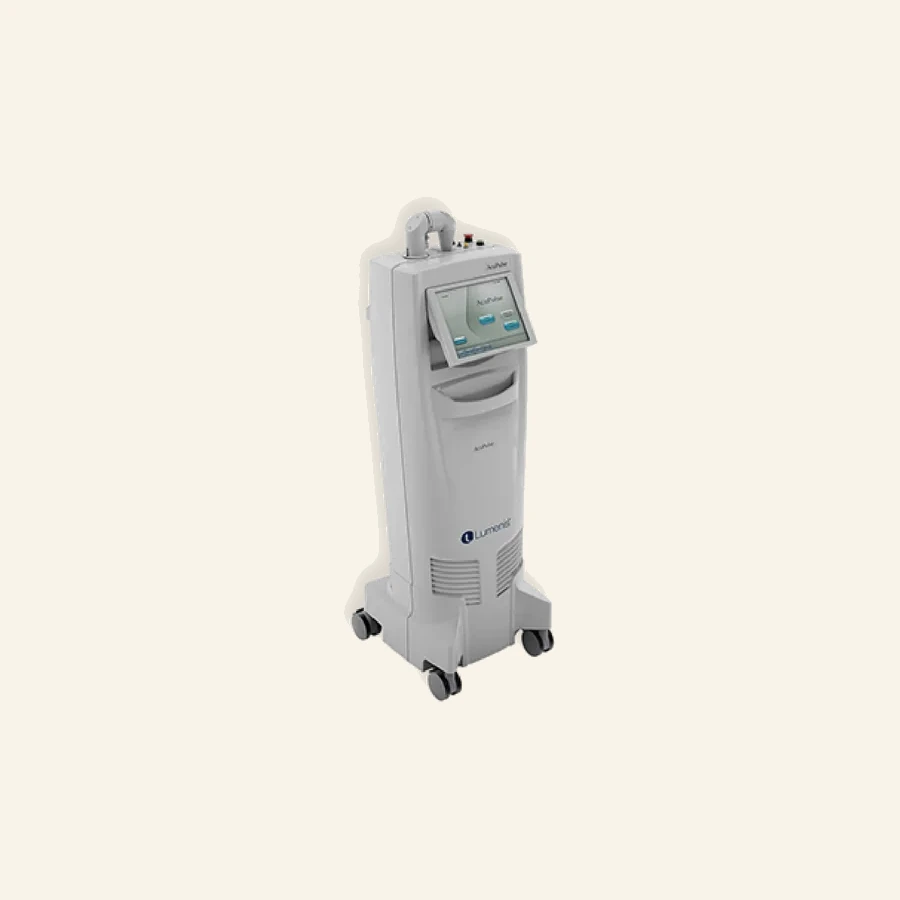
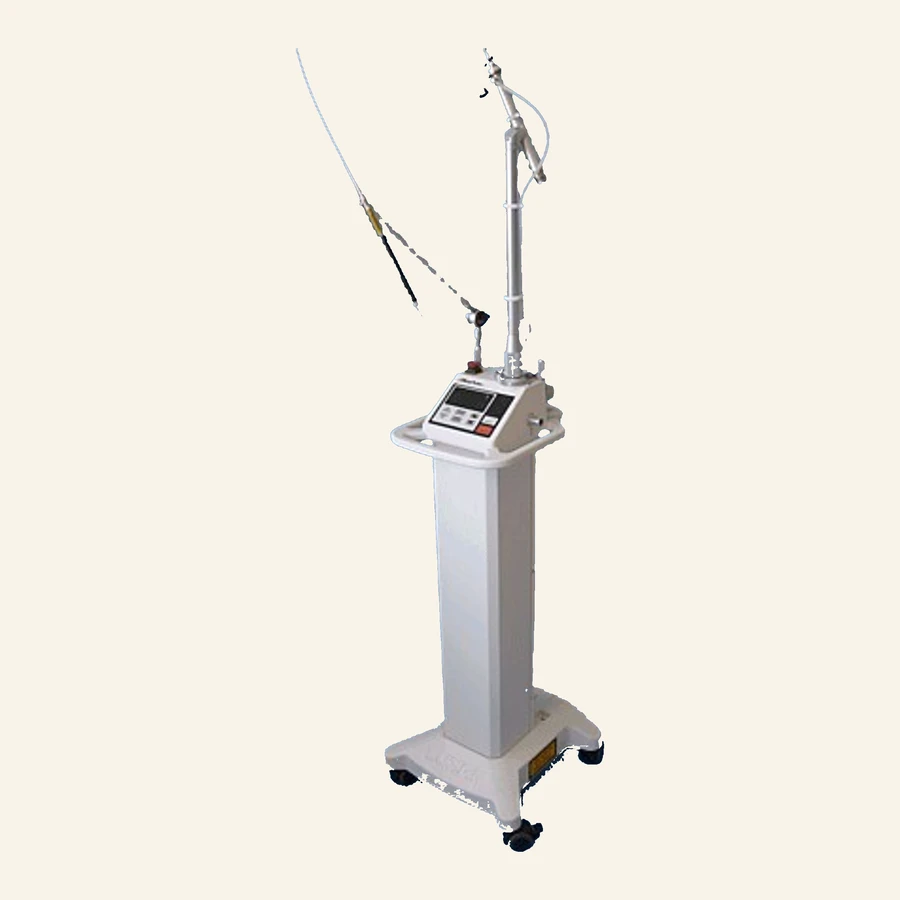
Not all CO₂ is the same, and the distinction defines the result. Fractional CO₂ (the AcuPulse) works the surface: it splits the beam into thousands of microcolumns to renew texture, fine lines and acne scars by stimulating collagen, with crusting and a few days of downtime. Focused-beam surgical CO₂ (the NovaPulse) does not polish: it cuts. It is a scalpel of light that vaporises soft tissue while cauterising the vessels, so it bleeds less — used to excise lesions, in eyelid surgery, or to revise a scar.
Having both machines matters because the problem is chosen by indication, not the other way around. The same CO₂ that renews skin is not the one that opens an eyelid, and forcing everything onto a single device is the difference between a good result and a sale. Your consultation defines which one applies: laser blepharoplasty, mole and wart removal or scar and keloid surgery.
Fractional CO₂ laser recovery, day by day
Ablative fractional CO₂ does have a recovery — it is part of how it works. Knowing what to expect prevents scares and bad decisions on the wrong day.
- Days 1–2: skin looks red and swollen, with a sunburn sensation and a sandy texture. Kept moist with the prescribed cream.
- Days 3–5: dark micro-crusts appear (the fractional pattern) and the skin begins to peel. Do not scratch or pull them.
- Days 5–7: the crusts fall off on their own and new pink skin shows. Makeup and social life usually resume around here in most cases.
- Following weeks: the pinkness fades; collagen keeps remodelling for weeks to months. Strict sun protection, no exceptions.
Trust is verified, not promised. All 210 scanned documents —degree, licences, diplomas, publications and certificates, from 1977 to 2025— are open in Dr. Arístides Arellano’s credential archive, alongside an explanation of the difference between a specialty licence and a board certification.
Recovery · step by step
- Hours 0–24Redness and an intense sunburn sensation that subsides within hours. Mild swelling.
- Days 2–4Pinpoint micro-crusts form; the skin feels rough, “like sandpaper”. Do not pick them.
- Days 5–7The micro-crusts shed on their own; new skin appears pink. Make-up may be used once authorised.
- Weeks 2–4The pink tone fades gradually. Strict sun protection — this is the phase where the result is protected.
- Months 1–6New collagen remodels: improvement in texture and scars keeps building session after session.
Frequently asked questions
How much does fractional CO₂ laser cost in Puebla?
A session has a reference price of approximately $25,000 MXN. The final cost is confirmed at the consultation, according to the extent of the area, the planned depth and the number of sessions your case requires.
What is the CO₂ laser for?
It is the reference ablative laser for acne and surgical scars, resurfacing of perioral and periocular wrinkles, eyelid skin tightening and vaporisation of selected benign skin lesions. In this clinic it is indicated with surgical judgment, after an assessment of your skin.
How soon are results visible?
The skin recovers in 5 to 7 days, and improvement in texture and brightness shows from the first weeks. The result on scars and wrinkles keeps building for months, as new collagen remodels progressively after each session.
How many sessions are needed?
It depends on the indication: perioral resurfacing may resolve in 1 or 2 sessions; acne scars usually require 3 to 4, spaced 4 to 8 weeks apart. The plan is set at the consultation.
Does it hurt?
The session is performed under topical or local anaesthesia, or light sedation depending on depth, so it is tolerable. Afterwards there is an intense sunburn sensation that subsides within the first hours.
Is CO₂ laser suitable for every skin type?
Not indiscriminately. Darker phototypes carry a higher risk of post-inflammatory hyperpigmentation, so the indication, parameters or alternative are decided by examining your skin at the consultation. It is also postponed in tanned skin, active infection or recent isotretinoin treatment.
How does CO₂ differ from other lasers (ResurFX, IPL)?
CO₂ is ablative: it vaporises tissue and is the most powerful, with the most noticeable downtime. Non-ablative lasers such as ResurFX stimulate collagen without removing the surface, with fewer recovery days and more gradual results. The choice depends on the problem, the skin and the downtime available; the right platform for your case is defined at the consultation.
How many days do the crusts from CO₂ laser last?
With fractional CO₂, the micro-crusts usually appear around day 2–3 and fall off on their own around day 5–7; the redness fades over the following one to three weeks. They must not be scratched or forcibly removed. The exact timing depends on the intensity applied and on each skin type, and is reviewed at follow-up.
What does the skin look like after CO₂ laser?
Once the crusts come off, new pink-toned skin appears and evens out over weeks; texture, fine lines and treated scars improve over time. It does not erase completely — it attenuates. Strict sun protection is required to avoid pigmentation, especially in darker skin. Results may vary.
The equipment used
Before and after
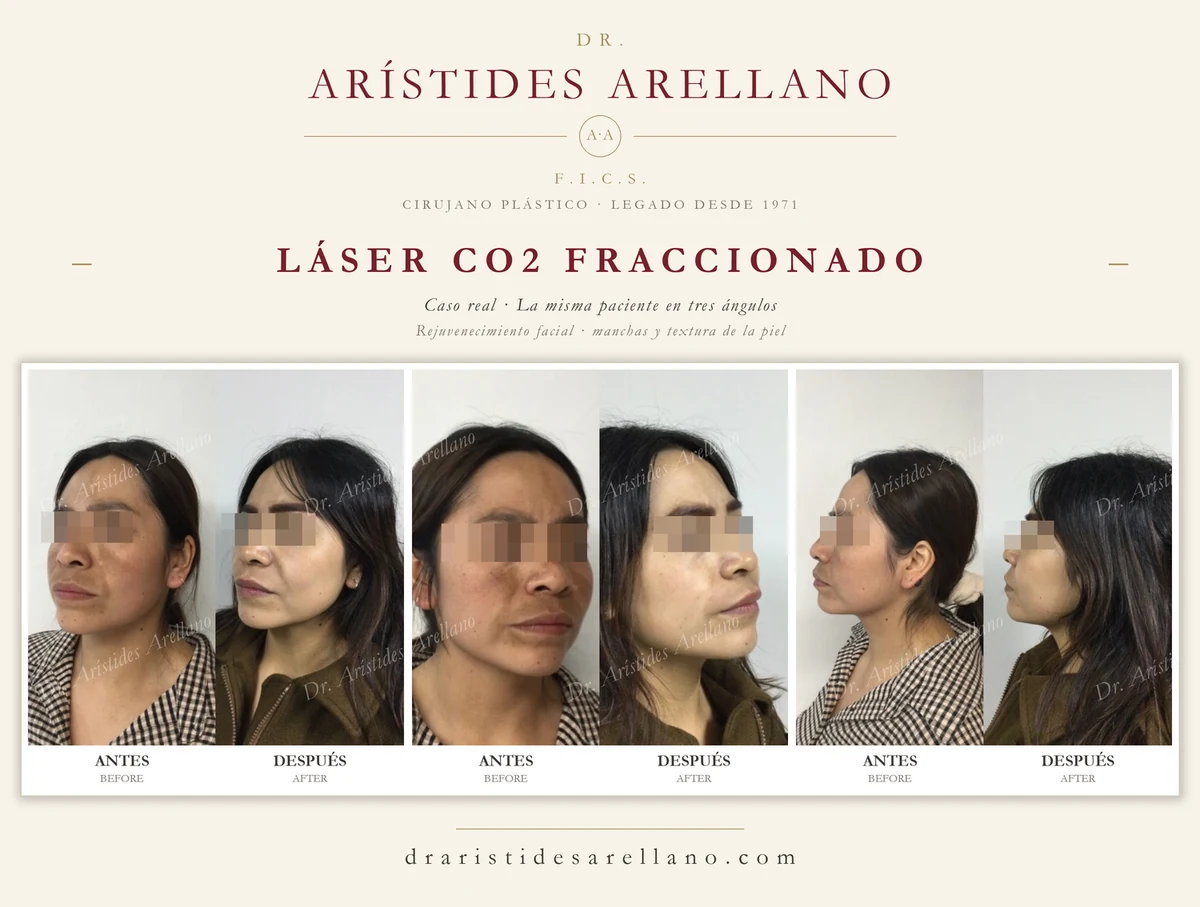
Photographs of real patients, published with their written informed consent. Results may vary from person to person; these images are not a promise of outcome.
Every case is different. Discuss yours in a personal consultation.
Book a consultation on WhatsAppEvery figure published on this site is approximate and is not a quote. Any procedure or treatment first requires a private assessment consultation with Dr. Arístides Arellano —$800 MXN, charged separately— and it is at that consultation that the definitive cost of your case is determined.
Educational content; it does not replace a medical consultation. Results may vary from person to person.