
What is melasma?
Melasma is an increase in pigment (melanin) that appears as irregular, usually symmetrical patches on the light-exposed areas of the face: cheekbones, forehead, upper lip and, less often, the chin. It mostly affects women of reproductive age and is especially common in darker skin — Fitzpatrick phototypes IV to VI, which is most of the Mexican population.
What happens underneath matters for the prognosis. When pigment sits in the superficial layer (epidermal melasma) it responds better. When it descends into the deeper layer (dermal melasma) it is far more resistant, and aggressive treatment is more likely to worsen it than to improve it. Many cases are mixed. Telling them apart is the first job of the consultation, not an academic detail.
Not every facial spot is melasma
This is the most common and most expensive mistake: treating something as melasma when it is not — or the reverse. The most frequent facial spots are:
- Melasma: symmetrical brown or greyish patches, driven by sun and hormones. Chronic and recurrent.
- Solar lentigines (age spots): round, well-defined spots from accumulated sun damage. These do respond well and quickly to IPL or laser.
- Freckles: genetic; they darken with sun and fade in winter.
- Post-inflammatory hyperpigmentation: the dark mark left by a pimple, a burn, badly done hair removal or a poorly indicated laser. It fades on its own over time if protected from the sun.
- Lesions that are not pigment spots at all: a mole that changes size, colour or border, or that bleeds, is not a cosmetic matter. It is assessed medically. See mole & wart removal and basal cell carcinoma.
Why does melasma appear? The three triggers
1. Light. Not only ultraviolet radiation. Melasma is also activated by visible light — on an overcast day, through a car or office window, even from screens — and by infrared heat. This is why a conventional sunscreen that filters UV but not visible light is not enough for melasma: it is the number-one reason a correct treatment appears not to work.
2. Hormones. Pregnancy (hence the popular name, "the mask of pregnancy"), hormonal contraceptives and hormone therapy are well-documented triggers. While the hormonal stimulus is active, control is harder — and it is worth being realistic about that from the first consultation.
3. Genetic predisposition and phototype. The more pigmented the skin, the more reactive its melanin machinery — and the easier it is to create a new spot while treating the old one with too much energy.
Less obvious triggers add to this: heat itself (cooking, saunas, intense outdoor exercise) and certain photosensitising medications.
The part almost nobody tells you: melasma is controlled, not cured
It is a chronic, recurrent condition. With the right plan the patch can lighten substantially, but no treatment — topical, peel or laser — guarantees it will not come back. One unprotected summer, a pregnancy or a hormonal change can reactivate it.
If someone promises to erase your melasma forever in a fixed number of sessions, that promise is not medical: it is commercial. The honest framing is a condition kept under control with habits and maintenance, much as blood pressure is kept under control. Framed that way, results tend to be good and durable. Framed as permanent erasure, there is almost always disappointment — and frequently a worse patch.
How is it treated? The order matters more than the technology
Melasma treatment is a staircase, and skipping the first steps is what ruins results:
- Step 1 — Photoprotection (not optional; it IS the treatment). Broad-spectrum SPF 50+ that also blocks visible light — the tinted ones containing iron oxides are the ones that do. Reapplied every 3–4 hours, every day, indoors and on cloudy days too. Without this step, everything else is wasted.
- Step 2 — Prescription topical depigmenting therapy, matched to phototype and pigment depth. This is the basis of real lightening. It demands months of consistency, not days.
- Step 3 — Trigger control: reviewing hormonal contraception with your physician where relevant, and reducing direct heat exposure.
- Step 4 — In-office procedures: superficial chemical peels, where the case allows.
- Step 5 — Energy (laser / IPL): the last resort, not the first, and only in selected cases.
Laser for melasma: when it helps and when it makes things worse
This is the section we would rather you read before walking into any clinic in this city, ours included.
Laser and IPL are excellent for solar lentigines and for the vascular component of redness — there the result is fast and visible. But melasma is irritable tissue: it answers excess energy and heat by making more pigment. A powerful device used with aggressive settings on darker skin can produce rebound hyperpigmentation that leaves the face worse than before and then takes months to reverse.
So in melasma, technology only enters once the foundation is in place (photoprotection and topicals), at low fluence, with spaced sessions and a clear expectation. The platforms used are the clinic’s IPL and non-ablative laser systems — Lumenis M22 (intense pulsed light), Lumenis ResurFX (non-ablative fractional) and Alma Hybrid — selecting the device by what the skin tolerates, not by what a clinic wants to sell.
Put bluntly: the most valuable clinical decision in melasma is often not to fire the laser at all. A clinic that points a device at every spot walking through the door will make some of its melasmas worse. The judgement to know when not to treat is what four decades of practice, and a dermatologic clinic running since 1971, bring to this problem.
What does the consultation involve?
The consultation does not begin by choosing a device. It begins by answering three questions: is it melasma or something else?, is the pigment superficial or deep? and what is triggering it in your specific case?
The lesion is examined under light, your phototype is determined, and your hormonal history, exposure habits and previous treatments are reviewed — including cosmetics and home remedies, which are frequently part of the problem. From that comes a stepped plan with a realistic horizon and a maintenance plan, because maintenance is what holds the result.
Track record and credentials
Facial pigmentation is treated at the Clínica Dermatológica y Cirugía Estética de Puebla, running since 1971, when it was founded by Dr. Francisco Arellano Ocampo. That continuity — more than half a century treating skin in the same city — is what underpins the judgement applied to these cases today.
Dr. Arístides Arellano is a plastic surgeon holding a specialty licence: he practises under a Mexican medical licence (D.G.P. 1125959) and a specialty licence in Plastic & Reconstructive Surgery (0002008), both issued by the Directorate General of Professions (DGP), which reissued his certificate of professional standing in 2025. His career began before Mexico’s present-day specialty-board system existed: he belongs to the founding generation of plastic surgery in Puebla, the second generation of a surgical tradition started in 1971 by Dr. Francisco Arellano Ocampo. Trust is verified, not promised: both licences are public and anyone can look them up in the DGP’s National Registry of Professionals.
Dr. Arístides Arellano is also a full member of the Spanish Society of Medical & Surgical Laser (SELMQ) and of the Mexican Academy of Laser Surgery: the medical use of lasers is a formal part of his training — and it is that training which dictates when the laser is not the answer.
Before-and-after photographs
Most patients want to see before-and-after photographs before deciding. Out of respect for each person’s privacy, Dr. Arístides Arellano shows real cases —always with documented consent— during your in-person consultation, where you can review results from patients with a starting point similar to yours. Results may vary from patient to patient.
Risks and expectations
Every medical treatment —topicals, peels and energy-based devices included— carries risk and requires a prior assessment. In darker skin (Fitzpatrick IV–VI, the most common phototypes in Mexico) a poorly indicated procedure can darken the patch instead of lightening it. Results may vary according to each patient, their phototype and their individual triggers.
What does melasma treatment cost?
There is no catalogue price, because there is no single treatment: cost depends on whether the plan is topical, whether it includes peels, whether it eventually requires device sessions at all, and how many. It is defined at the consultation, with a written plan and no sessions that are not indicated. See the price list for other procedures.
Trust is verified, not promised. All 210 scanned documents —degree, licences, diplomas, publications and certificates, from 1977 to 2025— are open in Dr. Arístides Arellano’s credential archive, alongside an explanation of the difference between a specialty licence and a board certification.
Control plan · what to expect month by month
- Weeks 1–4Strict photoprotection and start of topical therapy. No lightening yet: the stimulus is being shut down. This is the phase where most people quit — which is why most people do not improve.
- Months 2–3First visible lightening in epidermal melasma. The topical is adjusted to tolerance. If there is irritation, intensity comes down: irritated skin makes more pigment.
- Months 3–6We assess whether the case justifies superficial peels or low-fluence device sessions. Many cases do not need them — and that is a good outcome, not a wasted consultation.
- Maintenance (indefinite)Lifelong daily photoprotection and a maintenance topical. This is what separates a good result at 6 months from a good result at 5 years.
- Summer · pregnancy · hormonal changeThese are the relapse moments. Protection is reinforced and the plan reviewed before the patch returns, not after.
Frequently asked questions
Does melasma go away forever?
No. Melasma is a chronic condition: it is controlled and can lighten substantially, but it can return if triggers come back (sun, heat, hormonal change). Any promise of permanent elimination is commercial, not medical. Results may vary.
Does laser erase facial dark spots?
It depends which spot. For solar lentigines (age spots), laser and IPL work very well. In melasma, a poorly indicated or overly aggressive laser can worsen it and cause rebound hyperpigmentation. That is why the diagnosis comes first, and only then, if indicated, low-fluence energy.
Can I treat melasma in summer?
The foundation (photoprotection and topicals) can start at any time of year. Energy-based procedures are preferably planned for periods of lower sun exposure and always with rigorous photoprotection, because subsequent sun exposure is what undoes the result.
It appeared during pregnancy. Will it clear on its own?
Melasma of pregnancy (chloasma) may lighten on its own in the months after delivery, especially with good photoprotection. During pregnancy and breastfeeding several topical treatments are contraindicated, so management focuses on protection and time. Ask before using any depigmenting product.
How many sessions will I need?
Melasma is not measured in sessions but in months of consistency. The foundation is a daily at-home regimen; in-office procedures, when indicated, are few and spaced out. Be wary of large closed session packages sold before a diagnosis.
What is the difference between melasma and age spots?
Melasma forms symmetrical patches driven by hormones and light; it is chronic and recurrent. Solar lentigines are round, well-defined spots from accumulated sun damage and respond well and quickly to IPL. Treating them the same way is the commonest mistake.
The equipment used
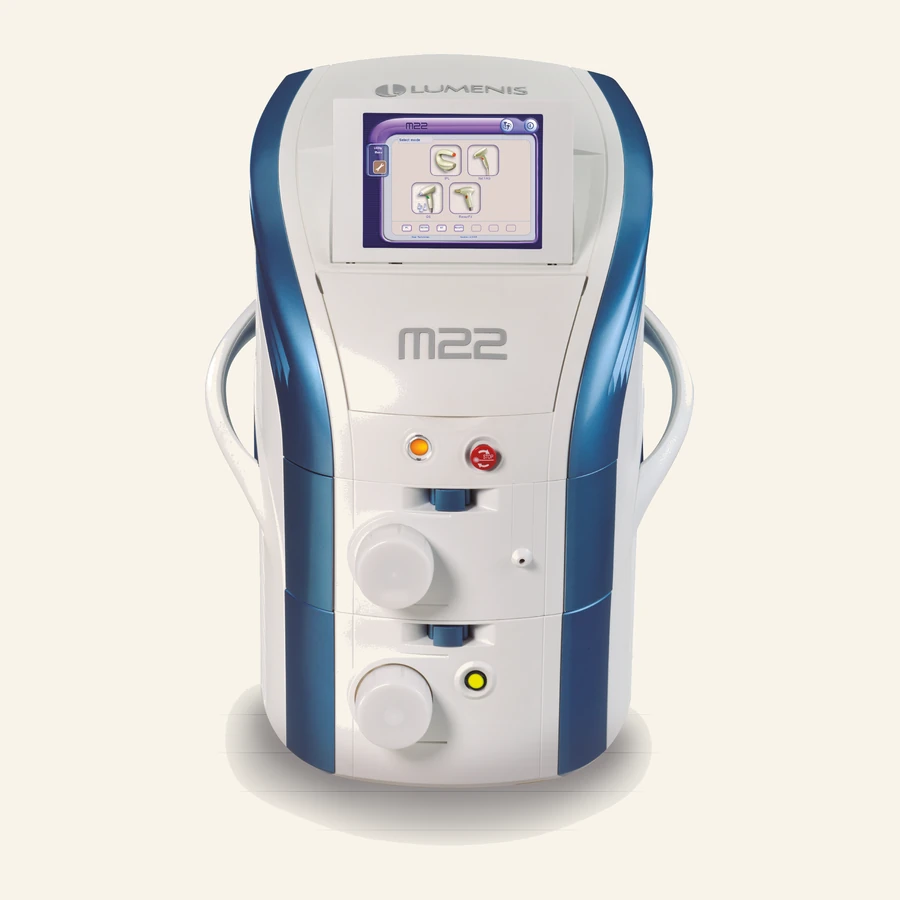
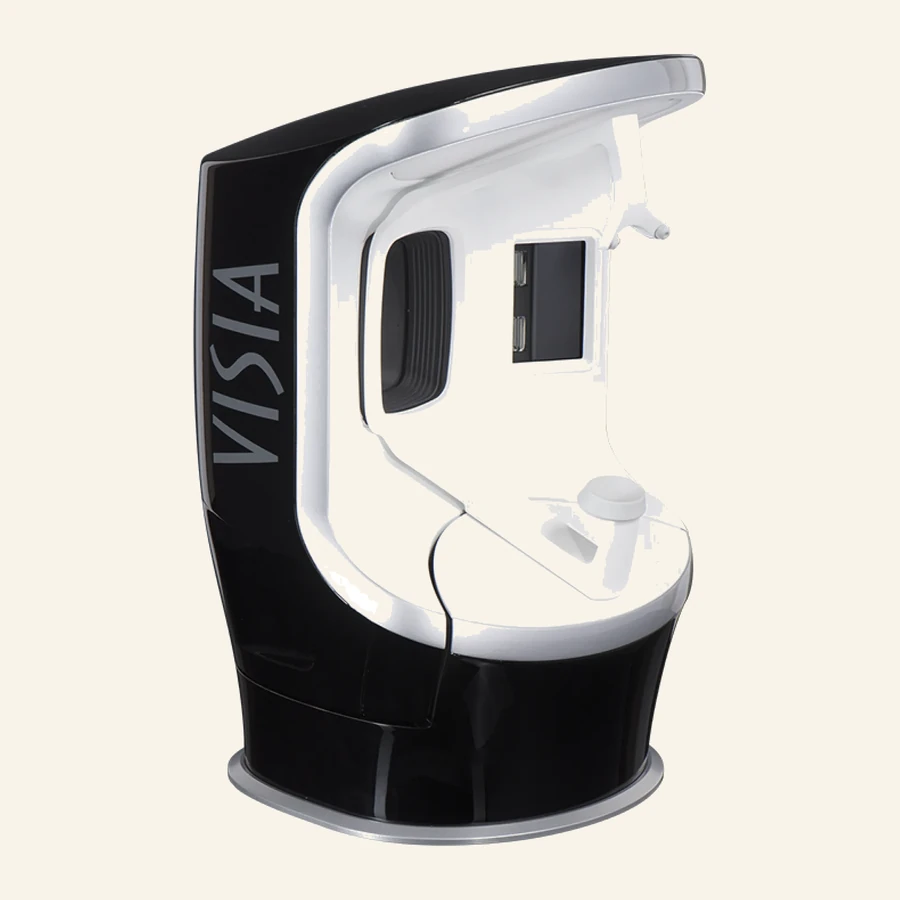
Every case is different. Discuss yours in a personal consultation.
Book a consultation on WhatsAppEvery figure published on this site is approximate and is not a quote. Any procedure or treatment first requires a private assessment consultation with Dr. Arístides Arellano —$800 MXN, charged separately— and it is at that consultation that the definitive cost of your case is determined.
Educational content; it does not replace a medical consultation. Results may vary from person to person.