
What is ultrasonic cavitation?
Ultrasonic cavitation is a non-invasive body treatment that applies low-frequency ultrasound over an area of localized fat —abdomen, flanks, thighs, arms or back— to reduce its volume with no surgery, no anaesthesia and no downtime. The key word is localized: cavitation reshapes a specific contour; it does not slim the whole body and it does not replace diet or exercise.
Its mechanism is physical. The applicator emits ultrasound waves that form pressure microbubbles in the fluid surrounding the fat cells (adipocytes); that pressure destabilizes the membrane of a proportion of those cells and releases their fatty content (triglycerides) into the interstitial space, from where the body itself processes it through the lymphatic system and the liver, as it would with any dietary fat. The result is therefore gradual and cumulative: it builds over a series of sessions and depends on the body draining and metabolizing what has been mobilized —hence the importance of hydration, physical activity and orderly eating during the plan.
Techniques used by Dr. Arístides Arellano
Cavitation is rarely used on its own: it performs better as part of a body-contouring protocol tailored to each case. Dr. Arístides Arellano decides what to combine according to the area, the thickness of the fat and the condition of the skin:
- Ultrasonic cavitation by area: sessions focused on a specific pocket of localized fat, with power and time adjusted to the thickness of the fat layer. This is the focus of this page.
- Body radiofrequency as a complement: when there is laxity or loose skin alongside fat, radiofrequency heats the dermis to stimulate collagen, something cavitation alone does not do.
- Lymphatic drainage afterwards: it supports clearance of the mobilized fat and reduces the heavy feeling after a session.
- Carboxytherapy in selected cases, as an adjunct in fibrous areas or with cellulite, always on medical indication.
- Referral to surgery when appropriate: if the volume of fat is large or the goal is a marked change in contour, the honest answer is liposuction, not a series of cavitation sessions. Cavitation is not a scalpel-free liposuction.
How is it performed?
Ultrasonic cavitation is performed in the office, without anaesthesia and on an outpatient basis. A conductive gel is applied to the area and the specialist moves the applicator in continuous strokes for about 30 to 45 minutes per region. Most patients describe a sensation of warmth and, with some devices, a high-pitched hum audible during the application; it is not a painful procedure and you can resume normal activity immediately afterwards. It is usually planned as a series of 6 to 12 sessions, spaced once or twice a week, because the change accumulates session by session.
It helps to have clear expectations from the start: cavitation produces a moderate, progressive reduction in contour, not an immediate change and nothing comparable to surgery. It works best in people near their target weight with stubborn localized deposits, and its effect holds only if weight is maintained: the fat cells that remain can refill if you gain weight. Every body treatment must begin with a medical assessment that rules out contraindications and confirms cavitation is the right tool for your case —and not another.
Every medical treatment —topicals, peels and energy-based devices included— carries risk and requires a prior assessment. In darker skin (Fitzpatrick IV–VI, the most common phototypes in Mexico) a poorly indicated procedure can darken the patch instead of lightening it. Results may vary according to each patient, their phototype and their individual triggers.
Who is a good candidate?
- People near their ideal weight with pockets of localized fat that resist diet and exercise, on the abdomen, flanks, thighs, arms or back.
- Those seeking a contour improvement without surgery and without downtime, who accept a gradual result spread over several sessions.
- Patients with realistic expectations, willing to support the treatment with hydration, physical activity and orderly eating.
- It is not a treatment for weight loss or obesity, and it is not indicated in pregnancy or breastfeeding, nor over areas with a pacemaker, metal implants, hernias, or relevant liver or kidney disease. These cases are reviewed and ruled out at the consultation.
Recommended post-treatment care
Cavitation has no downtime, but its result depends on what you do around each session: drinking plenty of water in the following 48 to 72 hours helps clear the mobilized fat, and keeping up physical activity and orderly eating is what consolidates the contour. Depending on the case, the plan may include radiofrequency for the skin, lymphatic drainage or carboxytherapy as complements, always defined at the consultation. See the full guide: Post-surgical recovery and care.
Before and after
Most patients want to see before-and-after photographs before deciding. Out of respect for each person’s privacy, Dr. Arístides Arellano shows real cases —always with documented consent— during your in-person consultation, where you can review results from patients with a starting point similar to yours. Results may vary from patient to patient.
Approximate price
It is sold as a course: 6 sessions from approximately $7,000 MXN, depending on the area worked. Approximate price — the definitive cost is set at your private consultation with Dr. Arístides Arellano.
About Dr. Arístides Arellano
Dr. Arístides Arellano is a plastic surgeon holding a specialty licence: he practises under a Mexican medical licence (D.G.P. 1125959) and a specialty licence in Plastic & Reconstructive Surgery (0002008), both issued by the Directorate General of Professions (DGP), which reissued his certificate of professional standing in 2025. His career began before Mexico’s present-day specialty-board system existed: he belongs to the founding generation of plastic surgery in Puebla, the second generation of a surgical tradition started in 1971 by Dr. Francisco Arellano Ocampo. Trust is verified, not promised: both licences are public and anyone can look them up in the DGP’s National Registry of Professionals.
Related patient guide
Before choosing any body treatment, it helps to know how to tell a serious professional from a marketing promise: read How to choose a plastic surgeon in Puebla, reviewed by Dr. Arístides Arellano.
Trust is verified, not promised. All 210 scanned documents —degree, licences, diplomas, publications and certificates, from 1977 to 2025— are open in Dr. Arístides Arellano’s credential archive, alongside an explanation of the difference between a specialty licence and a board certification.
Recovery · step by step
- Right afterNo downtime: normal activity resumes immediately. The area may be slightly red or warm for a few hours.
- First 48–72 hPlenty of hydration to support clearance of the mobilized fat. Light physical activity is recommended.
- Between sessionsThe plan is spread over 6 to 12 sessions, once or twice a week. The change accumulates gradually.
- Weeks 4–8Contour reduction in the treated area begins to show, if weight and habits are maintained.
- MaintenanceThe result holds with stable weight; the remaining fat cells can refill if you gain weight.
Frequently asked questions
Does ultrasonic cavitation help you lose weight?
No. Cavitation reduces localized fat and improves the contour of a specific area, but it is not a weight-loss method and not a treatment for obesity. It works best in people near their target weight with stubborn deposits, and only when paired with orderly eating and physical activity. Results may vary from patient to patient.
How many cavitation sessions do I need?
It is usually planned as a series of 6 to 12 sessions, spaced once or twice a week, because the change accumulates session by session. The exact number depends on the area, the thickness of the fat and your response, and is defined at the consultation after reviewing the area to be treated.
Does ultrasonic cavitation hurt?
It is not a painful procedure. A gel is applied and the applicator is moved for 30 to 45 minutes per area; most patients describe a sensation of warmth and, with some devices, an audible high-pitched hum. It needs no anaesthesia, and you resume normal activity immediately afterwards.
Are cavitation results permanent?
The fat the body clears does not return on its own, but the fat cells that remain in the area can refill if you gain weight. The result therefore holds with a stable weight and orderly habits. Cavitation reshapes a contour; it does not prevent future fat gain.
Which is better, cavitation or liposuction?
They are different things and do not compete. Cavitation is non-invasive, with no downtime and a moderate, gradual reduction, ideal for small deposits in people near their weight. Liposuction is surgery: it removes a larger volume of fat in one procedure, with a more marked change, in exchange for real recovery. If you want a large change in contour, cavitation will not achieve it; that decision is made at the consultation.
Who should not have cavitation?
It is not indicated during pregnancy or breastfeeding, nor over areas with a pacemaker, metal implants or hernias, and it must be assessed carefully in people with relevant liver or kidney disease or significant lipid disorders. Every cavitation begins with a medical assessment that rules out these situations before starting.
The equipment used
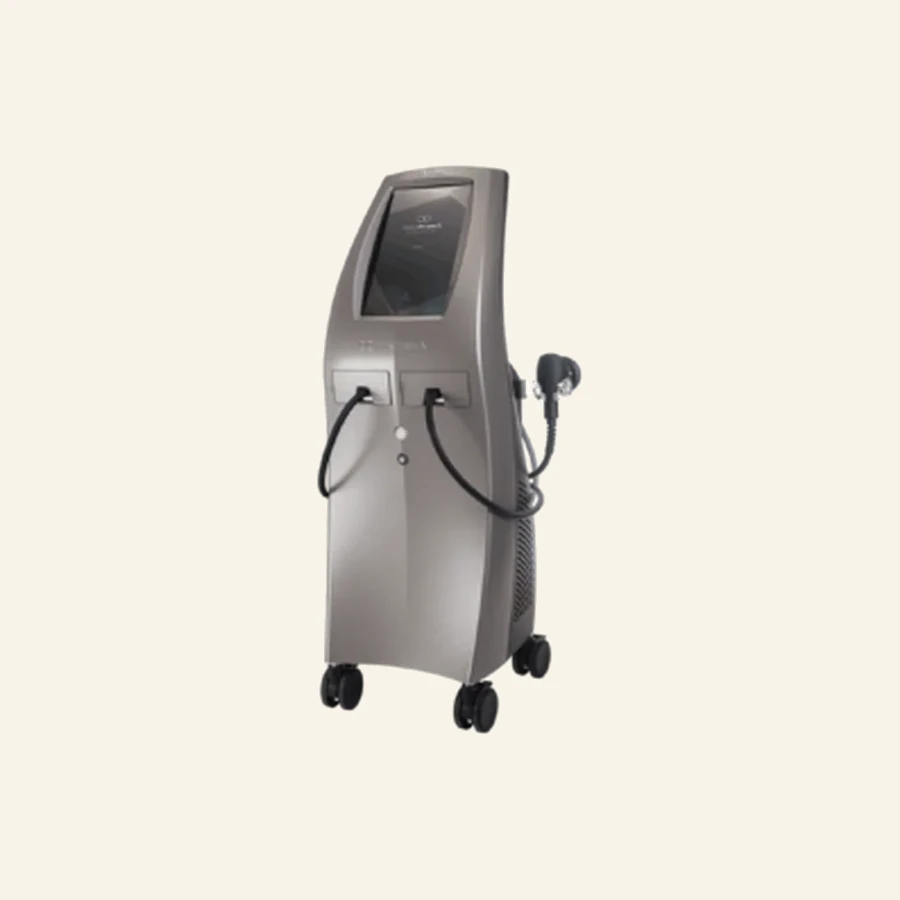
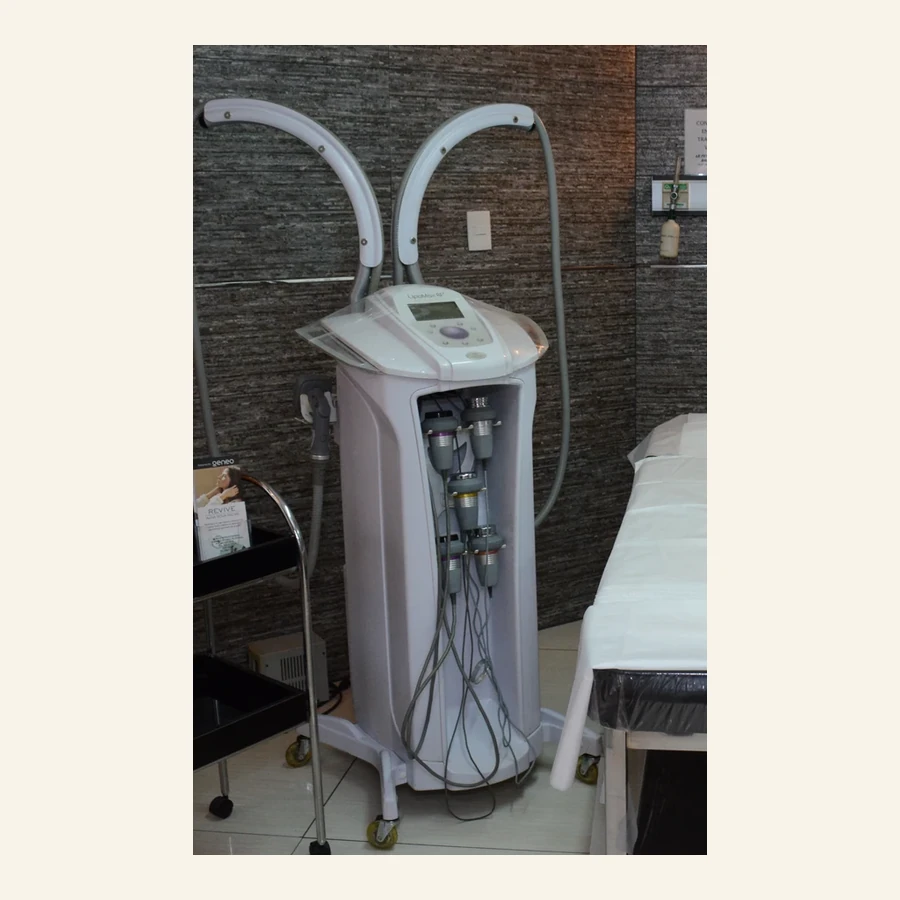
Every case is different. Discuss yours in a personal consultation.
Book a consultation on WhatsAppEvery figure published on this site is approximate and is not a quote. Any procedure or treatment first requires a private assessment consultation with Dr. Arístides Arellano —$800 MXN, charged separately— and it is at that consultation that the definitive cost of your case is determined.
Educational content; it does not replace a medical consultation. Results may vary from person to person.