
The colour tells you almost everything about your prognosis
Before spending a peso, look at your stretch marks in good light. Colour is not a cosmetic detail: it is the lesion’s clock, and it determines how much you can expect.
Red or purple marks (striae rubrae). These are recent and still inflamed and vascular. There is living tissue to work with, and this is when treatment gives the most. If your marks are still red, do not wait for them to turn white: you are wasting the best window.
White or pearly marks (striae albae). These are old, already mature scar, with no vessels and no pigment. They respond much worse. Texture can be improved and they can be made less obvious, but restoring the colour and surface of normal skin is not a realistic goal.
This single distinction explains why two patients on “the same treatment” get completely different results — and why the before-and-after photos you see online are almost always of red marks.
Why they appear
Skin stretches faster than the dermis can adapt, and it tears from within. The classic triggers: pregnancy, adolescent growth spurts, rapid weight change, fast muscle gain, and hormonal factors — including prolonged steroid use.
There is an important and frequently ignored genetic component: if your mother had stretch marks in pregnancy, your odds rise considerably, whatever any cream does. That does not mean moisturising is pointless; it means no cream defeats genetics, and promising otherwise is dishonest.
What can genuinely be done
The realistic goal is to improve texture, reduce the depression, and bring the colour closer to the surrounding skin. With that, many stretch marks stop being the first thing anyone sees. That is a good result. It is not erasure.
- Non-ablative fractional laser (ResurFX, a module of the Lumenis M22): creates microcolumns of controlled damage that induce new collagen inside the scar. It is the workhorse in stretch marks, and it works better the more recent the lesion. Planned as a series of sessions.
- Radiofrequency (EndyMed PRO): delivers dermal heat and collagen stimulus, with less pigmentary risk on darker skin. Useful in combination.
- Alma Hybrid: combines ablative and non-ablative energy, seeking more correction with fewer recovery days.
- None of this is a single session. Stretch marks are scars and collagen takes months to reorganise. The result is judged at 3–6 months, not the following week.
Darker skin: the warning that decides the result
In phototypes IV to VI, a laser that is too aggressive on a stretch mark can leave post-inflammatory hyperpigmentation — a dark shadow around every treated microcolumn — that is more visible than the original mark.
This is a real and frequent risk, and it is why stretch marks on darker skin are treated with conservative energies, more sessions and strict photoprotection, or with radiofrequency instead of laser. Going all-out in one session is the fastest way to make the problem worse.
What does not work (and is heavily sold)
“Anti-stretch-mark” creams moisturise the skin and improve its surface appearance, but they do not reorganise the collagen of a dermal scar. They can accompany treatment; they do not replace it.
And a final honesty: if the problem is excess skin on the abdomen after pregnancy or major weight loss, with the marks concentrated below the navel, then no laser is the answer. That skin — and much of that striae — is removed surgically. See abdominoplasty. You will get far more from knowing that now than after six laser sessions.
What does it cost?
It depends on the area and the number of sessions. For reference, laser scar treatment starts at $8,000 MXN; for stretch marks the plan is scaled to the surface treated. It is defined at consultation. See prices.
Track record and credentials
Treatment is carried out at the Clínica Dermatológica y Cirugía Estética de Puebla, in operation since 1971. That the person assessing your stretch marks is also a plastic surgeon has a concrete advantage: he is the one who can tell you, without a conflict of interest, when laser is not your answer.
Dr. Arístides Arellano is a plastic surgeon holding a specialty licence: he practises under a Mexican medical licence (D.G.P. 1125959) and a specialty licence in Plastic & Reconstructive Surgery (0002008), both issued by the Directorate General of Professions (DGP), which reissued his certificate of professional standing in 2025. His career began before Mexico’s present-day specialty-board system existed: he belongs to the founding generation of plastic surgery in Puebla, the second generation of a surgical tradition started in 1971 by Dr. Francisco Arellano Ocampo. Trust is verified, not promised: both licences are public and anyone can look them up in the DGP’s National Registry of Professionals.
Before-and-after photographs
Most patients want to see before-and-after photographs before deciding. Out of respect for each person’s privacy, Dr. Arístides Arellano shows real cases —always with documented consent— during your in-person consultation, where you can review results from patients with a starting point similar to yours. Results may vary from patient to patient.
Risks and expectations
Every medical treatment —topicals, peels and energy-based devices included— carries risk and requires a prior assessment. In darker skin (Fitzpatrick IV–VI, the most common phototypes in Mexico) a poorly indicated procedure can darken the patch instead of lightening it. Results may vary according to each patient, their phototype and their individual triggers.
Trust is verified, not promised. All 210 scanned documents —degree, licences, diplomas, publications and certificates, from 1977 to 2025— are open in Dr. Arístides Arellano’s credential archive, alongside an explanation of the difference between a specialty licence and a board certification.
Session plan and expectation
- AssessmentWhether they are red (better prognosis) or white (worse), phototype, and whether there is excess skin.
- Day 0–3Redness and swelling of the treated area.
- Weeks 2–4Next session. Collagen begins to reorganise.
- Months 3–6This is when the result is judged. Not before.
- AlwaysStrict photoprotection, especially on darker skin.
- ExpectationImproved texture and colour. Never complete disappearance.
Frequently asked questions
Can stretch marks be removed completely?
No. A stretch mark is a dermal scar, and scars are not erased: they are improved. The realistic goal is to reduce the depression, improve the texture and bring the colour closer to the surrounding skin, so they stop being the first thing anyone sees. Anyone promising to eliminate them is promising something biology does not allow.
Why do some stretch marks respond and others not?
Colour, which is the lesion’s clock. Red or purple ones are recent, still inflamed and vascular, and respond reasonably well. White or pearly ones are already mature scar, without vessels or pigment, and respond much worse. If yours are still red, this is the best moment to treat them: do not wait for them to turn white.
Do anti-stretch-mark creams work?
They moisturise and improve surface appearance, but they do not reorganise the collagen of a dermal scar. They can accompany treatment; they do not replace it. And no cream defeats the genetic component: if your mother had stretch marks in pregnancy, your odds were high whatever you did.
How many laser sessions do I need?
It is planned as a series, not a single session, because collagen takes months to reorganise. The exact number depends on the area, the colour of the marks and your phototype. The result is judged 3 to 6 months after finishing the plan, not the following week.
Is stretch-mark laser safe on darker skin?
It requires care. In phototypes IV to VI an overly aggressive laser can leave hyperpigmentation around each treated point, which ends up more visible than the original mark. That is why conservative energies, more sessions and strict photoprotection are used, and in some cases radiofrequency is preferred over laser.
I have stretch marks and loose abdominal skin. Laser or surgery?
If there is excess skin after pregnancy or major weight loss, and the marks are concentrated below the navel, no laser will solve it: that skin is removed surgically in an abdominoplasty, and much of the striae goes with it. Knowing this beforehand saves you six laser sessions that were never going to give you what you want.
The equipment used
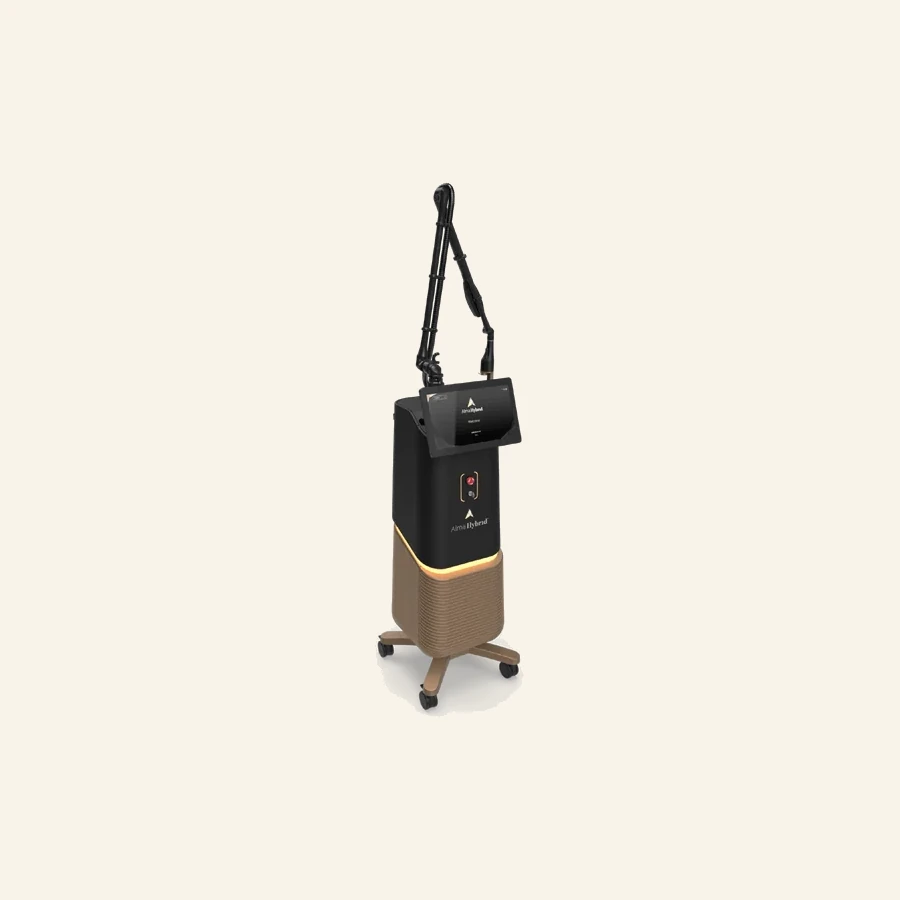
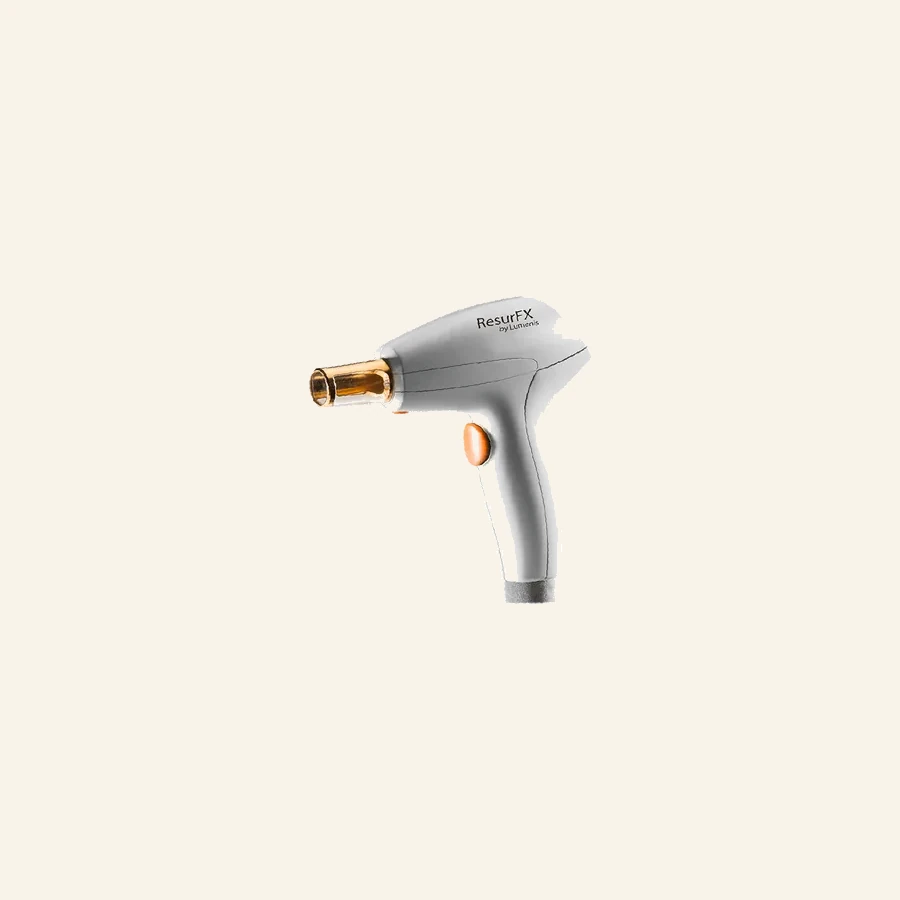
Every case is different. Discuss yours in a personal consultation.
Book a consultation on WhatsAppEvery figure published on this site is approximate and is not a quote. Any procedure or treatment first requires a private assessment consultation with Dr. Arístides Arellano —$800 MXN, charged separately— and it is at that consultation that the definitive cost of your case is determined.
Educational content; it does not replace a medical consultation. Results may vary from person to person.