
Why it is confirmed before it is treated
This is the difference between a medical consultation and over-the-counter advice, and it can save you a year.
Studies consistently show that a very high proportion of nails that look fungal are not. Appearance deceives. And antifungal treatment — especially oral — lasts months, may require liver-function monitoring, and is not harmless.
Treating “just in case” has three costs: months are lost, a risk is taken with no benefit, and — worst — the real diagnosis is delayed, which could be nail psoriasis, lichen planus or, in a rare but real case, a subungual melanoma.
Hence: mycological testing (direct examination and/or culture) before starting treatment. It costs one extra consultation. It saves a year.
What gets confused with onychomycosis
All of these produce thickened, yellow or deformed nails:
- Nail psoriasis: with pitting, oil-drop patches and lifting of the nail. The patient frequently has psoriasis elsewhere. See psoriasis.
- Repeated trauma: the tight shoe, the runner, the footballer. One of the commonest causes, and no antifungal resolves it.
- Nail lichen planus and other inflammatory dermatoses.
- 🔴 Subungual melanoma: a dark longitudinal band in the nail, especially if new, widening, irregular, or staining the skin around the nail. This does not wait: it is assessed immediately. See skin cancer screening.
How it is treated, when it really is fungus
Prescribed and supervised in the dermatology consultation. No drug names or doses here:
- Topical treatment when involvement is limited and does not reach the nail matrix.
- Systemic treatment under prescription when involvement is extensive or several nails are affected. It requires medical monitoring.
- Obligatory patience: a toenail takes 9 to 12 months to grow out completely. Even if the fungus dies today, the nail will look bad until the healthy part replaces the diseased one. That is not treatment failure: that is the speed of a nail.
- Treat the athlete’s foot too, and the footwear, or reinfection is only a matter of time.
- Recurrence: common. Onychomycosis is cured, but it is caught again.
Laser for nail fungus: yes, it is offered — with honest caveats
The practice has the Fotona SP Dynamis Max (Fotona, Slovenia), whose Nd:YAG platform lists onychomycosis among its official protocols. The laser heats the nail bed to a temperature the fungus cannot tolerate, without damaging the nail or the skin.
Now the caveats, because they matter more than the machine. First, it is confirmed to be a fungus — a laser fired at nail psoriasis or a subungual melanoma does nothing good and does delay the diagnosis. Second, the laser is not magic: it requires several sessions, the evidence is more modest than the advertising, and it is usually planned alongside medical treatment rather than instead of it. Third, and this does not change: even if the fungus dies today, a toenail takes 9 to 12 months to grow out, and until then it will look exactly as bad.
It is a good option, particularly for anyone who cannot or will not take systemic treatment. It is not a shortcut.
Who handles it here
Diagnosis and treatment of fungal infections and onychomycosis belong to the clinic’s dermatology consultation — the same one with which Dr. Francisco Arellano Ocampo founded the house in 1971. Dr. Arístides Arellano is a plastic surgeon, not a dermatologist: his contribution here is surgical and reconstructive, and the disease itself is managed in the consultation. Book at dermatology consultation.
Dr. Arístides Arellano is a plastic surgeon holding a specialty licence: he practises under a Mexican medical licence (D.G.P. 1125959) and a specialty licence in Plastic & Reconstructive Surgery (0002008), both issued by the Directorate General of Professions (DGP), which reissued his certificate of professional standing in 2025. His career began before Mexico’s present-day specialty-board system existed: he belongs to the founding generation of plastic surgery in Puebla, the second generation of a surgical tradition started in 1971 by Dr. Francisco Arellano Ocampo. Trust is verified, not promised: both licences are public and anyone can look them up in the DGP’s National Registry of Professionals.
Risks and expectations
Every medical treatment —topicals, peels and energy-based devices included— carries risk and requires a prior assessment. In darker skin (Fitzpatrick IV–VI, the most common phototypes in Mexico) a poorly indicated procedure can darken the patch instead of lightening it. Results may vary according to each patient, their phototype and their individual triggers.
Approximate price
A session starts at $8,000 MXN and the course of 5 sessions at $24,000 MXN, approximate figures depending on the area treated and how many sessions your response calls for. Approximate price — the definitive cost is set at your private consultation with Dr. Arístides Arellano.
Trust is verified, not promised. All 210 scanned documents —degree, licences, diplomas, publications and certificates, from 1977 to 2025— are open in Dr. Arístides Arellano’s credential archive, alongside an explanation of the difference between a specialty licence and a board certification.
Control plan
- 1 · ConfirmMycology BEFORE treating. Half of “fungal” nails are not.
- 2 · ExcludeNail psoriasis, trauma, lichen — and a dark band: melanoma, urgent.
- 3 · TreatTopical if limited; systemic under prescription if extensive.
- 4 · WaitA toenail takes 9–12 months to grow out. It looks bad even after the fungus dies.
- 5 · PreventTreat athlete’s foot and footwear, or it returns.
- RecurrenceCommon. It is cured, but it is caught again.
Frequently asked questions
Why not just give me the treatment?
Because a very high proportion of nails that look fungal are not: they may be nail psoriasis, repeated trauma, lichen planus or something else. Antifungal treatment lasts months, the oral form may require liver monitoring, and it is not harmless. Confirming with mycology costs one extra consultation and can save you a year of useless treatment.
How long until the nail looks normal?
9 to 12 months on the foot, because that is how long a nail takes to grow out completely. Even if the fungus dies today, the diseased part of the nail is still there until the healthy part replaces it. It is not that the treatment is not working: that is the speed at which a nail grows.
Do you offer laser for nail fungus?
Yes. The practice has the Fotona SP Dynamis Max, whose Nd:YAG platform lists onychomycosis among its official protocols. But with three honest conditions: first it is confirmed by mycology that it really is a fungus; the laser requires several sessions and is usually combined with medical treatment rather than replacing it; and even if the fungus dies today, a toenail takes 9 to 12 months to grow out, so it will look just as bad until then.
I have a dark stripe in my nail. Is it fungus?
A dark longitudinal band in the nail is not assumed to be fungus, and it does not wait. If it is new, widening, irregular, or staining the skin around the nail, it must be assessed immediately: it can be a subungual melanoma. It is rare, but it is exactly the case in which treating “just in case” with an antifungal for months does real harm.
Will it come back?
Frequently, yes. Onychomycosis is cured, but it is caught again. To reduce recurrence you must also treat athlete’s foot if present, disinfect or replace footwear, and keep the foot dry. Without that part, reinfection is only a matter of time.
The equipment used
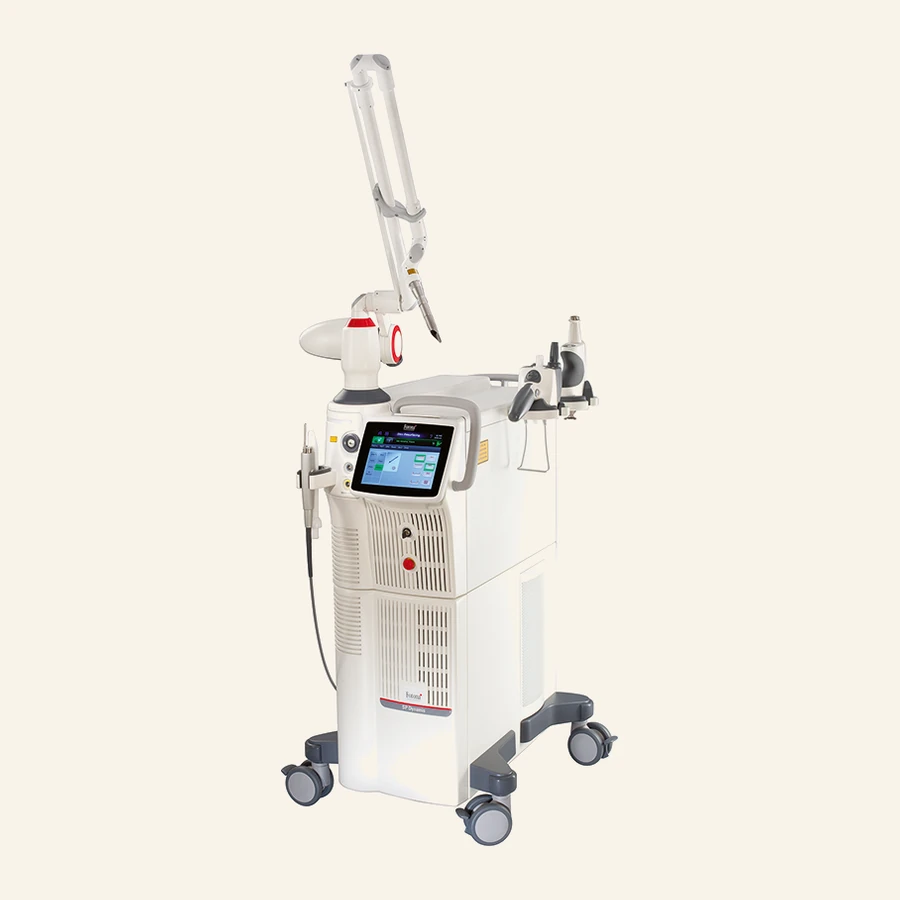
Every case is different. Discuss yours in a personal consultation.
Book a consultation on WhatsAppEvery figure published on this site is approximate and is not a quote. Any procedure or treatment first requires a private assessment consultation with Dr. Arístides Arellano —$800 MXN, charged separately— and it is at that consultation that the definitive cost of your case is determined.
Educational content; it does not replace a medical consultation. Results may vary from person to person.