
What is non-surgical buttock firming?
Non-surgical buttock firming is a set of outpatient treatments that improve the firmness and texture of the skin of the buttocks and upper thighs, without surgery, without incisions and without general anaesthesia. They work by heating or stimulating the deeper layers of the skin in a controlled way to encourage collagen production and improve tissue tone.
It matters to understand what it does and does not do. These treatments work on tissue quality —smoother skin, with better firmness and less superficial sagging—, but they do not add volume or lift the buttock the way surgery would. When the goal is more volume or a true lift of a sagging buttock, the route is surgical —for example liposuction with fat grafting, or a lift—, and that is a different consultation.
That is why the first step is not choosing a machine but defining the real goal. At the consultation with Dr. Arístides Arellano, mild skin laxity —which does respond to these treatments— is distinguished from marked sagging or volume loss, where energy alone yields little, and it is better to say so before starting a series of sessions.
Techniques used by Dr. Arístides Arellano
There is no single treatment to firm the buttock: the right technique depends on the state of the skin, the degree of laxity and each patient goal. That is why it is chosen at the consultation, and several modalities are often combined across a plan:
- Radiofrequency — heats the deeper layers of the skin in a controlled way to stimulate collagen formation and improve firmness and tone. It is the usual basis of skin-firming work, planned as a course of sessions.
- Carboxytherapy — fine micro-applications of medical CO₂ under the skin that aim to improve microcirculation and tissue quality; often used as a complement when the skin also looks dull or uneven.
- Muscle stimulation and toning — when the goal includes the tone of the muscle in the area, a stimulation phase can be added; it is a separate part of the plan, aimed at the muscle rather than the skin.
- Skin-texture care — complementary measures for texture, hydration and surface appearance that reinforce the result of the energy sessions.
- The exact combination, the number of sessions and their spacing are set case by case; not every patient needs every modality.
How is it performed?
The treatment is carried out in the office, on an outpatient basis, with no operating theatre and no general anaesthesia. Depending on the modality, a handpiece is applied over the skin of the buttocks —with radiofrequency, a tolerable sensation of heat— or very fine micro-applications in the case of carboxytherapy. Each session lasts a few minutes and usually allows a return to normal activity the same day.
It is not a one-time treatment. Collagen takes weeks to reorganise, so the work is done in a series of spaced sessions —the number set at the consultation— and a maintenance course is usually scheduled afterwards. Improvement is gradual and progressive, not immediate, and is more noticeable in skin firmness and texture than in the volume or shape of the buttock.
Here it is worth being honest about expectations. No non-surgical treatment replaces surgery when the underlying problem is significant volume loss or marked sagging; in those cases energy alone gives a modest change, and this is said before selling a series of sessions. The indication is always established after an individual assessment.
Every medical treatment —topicals, peels and energy-based devices included— carries risk and requires a prior assessment. In darker skin (Fitzpatrick IV–VI, the most common phototypes in Mexico) a poorly indicated procedure can darken the patch instead of lightening it. Results may vary according to each patient, their phototype and their individual triggers.
Who is a good candidate?
- People with mild-to-moderate skin laxity of the buttock who want to improve firmness and texture without undergoing surgery.
- Patients who notice the skin of the area looking dull, uneven or superficially lax and want an outpatient treatment without prolonged downtime.
- Those who prefer a non-surgical alternative, without incisions and with a quick return to activity, and who accept that the result is gradual and delivered over sessions.
- People in good general health, without active infection in the area to be treated and with realistic expectations, understanding that results may vary from one person to another.
- It is not the right route for anyone seeking more volume or a lift of a sagging buttock: that requires surgery, and is discussed at the consultation.
Recommended post-treatment care
After each session recovery is usually straightforward: there may be mild redness or some tenderness in the area for a few hours, and Dr. Arístides may advise basic care such as skin hydration, avoiding intense heat or very demanding exercise for the days indicated, and sun protection if the area is exposed. You are reassessed as the series progresses to decide whether to reinforce or adjust the plan. See the full guide: Post-surgical recovery and care.
Before and after
Most patients want to see before-and-after photographs before deciding. Out of respect for each person’s privacy, Dr. Arístides Arellano shows real cases —always with documented consent— during your in-person consultation, where you can review results from patients with a starting point similar to yours. Results may vary from patient to patient.
Approximate price
A session starts at approximately $1,500 MXN, depending on the area treated and how many sessions your response calls for. Approximate price — the definitive cost is set at your private consultation with Dr. Arístides Arellano.
About Dr. Arístides Arellano
Dr. Arístides Arellano is a plastic surgeon holding a specialty licence: he practises under a Mexican medical licence (D.G.P. 1125959) and a specialty licence in Plastic & Reconstructive Surgery (0002008), both issued by the Directorate General of Professions (DGP), which reissued his certificate of professional standing in 2025. His career began before Mexico’s present-day specialty-board system existed: he belongs to the founding generation of plastic surgery in Puebla, the second generation of a surgical tradition started in 1971 by Dr. Francisco Arellano Ocampo. Trust is verified, not promised: both licences are public and anyone can look them up in the DGP’s National Registry of Professionals.
Related patient guide
Before you decide whom to trust with your figure, it is worth knowing what to verify. Read How to choose a plastic surgeon in Puebla, with practical criteria that also apply to non-surgical treatments and to the difference between firming the skin and adding volume.
Trust is verified, not promised. All 210 scanned documents —degree, licences, diplomas, publications and certificates, from 1977 to 2025— are open in Dr. Arístides Arellano’s credential archive, alongside an explanation of the difference between a specialty licence and a board certification.
Recovery · step by step
- Before — the assessmentThe real goal is defined: mild skin laxity (which responds) is distinguished from marked sagging or volume loss (which require surgery). The modality is chosen and the series planned.
- Day of the sessionAn outpatient procedure of a few minutes, without general anaesthesia. A tolerable sensation of heat with radiofrequency. Normal activity can resume the same day.
- First hoursPossible mild redness or tenderness in the area, usually settling soon. Skin hydration is advised, along with avoiding intense heat or very demanding exercise for the days indicated.
- Following weeksImprovement in firmness and texture is progressive as new collagen forms. The work is done in a series; the number of sessions is set at the consultation.
- MaintenanceA maintenance course is usually scheduled afterwards. Results may vary from patient to patient.
Frequently asked questions
Does non-surgical buttock firming add volume?
No. These treatments work on the firmness and texture of the skin, not on the volume or shape of the buttock. If you want more volume or to lift a sagging buttock, the route is surgical (for example fat grafting or a lift), and that is discussed at the consultation. Firming the skin and adding volume are different goals.
Is it surgery?
No. It is an outpatient treatment done in the office, without incisions, without an operating theatre and without general anaesthesia. Depending on the modality, energy is applied over the skin —such as radiofrequency— or micro-applications such as carboxytherapy. It usually allows a return to normal activity the same day.
How many sessions do I need and when are results seen?
The work is done in a series of spaced sessions, because collagen takes weeks to reorganise; the exact number is set at the consultation according to the state of the skin. Improvement is gradual and progressive, not immediate, and a maintenance course is usually scheduled afterwards. Results may vary from patient to patient.
Does it hurt?
Most people describe a tolerable sensation of heat with radiofrequency, not pain, and mild discomfort with carboxytherapy. Each session lasts a few minutes and requires no general anaesthesia. There may be mild redness or tenderness for a few hours.
Does it help with orange-peel skin or marked sagging?
It can improve the appearance of texture and superficial firmness, but it has limits: with marked sagging or significant volume loss, energy alone yields little and it is best to say so before starting. In those cases a surgical option is considered. Each case is assessed individually.
How much does it cost in Puebla?
There is no single fee, because the cost depends on which modality or combination your case needs and on the number of sessions. It is set at the consultation, with a written plan and quote. Be wary of anyone who quotes a full plan over the phone without a prior consultation.
The equipment used
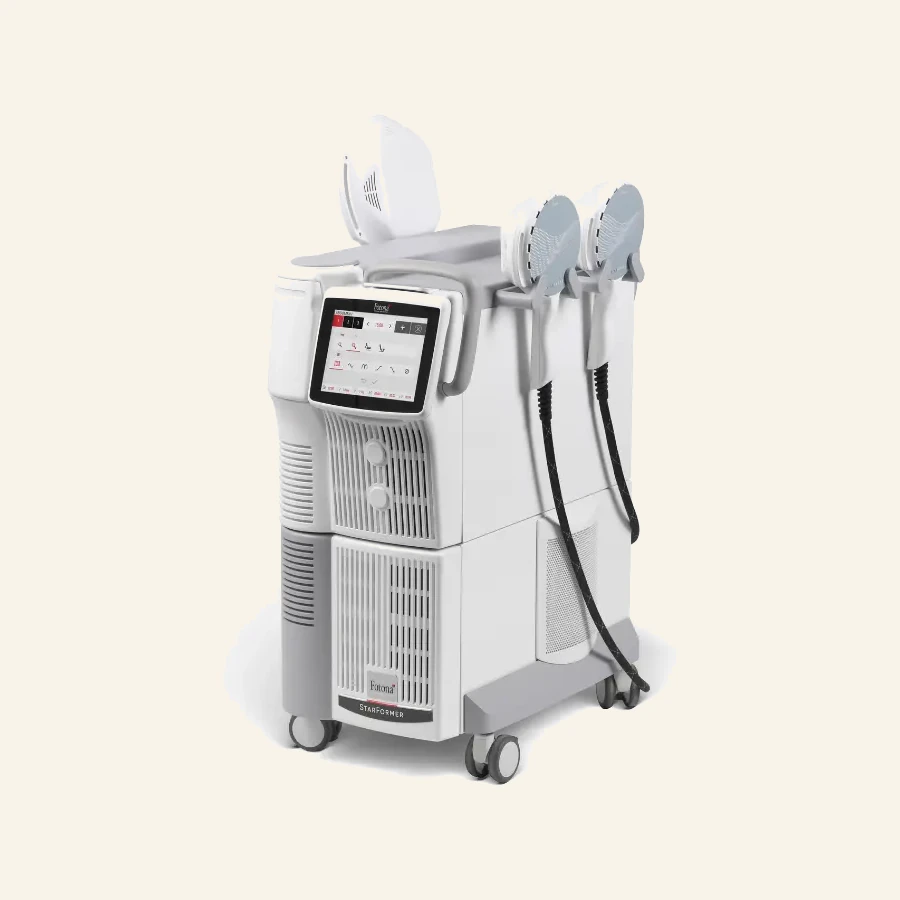
Every case is different. Discuss yours in a personal consultation.
Book a consultation on WhatsAppEvery figure published on this site is approximate and is not a quote. Any procedure or treatment first requires a private assessment consultation with Dr. Arístides Arellano —$800 MXN, charged separately— and it is at that consultation that the definitive cost of your case is determined.
Educational content; it does not replace a medical consultation. Results may vary from person to person.