
The only decision that matters: ablative or non-ablative
All laser resurfacing splits into two families, and understanding the difference will save you money and disappointment.
Ablative laser removes layers of skin in a controlled way. It corrects more, in fewer sessions, and in exchange demands real downtime: days of redness, crusting and strict sun care. It is the tool for deep wrinkles, deep scars and advanced sun damage.
Non-ablative laser heats the dermis without removing the surface. It builds collagen progressively with almost no downtime, and in exchange needs several sessions and delivers a subtler change. It is the tool for texture, pores, superficial spots and maintenance.
Neither is “better”. They answer different questions. The right question is not “which laser should I get?” but “how much downtime can I take, and how much do I need to correct?”
Which device does what, in this practice
The platform makes it possible to choose by indication instead of forcing every problem onto the single machine available — which is, in practice, what happens in a one-laser clinic:
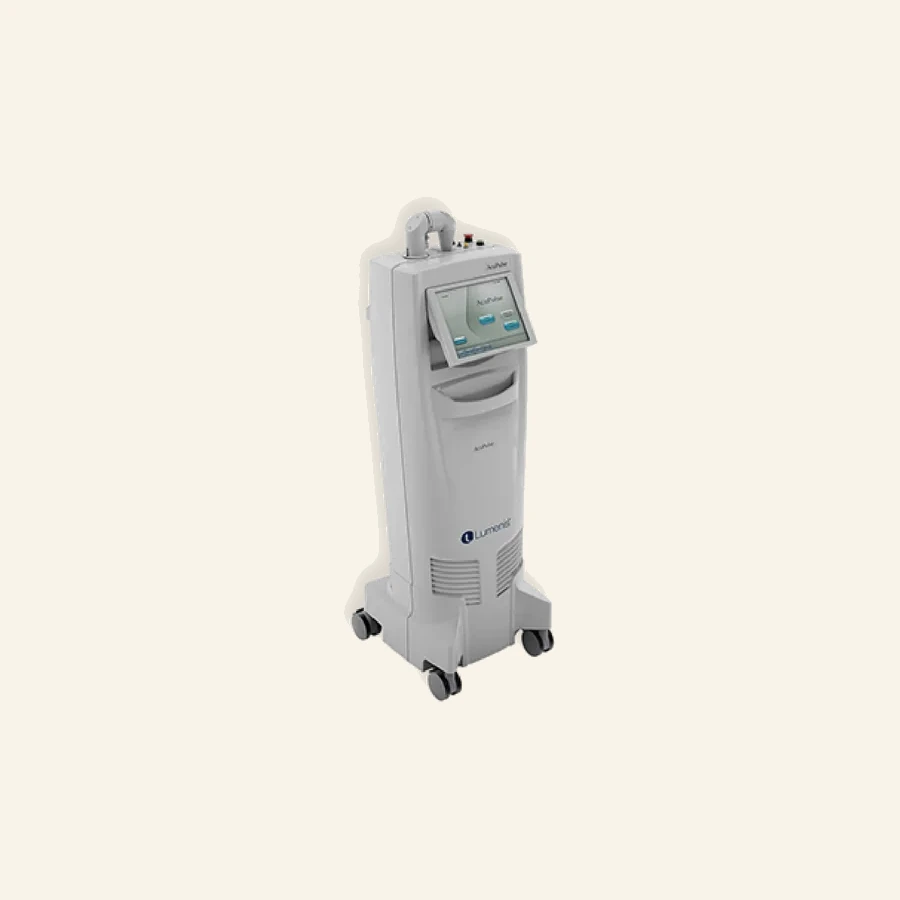
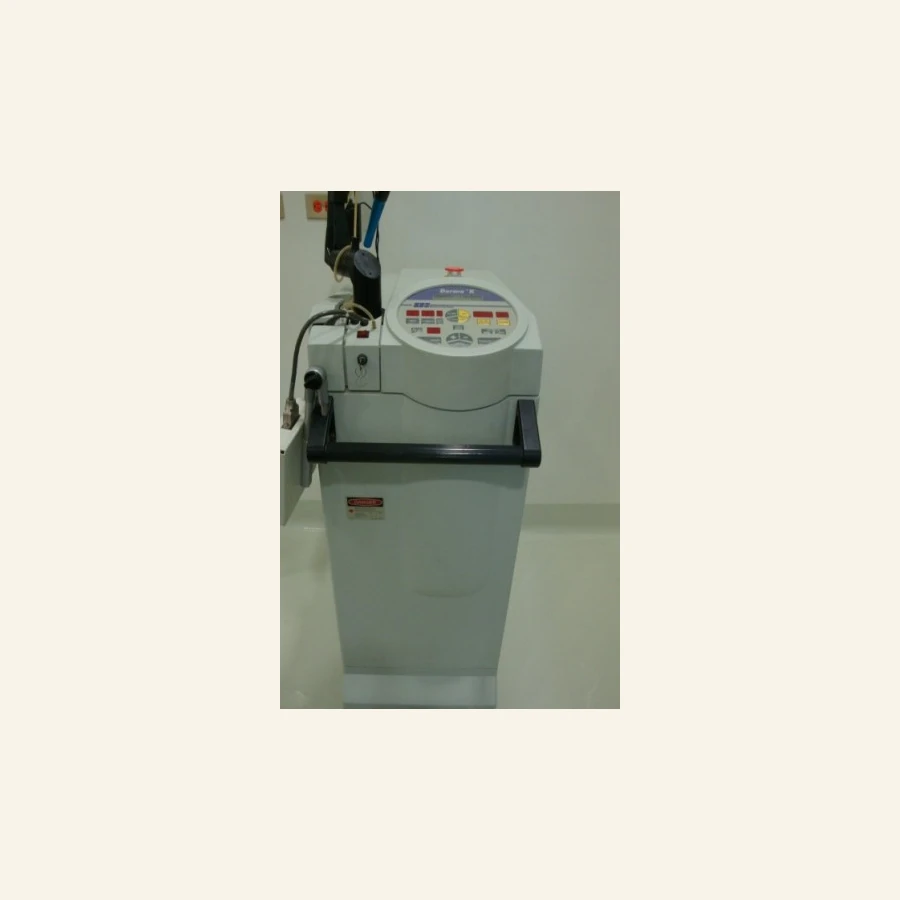
- AcuPulse CO₂ (Lumenis, Israel) — fractional ablative. The most powerful device here. Perioral and periocular wrinkles, advanced sun damage, depressed scars. It corrects the most and asks for the most recovery. It has its own page.
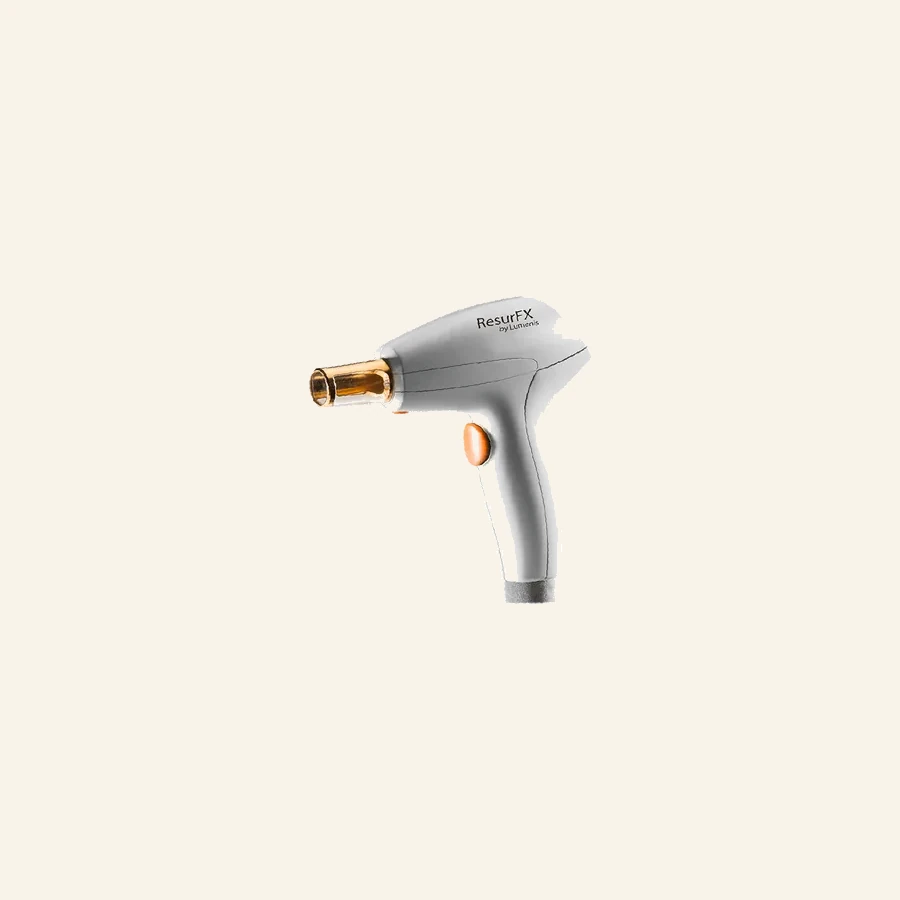
- ResurFX (a module of the Lumenis M22) — fractional non-ablative. Texture, enlarged pores, mild scarring and overall tone, with minimal downtime. The workhorse of facial maintenance.
- Intense pulsed light, IPL (Lumenis M22) — not a laser; light. It does not work on texture: it works on colour — redness, dilated capillaries, solar lentigines. This is the rosacea and flat-pigment device.
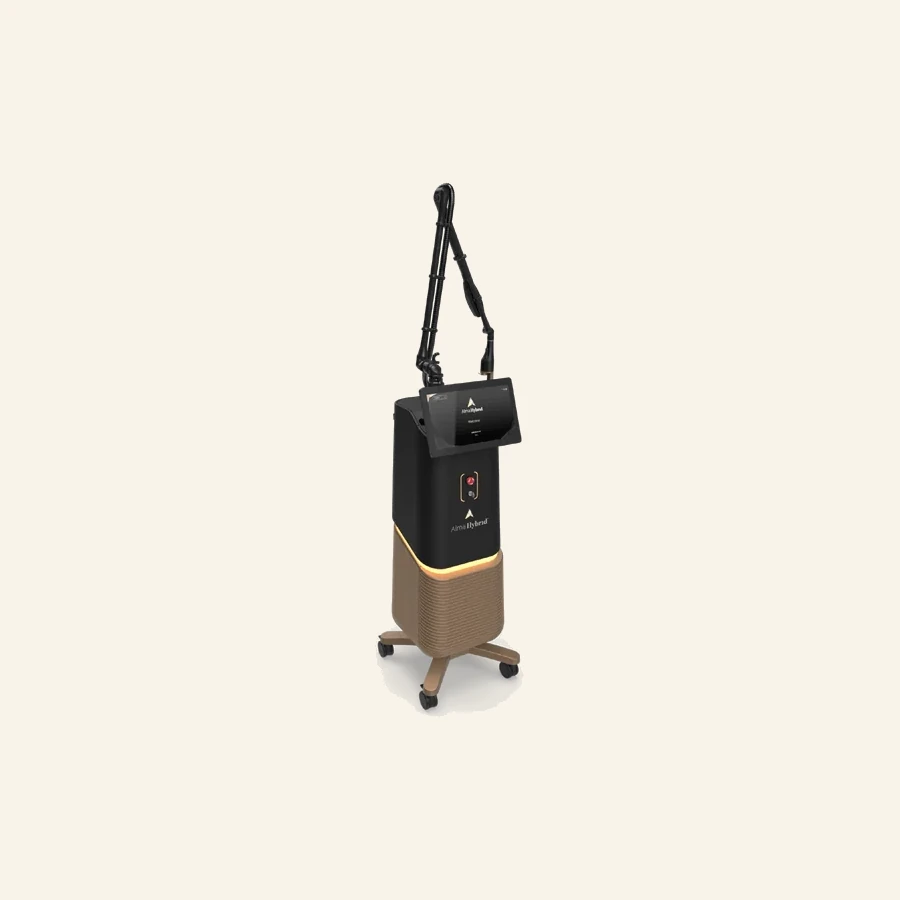
- Alma Hybrid (Alma, Israel) — hybrid. Delivers ablative and non-ablative energy in the same pass, seeking correction with fewer recovery days.
- Fotona SP Dynamis (Fotona, Slovenia) — Er:YAG + Nd:YAG. Enables tightening protocols and intraoral work; Er:YAG is shallower and cleaner on darker skin than an aggressive CO₂.
- EndyMed PRO — radiofrequency, not laser. Used when the problem is mild laxity rather than texture. See skin tightening.
Darker skin: the conversation almost nobody has
Most of the Mexican population has Fitzpatrick phototypes IV to VI: skin that tans easily and rarely burns. That same skin has the most reactive melanin machinery, and it answers excess energy and heat by making pigment.
The practical consequence: a powerful device run on settings designed for pale skin can leave post-inflammatory hyperpigmentation that takes months to fade — and is sometimes worse than the original complaint. This is not theoretical: it is the most common complication of badly indicated facial laser in Mexico.
So in high phototypes the strategy is less energy, more sessions, and priming the skin first. And in some cases — melasma being the classic — the correct decision is not to fire the laser at all. See melasma and pigmentation, where this is explained in full.
What is your actual problem? An honest map
The point of a broad platform is being able to send you to the right device — or to tell you that laser is not your answer:
- Depressed acne scars: laser alone is not enough. Ice-pick and tethered scars need subcision and surgical technique before energy. See acne scars.
- Active acne: laser is not first-line. It is treated medically first. See acne treatment.
- Symmetric cheek patches (melasma): laser can make it worse. Read this page before booking anything.
- Round, well-defined spots (solar lentigines): here IPL and laser do respond quickly and well.
- Redness and capillaries (rosacea): M22 IPL on the vascular component, with medical control of the underlying disease. See rosacea.
- Laxity, not texture: resurfacing does not lift sagging tissue. If the problem is descent, the honest answer is surgery or tightening, not a surface laser.
- Deep perioral lines and severe sun damage: fractional CO₂.
The session, and the recovery to expect
Topical anaesthetic is applied and, depending on the device, cooling. A full facial session runs 30–60 minutes. What changes radically between families is the next day.
With non-ablative (ResurFX, IPL) the skin is red and feels sunburnt for a few hours; most patients return to their routine the following day, with strict sun protection.
With ablative (CO₂, Er:YAG) there is marked redness, oozing and fine crusting for several days, and residual pinkness can last weeks. It is planned with a calendar in hand: this is not a Friday-afternoon procedure.
In both cases the rule that decides the result is the same: strict photoprotection, every day, during and after the plan. Without it, the laser works against you.
What does it cost?
It depends on the device and the area treated, not on a generic “laser price”. For reference, a facial ResurFX session starts at $5,000 MXN and full-face fractional CO₂ at $25,000 MXN; scar treatment starts at $8,000 MXN. The number of sessions and the device are defined at consultation. See prices.
Track record and credentials
Facial laser is performed at the Clínica Dermatológica y Cirugía Estética de Puebla, in operation since 1971. More than half a century treating skin in the same city is what lets someone say “this case is not for laser” without losing a sale.
Dr. Arístides Arellano is a plastic surgeon holding a specialty licence: he practises under a Mexican medical licence (D.G.P. 1125959) and a specialty licence in Plastic & Reconstructive Surgery (0002008), both issued by the Directorate General of Professions (DGP), which reissued his certificate of professional standing in 2025. His career began before Mexico’s present-day specialty-board system existed: he belongs to the founding generation of plastic surgery in Puebla, the second generation of a surgical tradition started in 1971 by Dr. Francisco Arellano Ocampo. Trust is verified, not promised: both licences are public and anyone can look them up in the DGP’s National Registry of Professionals.
Dr. Arístides Arellano is a full member of the Spanish Society of Medical and Surgical Laser (SELMQ) and of the Mexican Academy of Laser Surgery. Medical laser use is a formal part of his training — and that training is what dictates when laser is not the answer.
Before-and-after photographs
Most patients want to see before-and-after photographs before deciding. Out of respect for each person’s privacy, Dr. Arístides Arellano shows real cases —always with documented consent— during your in-person consultation, where you can review results from patients with a starting point similar to yours. Results may vary from patient to patient.
Risks and expectations
Every medical treatment —topicals, peels and energy-based devices included— carries risk and requires a prior assessment. In darker skin (Fitzpatrick IV–VI, the most common phototypes in Mexico) a poorly indicated procedure can darken the patch instead of lightening it. Results may vary according to each patient, their phototype and their individual triggers.
Trust is verified, not promised. All 210 scanned documents —degree, licences, diplomas, publications and certificates, from 1977 to 2025— are open in Dr. Arístides Arellano’s credential archive, alongside an explanation of the difference between a specialty licence and a board certification.
Session plan and recovery
- ConsultationPhototype, the real problem and the laser family are defined. Sometimes the conclusion is that it is not indicated.
- PrimingIn high phototypes, skin priming and strict photoprotection for weeks beforehand.
- Day 0–2 (non-ablative)Redness and a sunburn sensation. Normal routine the next day.
- Day 0–7 (ablative)Marked redness, oozing and fine crusting. Real downtime.
- Weeks 2–8Residual pinkness fades. Collagen keeps forming.
- Months 3–6Consolidated result. Maintenance as indicated.
Frequently asked questions
Which is the best facial laser?
There is none. There is the right laser for your problem and your phototype. A fractional CO₂ corrects more than a ResurFX, but demands days of recovery and carries more risk on darker skin. IPL clears flat pigment and redness but does not improve texture. Choosing by power instead of by indication is the most expensive mistake in facial laser.
Does facial laser help sagging?
Very little. Resurfacing works on the surface: texture, spots, fine lines. It does not lift descended tissue. If the problem is mild laxity, radiofrequency or laser tightening can help. If the tissue has already dropped, no device substitutes for surgery, and anyone promising otherwise is selling a result you will not see.
Is laser safe on darker skin?
Yes, if the settings are adjusted and the right device is chosen. The real risk in phototypes IV to VI is not a burn but post-inflammatory hyperpigmentation: a dark patch that appears weeks later and takes months to fade. It is prevented with less energy, more sessions, priming the skin beforehand, and strict photoprotection.
How many facial laser sessions do I need?
It depends on the family. Ablative CO₂ can achieve a great deal in a single session, with real downtime in exchange. Non-ablative (ResurFX) is usually planned as a series of three to five spaced sessions, with progressive change. The exact number is defined at consultation, not over the phone.
Can I have facial laser in summer?
You can, but it is the worst season to do it without discipline. Strict photoprotection is not a suggestion in resurfacing: it is part of the treatment. If you know you will be in the sun, it is wiser to postpone and do it properly than to do it now and risk a pigment problem.
Does facial laser hurt?
Topical anaesthetic is applied and, depending on the device, cooling. Most patients describe heat or a rubber-band snap against the skin, tolerable through the session. Ablative is more uncomfortable than non-ablative, and is planned accordingly.
The equipment used
Every case is different. Discuss yours in a personal consultation.
Book a consultation on WhatsAppEvery figure published on this site is approximate and is not a quote. Any procedure or treatment first requires a private assessment consultation with Dr. Arístides Arellano —$800 MXN, charged separately— and it is at that consultation that the definitive cost of your case is determined.
Educational content; it does not replace a medical consultation. Results may vary from person to person.